Tigava Stål, 1858
Type species: Tigava praecellens Stål
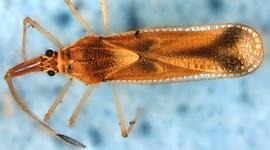
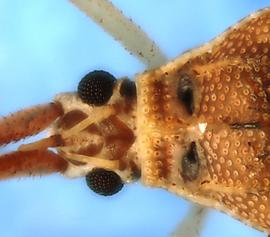
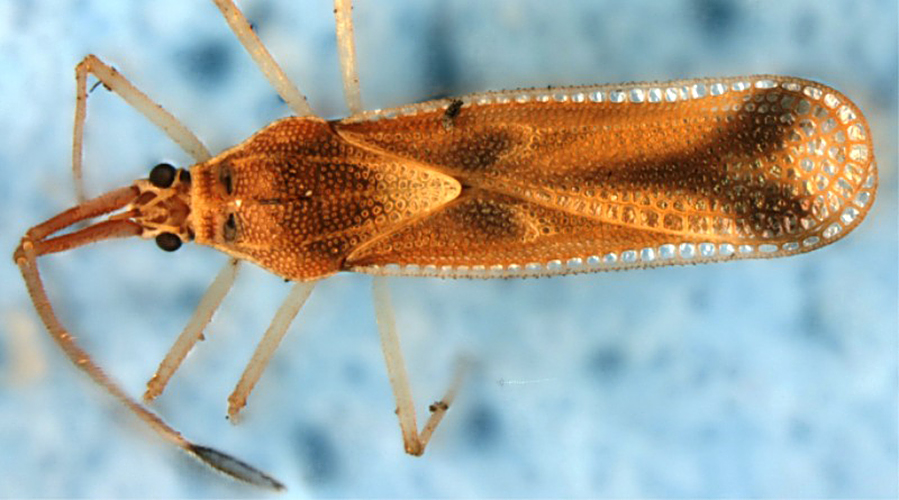
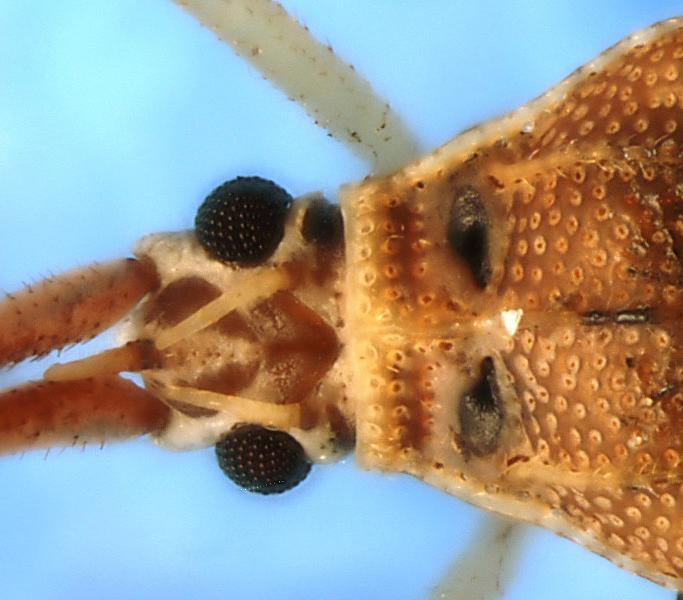
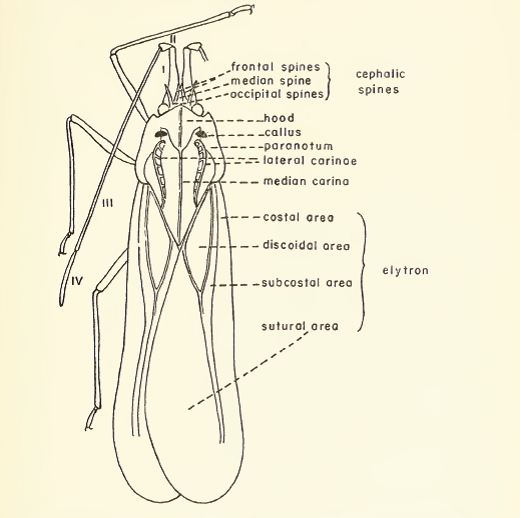
Body narrow and elongate, head short, clypeus not surpassing apical half of first antennal segmentantennal segment:
subdivisions of the antennae, denoted by constrictions. All Tingidae have 4 segments.
; antennae subequal to or shorter than the body, segment I five times or more longer than segment II; cephalic spinescephalic spine:
a spine on the head
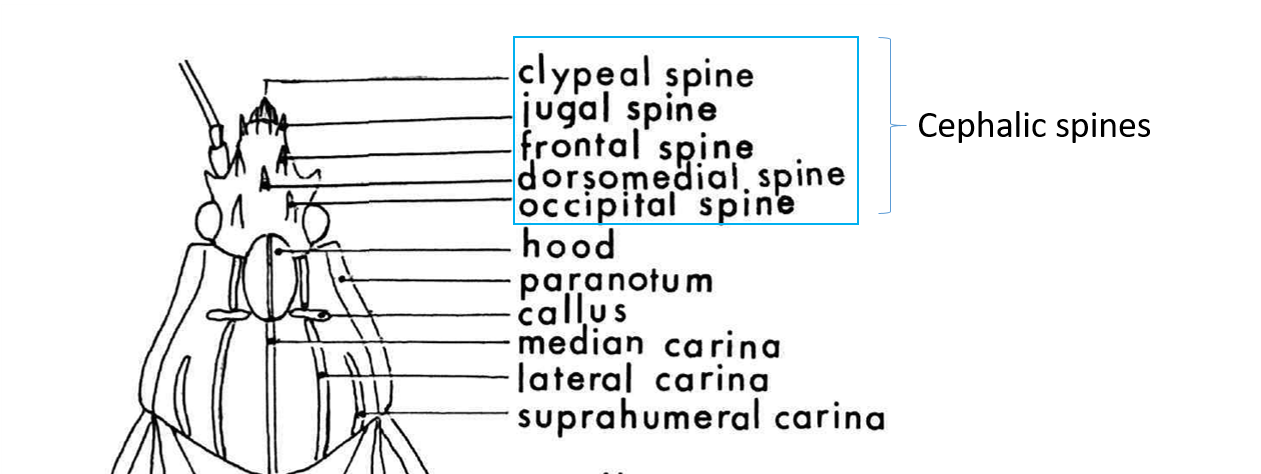 present, confined to occipital spinesoccipital spine:
a cephalic spine (one of a pair) located on the occiput or arising a short distance forward so as to be between the eyes
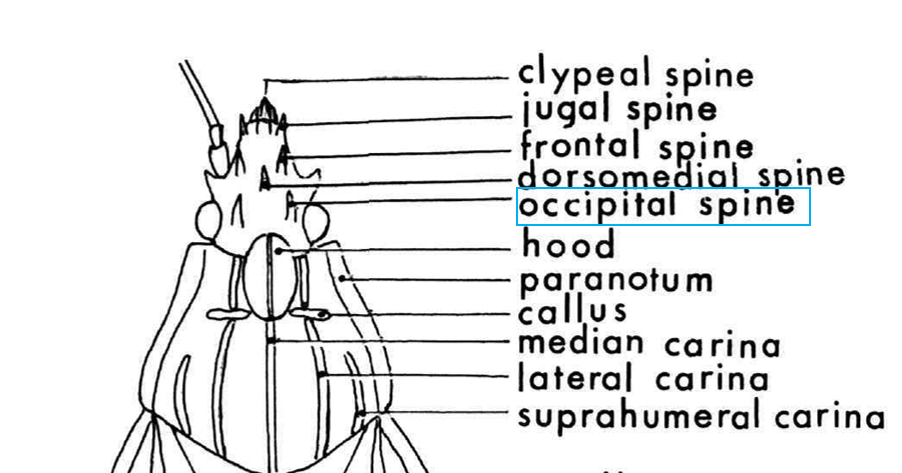 and dorsomedial spinedorsomedial spine:
a single spine on the midline of the head
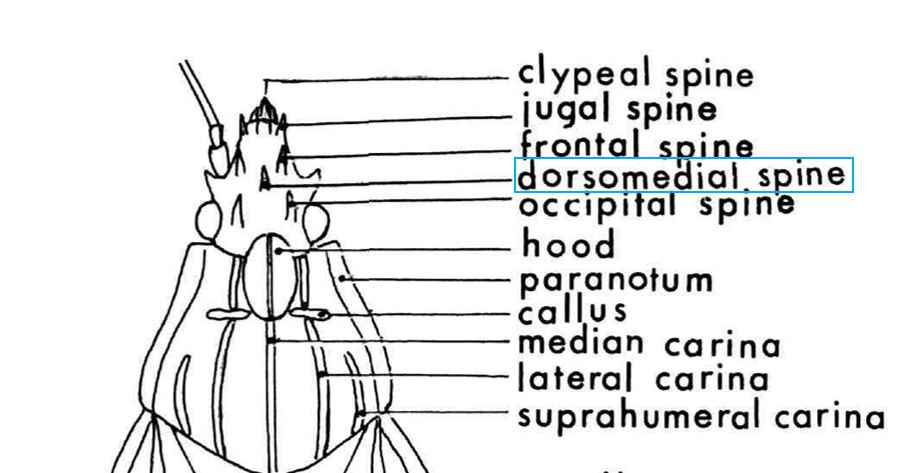 ; bucculaebuccula:
an elevated ridge on either side of the first labial segment
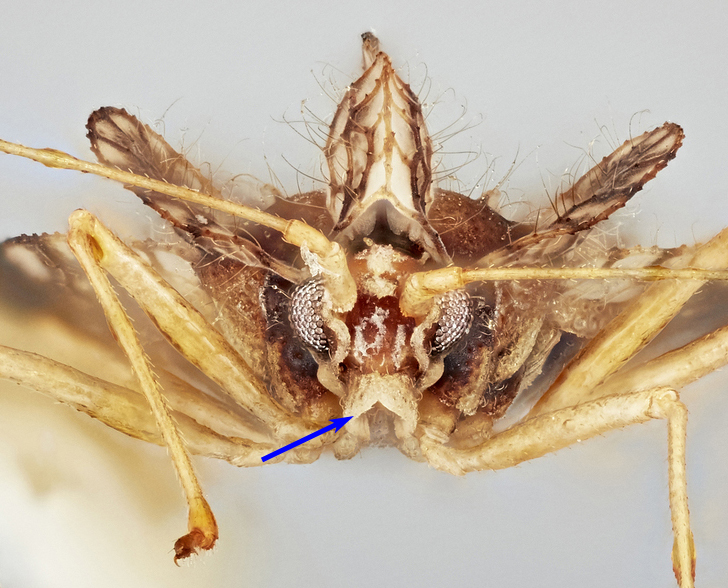 closed anteriorly; rostral sulcusrostral sulcus:
shallow furrow on either side of rostrum (labium)
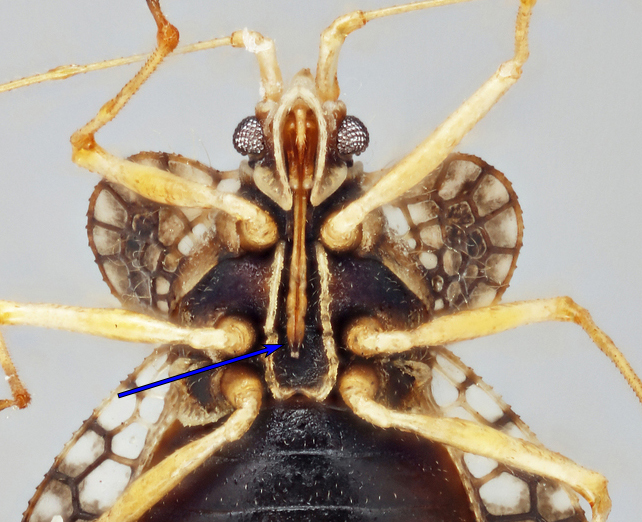 parallel, not constricted, uninterrupted by a transverse carinatransverse carina:
a carina that runs across the body or body part, as opposed to longitudinally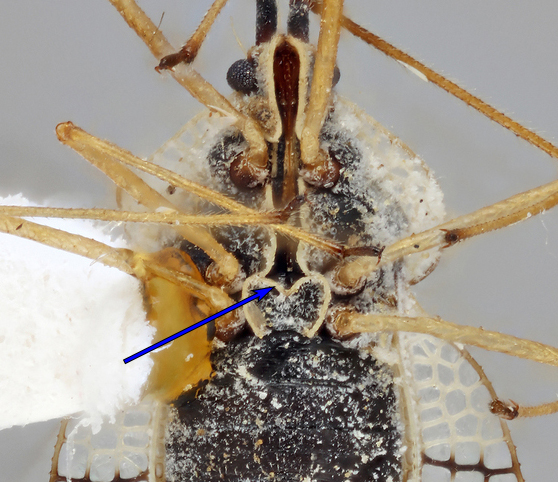 ; pronotum tricarinatetricarinate:
bearing both median carina and lateral carinae on pronotum
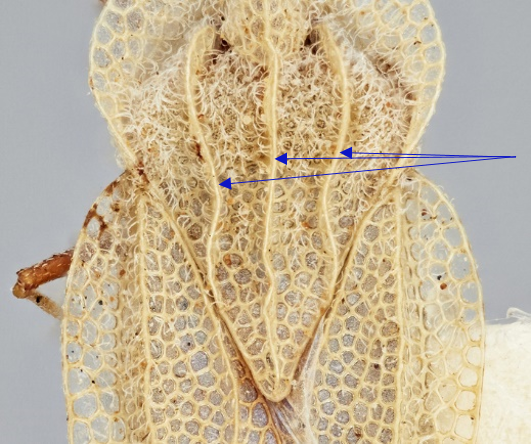 , lateral carinaelateral carina:
an elevated ridge located on either side of the pronotum
 extends throughout the pronotumpronotum:
dorsal sclerite of the first thoracic segment
, height of median carinamedian carina:
an elevated ridge located on the midline of the pronotum
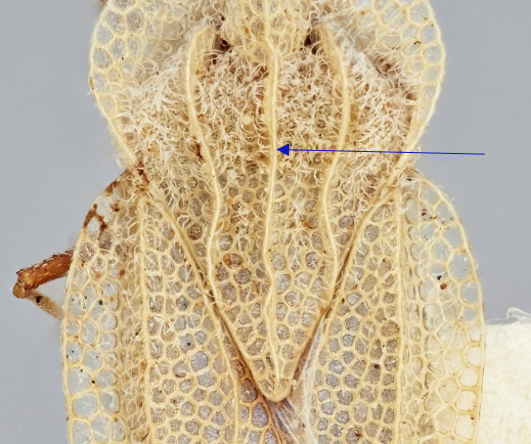 equal to that of lateral carinaelateral carina:
an elevated ridge located on either side of the pronotum
; pronotal hood tectiformtectiform:
tent-like or roof-shaped
, not bulbous, not extending beyond the apex of head; paranotumparanotum:
lateral extension of pronotum; may be carinate, explanate, or reflexed
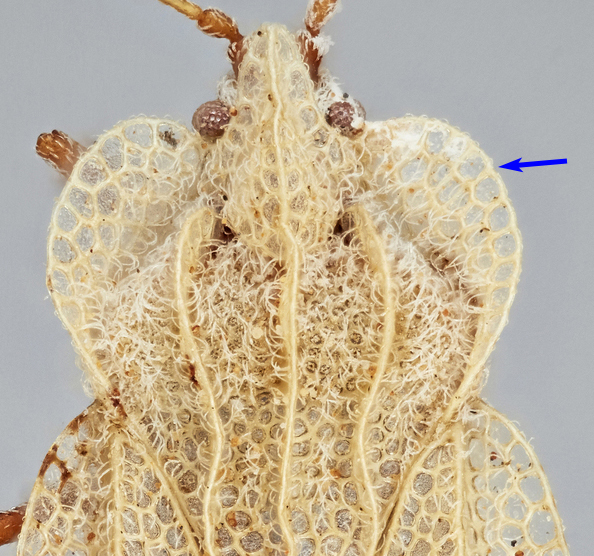 carinate or narrow, with 1-2 rows of areolaeareola:
a small enclosed space on a surface, such as an area enclosed by veinlets on wings
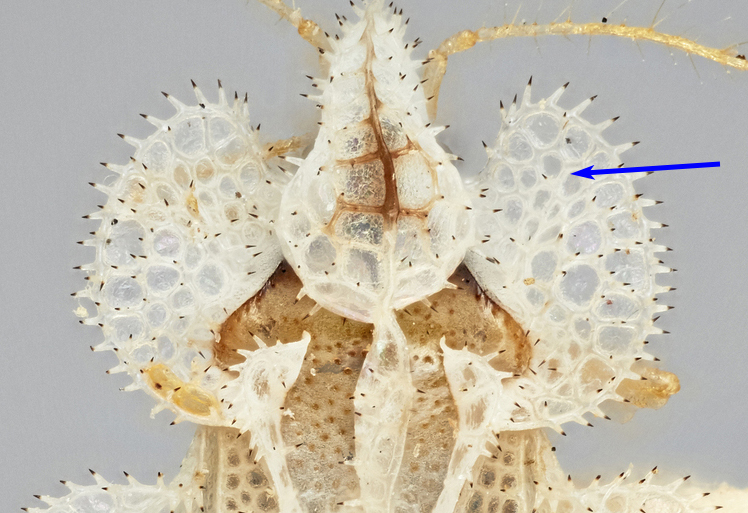 , not reflexedreflexed:
bent or curved backwards, as in a reflexed paranotum
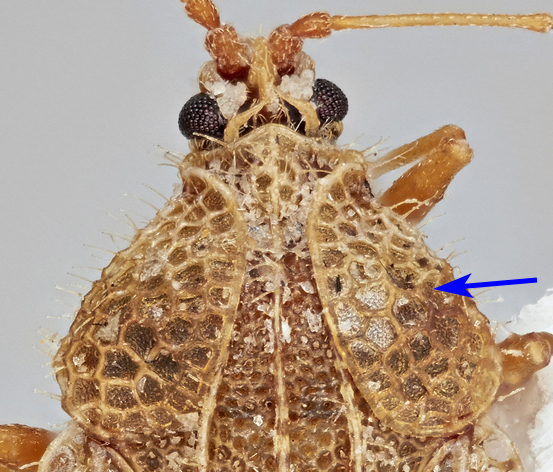 , oriented subvertically, spines absent along paranotal margin, anterior margin not projecting anterad; hemelytrahemelytron:
one of the basally thickened forewings of Hemiptera
with claval areaclaval area:
parallel-sided and sharply pointed anal area of hemelytron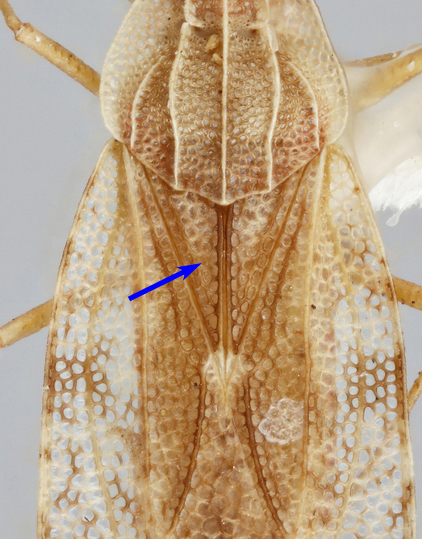 weakly developed, almost entirely covered by posterior margin of pronotumpronotum:
dorsal sclerite of the first thoracic segment
; costal areacostal area:
area of the costa delineated by the first longitudinal vein of the wing, usually running along the anterior margin
 narrow, with 1-2 rows of areolaeareola:
a small enclosed space on a surface, such as an area enclosed by veinlets on wings
; discoidal cell level, short, not reaching the middle of hemelytrahemelytron:
one of the basally thickened forewings of Hemiptera
(Montemayor 2008Montemayor 2008:
Montemayor, S. I. 2008. A new genus and two new species of Tingidae (Heteroptera) from Central America. Zoological Science. 25: 444-450., Montemayor and Costa 2009Montemayor and Costa 2009:
Montemayor, S. I., and L. A. a. Costa. 2009. Systematic revision of Macrotingis and phylogenetic analysis of the genera Macrotingis and Ceratotingis (Heteroptera: Tingidae). European Journal of Entomology 106: 631-642., Henry et al. 2017Henry et al. 2017:
Henry, T. J., S. I. Montemayor, and A. H. Knudson. 2017. Review of the New World Tigava lace bug complex (Hemiptera: Heteroptera: Tingidae), with the description of two new genera and two new species and a key to genera. Dugesiana 24: 269-277.).
Nearctic, Neotropical (Mexico to Argentina) (Drake and Ruhoff 1960Drake and Ruhoff 1960:
Drake, C. J., and F. Ruhoff, A. 1960. Lace-bug genera of the world (Hemiptera: Tingidae). Proceedings of the United States National Museum 112., Guilbert 2019Guilbert 2019:
Guilbert, E. 2019. Lace bugs database - http://www.hemiptera-databases.com/tingidae, Knudson 2018Knudson 2018:
Knudson, A. H. 2018. The Tingidae (Hemiptera: Heteroptera) of southern Central America (with an emphasis on Costa Rica). Master#39;s thesis. North Dakota University. https://library.ndsu.edu/ir/handle/10365/28773)
| Intercepted species | Shipment origin(s) | Inspected host(s) |
|---|---|---|
| Tigava pulchella Distant | Mexico | Persea americana |
Drake and Ruhoff 1960Drake and Ruhoff 1960:
Drake, C. J., and F. Ruhoff, A. 1960. Lace-bug genera of the world (Hemiptera: Tingidae). Proceedings of the United States National Museum 112., Guilbert 2019Guilbert 2019:
Guilbert, E. 2019. Lace bugs database - http://www.hemiptera-databases.com/tingidae, Henry et al. 2017Henry et al. 2017:
Henry, T. J., S. I. Montemayor, and A. H. Knudson. 2017. Review of the New World Tigava lace bug complex (Hemiptera: Heteroptera: Tingidae), with the description of two new genera and two new species and a key to genera. Dugesiana 24: 269-277., Knudson 2018Knudson 2018:
Knudson, A. H. 2018. The Tingidae (Hemiptera: Heteroptera) of southern Central America (with an emphasis on Costa Rica). Master#39;s thesis. North Dakota University. https://library.ndsu.edu/ir/handle/10365/28773, Montemayor 2008Montemayor 2008:
Montemayor, S. I. 2008. A new genus and two new species of Tingidae (Heteroptera) from Central America. Zoological Science. 25: 444-450., Montemayor and Costa 2009Montemayor and Costa 2009:
Montemayor, S. I., and L. A. a. Costa. 2009. Systematic revision of Macrotingis and phylogenetic analysis of the genera Macrotingis and Ceratotingis (Heteroptera: Tingidae). European Journal of Entomology 106: 631-642.
Authors: S.M. Krishnankutty, J.L. Scher
Last updated May 2020
idtools.org