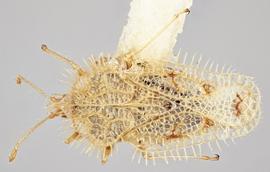
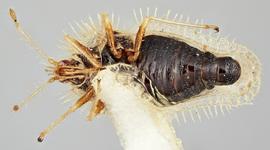
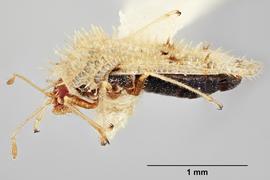
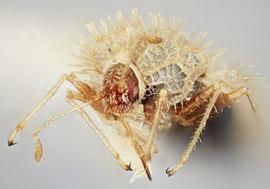
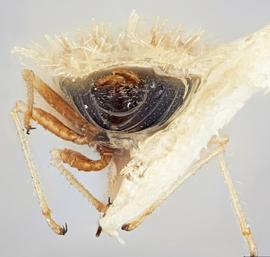
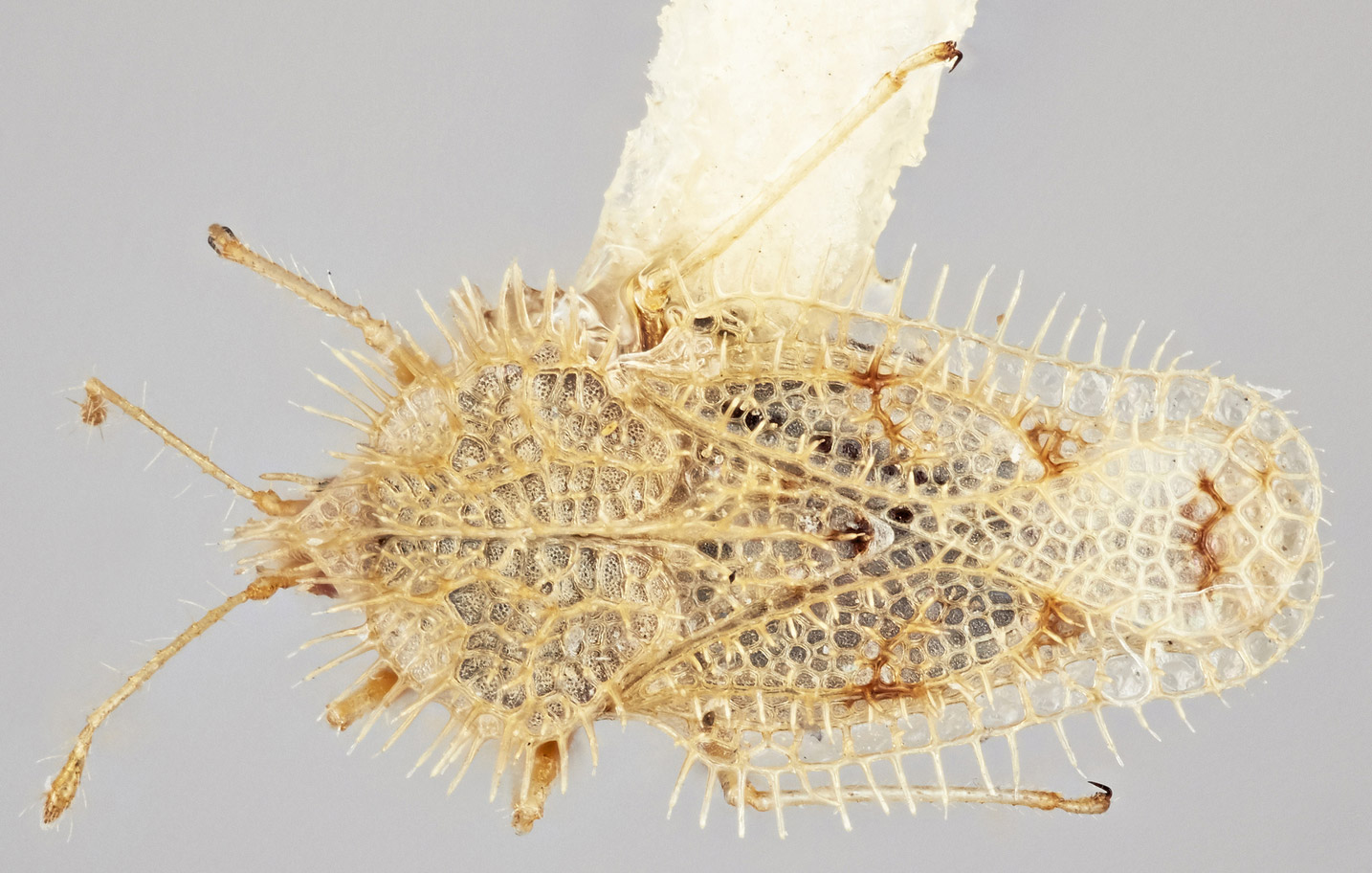
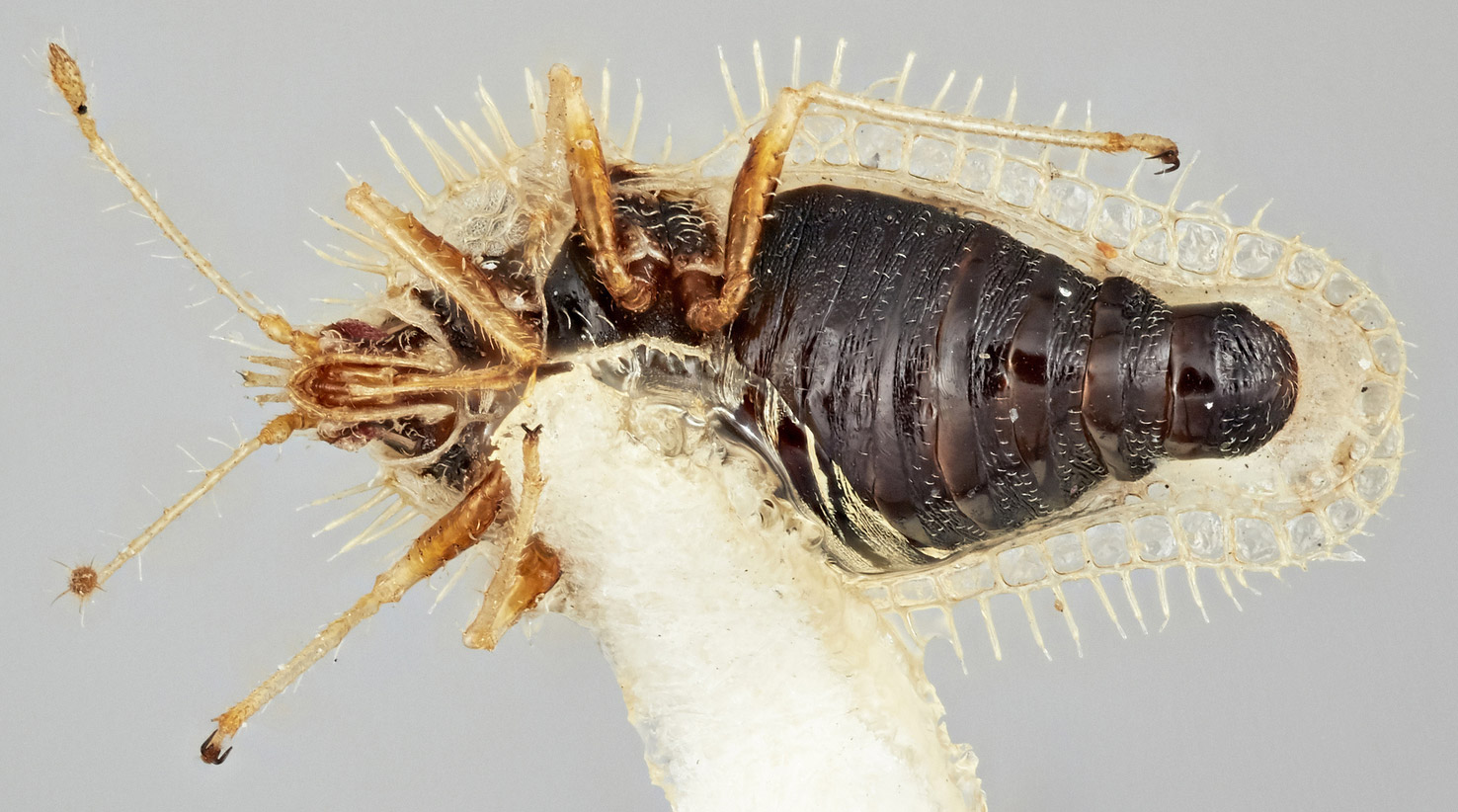
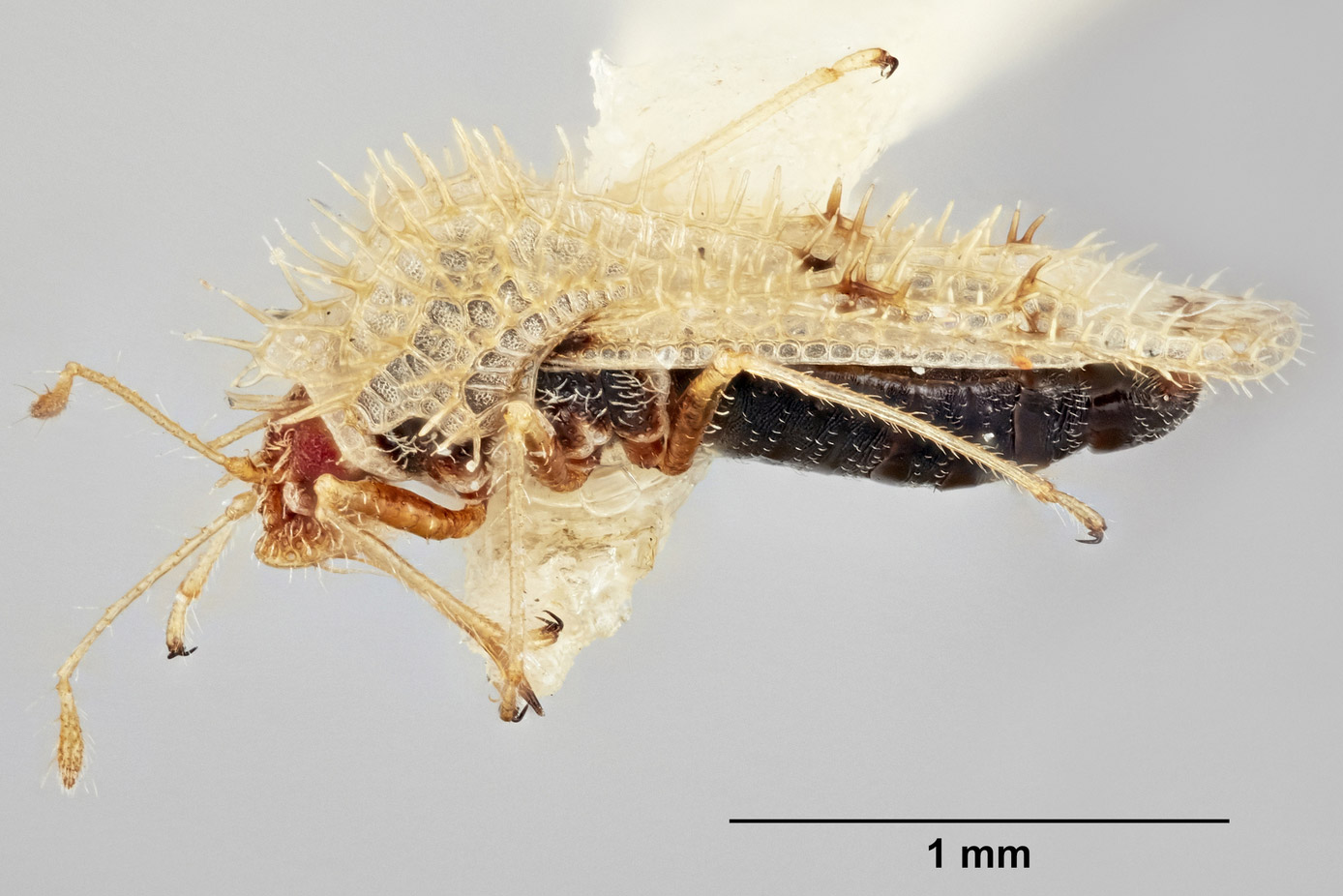
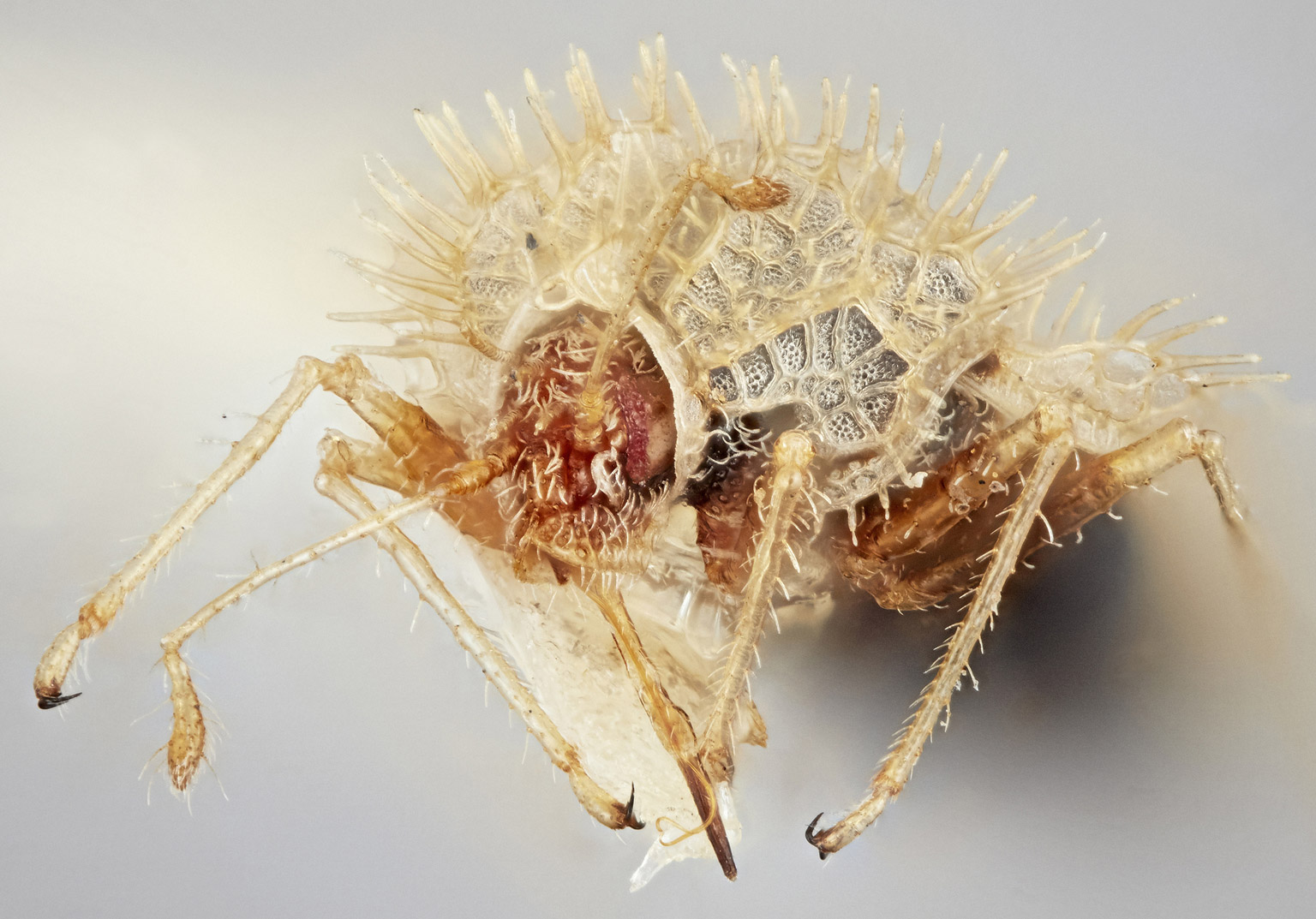
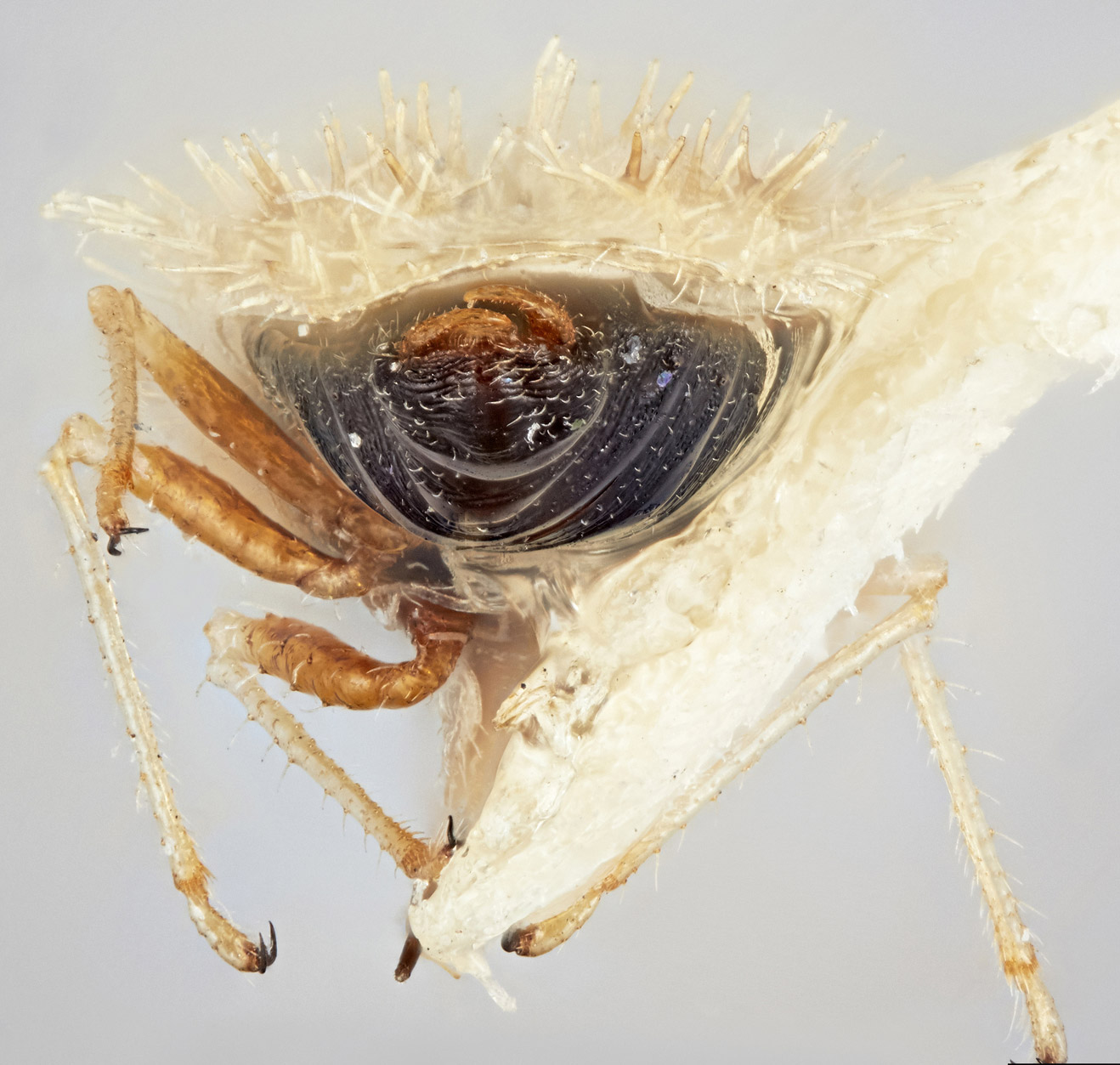
Urentius Distant, 1903
Type species: Urentius echinus Distant = Tingis hystricellus Ritcher
Head short, clypeus not surpassing apical half of first antennal segmentantennal segment:
subdivisions of the antennae, denoted by constrictions. All Tingidae have 4 segments.
; antennae longer than the pronotumpronotum:
dorsal sclerite of the first thoracic segment
; spines present on head, pronotumpronotum:
dorsal sclerite of the first thoracic segment
, and hemelytrahemelytron:
one of the basally thickened forewings of Hemiptera
; bucculaebuccula:
an elevated ridge on either side of the first labial segment
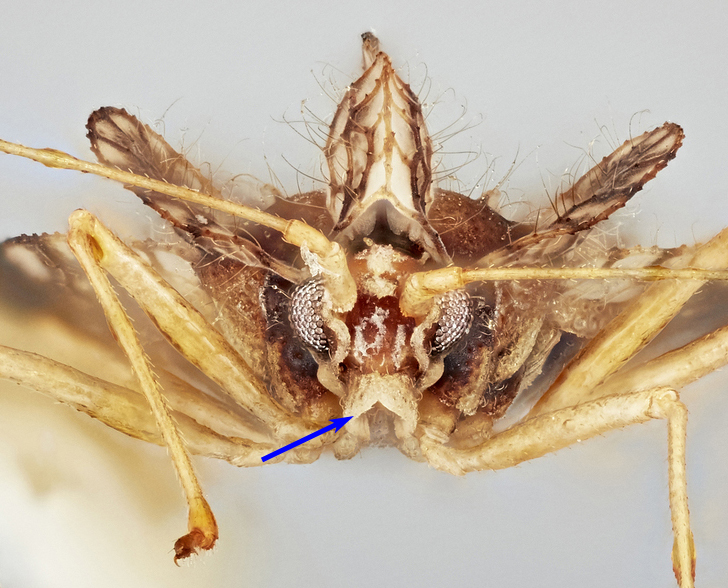 closed anteriorly; pronotum tricarinatetricarinate:
bearing both median carina and lateral carinae on pronotum
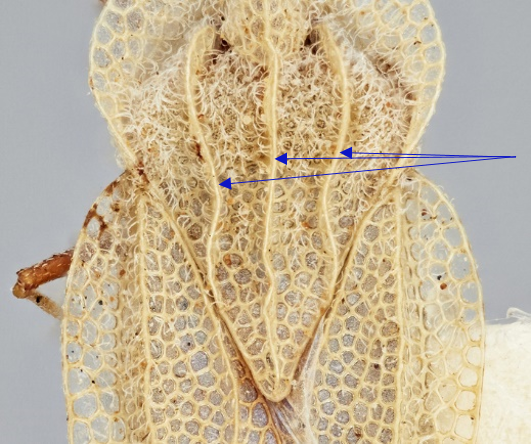 , lateral carinaelateral carina:
an elevated ridge located on either side of the pronotum
 hidden anteriorly under reflexedreflexed:
bent or curved backwards, as in a reflexed paranotum
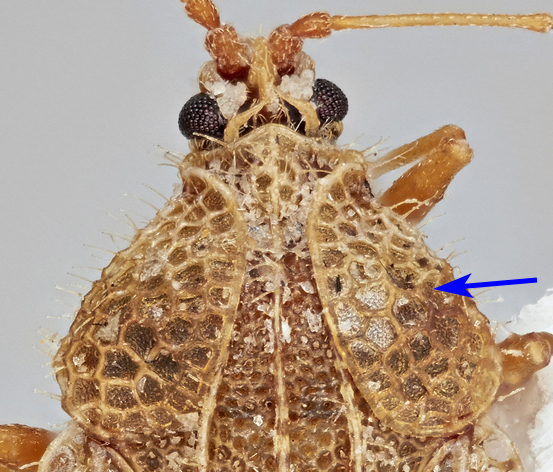 paranotum; pronotal hood tectiformtectiform:
tent-like or roof-shaped
, not bulbous; paranotumparanotum:
lateral extension of pronotum; may be carinate, explanate, or reflexed
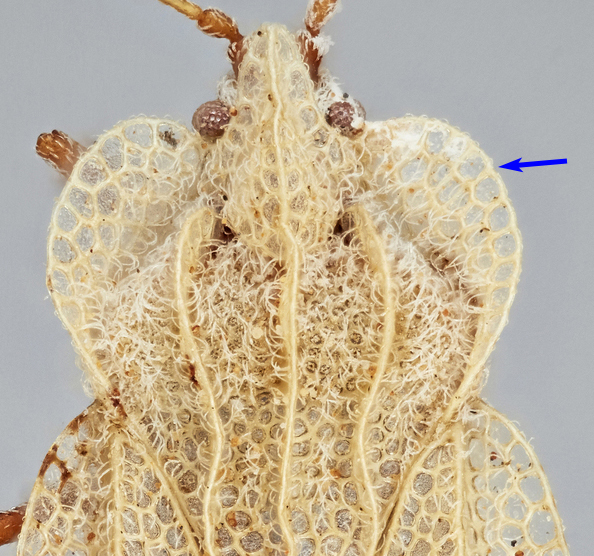 widely expanded with at least 3 rows of areolaeareola:
a small enclosed space on a surface, such as an area enclosed by veinlets on wings
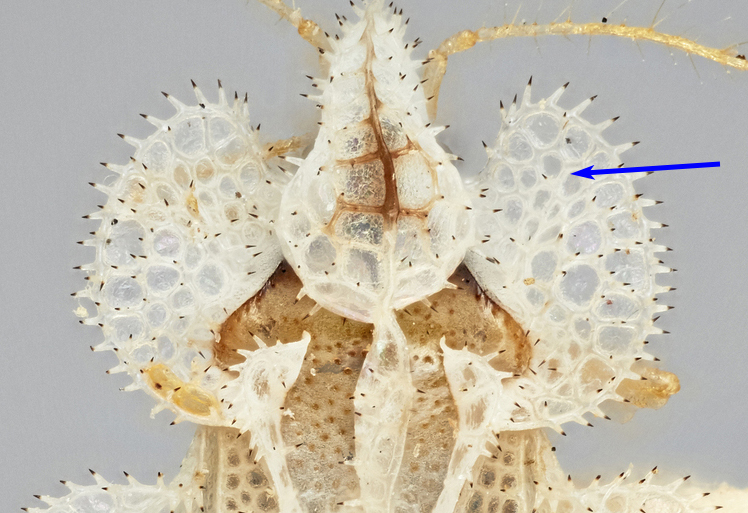 , reflexedreflexed:
bent or curved backwards, as in a reflexed paranotum
and appressed to pronotal disc, not forming elevated cyst; anterior margin of paranotumparanotum:
lateral extension of pronotum; may be carinate, explanate, or reflexed
not projecting anterad; hemelytrahemelytron:
one of the basally thickened forewings of Hemiptera
with claval areaclaval area:
parallel-sided and sharply pointed anal area of hemelytron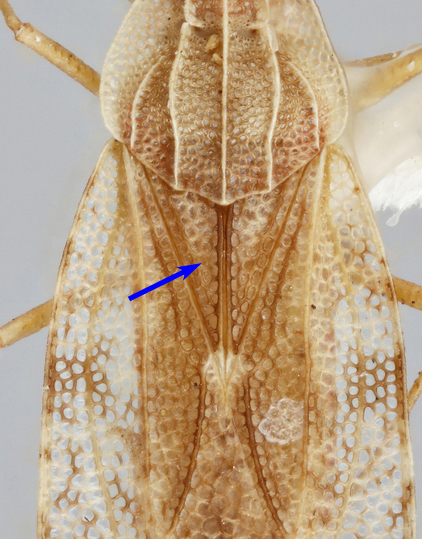 weakly developed, almost entirely covered by posterior margin of pronotumpronotum:
dorsal sclerite of the first thoracic segment
; discoidal areadiscoidal area:
area of the forewing posterior to the subcostal area
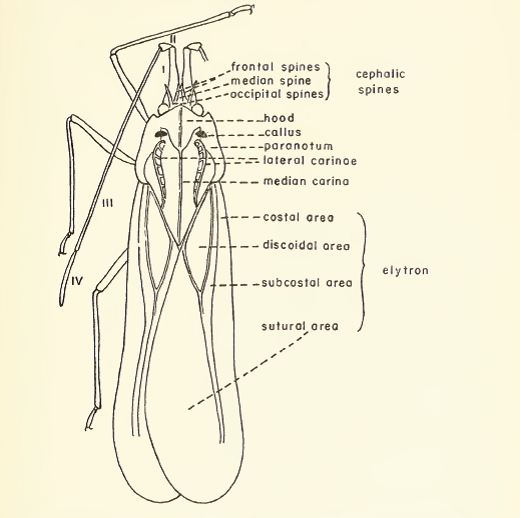 level, extending beyond the middle of hemelytrahemelytron:
one of the basally thickened forewings of Hemiptera
; hypocostal laminaehypocostal lamina:
a ridge produced ventrally along costal margin
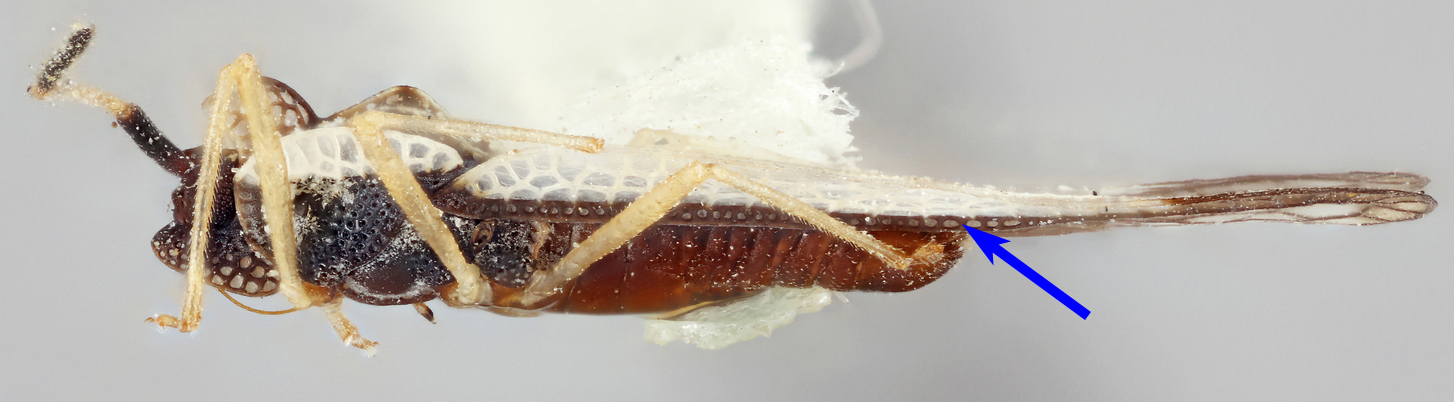 extending to the apex of abdomen (Distant 1904aDistant 1904a:
Distant, W. L. 1904a. The fauna of British India, including Ceylon and Burma. Rhynchota. Vol. II. Part 1 (Heteroptera). Taylor amp; Francis, London.).
Afrotropical, Australasian, Oriental, Palearctic (Drake and Ruhoff 1960Drake and Ruhoff 1960:
Drake, C. J., and F. Ruhoff, A. 1960. Lace-bug genera of the world (Hemiptera: Tingidae). Proceedings of the United States National Museum 112., Drake and Ruhoff 1965Drake and Ruhoff 1965:
Drake, C. J., and F. A. Ruhoff. 1965. Lacebugs of the World: A Catalog (Hemiptera: Tingidae) Bulletin of the United States National Museum: 1ndash;634., Guilbert 2019Guilbert 2019:
Guilbert, E. 2019. Lace bugs database - http://www.hemiptera-databases.com/tingidae)
| Intercepted species | Shipment origin(s) | Inspected host(s) |
|---|---|---|
| Urentius euonymus Distant | Israel, Jordon | Cucurbita sp., Leucadendron sp., Origanum vulgare, Salvia officinalis, Thymus vulgaris |
| Urentius sp. | Israel, Qatar | Origanum vulgare, Vitis sp. |
Distant (1904a)Distant (1904a):
Distant, W. L. 1904a. The fauna of British India, including Ceylon and Burma. Rhynchota. Vol. II. Part 1 (Heteroptera). Taylor amp; Francis, London., Drake and Ruhoff (1960)Drake and Ruhoff (1960):
Drake, C. J., and F. Ruhoff, A. 1960. Lace-bug genera of the world (Hemiptera: Tingidae). Proceedings of the United States National Museum 112., Drake and Ruhoff (1965)Drake and Ruhoff (1965):
Drake, C. J., and F. A. Ruhoff. 1965. Lacebugs of the World: A Catalog (Hemiptera: Tingidae) Bulletin of the United States National Museum: 1-634., Guilbert (2019)Guilbert (2019):
Guilbert, E. 2019. Lace bugs database - http://www.hemiptera-databases.com/tingidae
Authors: S.M. Krishnankutty, J.L. Scher
Last updated May 2020
idtools.org