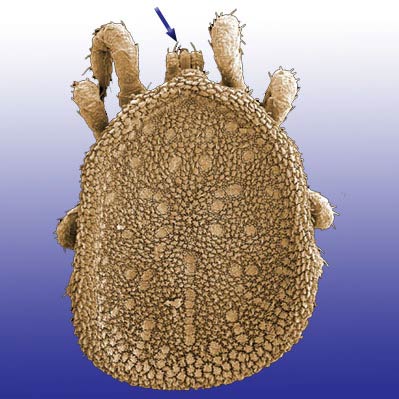
test
Ixodida Leach, 1815
Superorder Parasitiformes » Order Ixodida
hard ticks, soft ticks
medium
Very high. Ticks are the most important group of disease vectors after the mosquitoes.
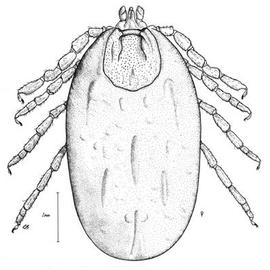
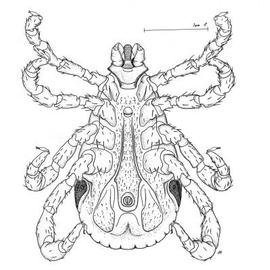
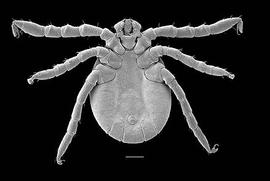
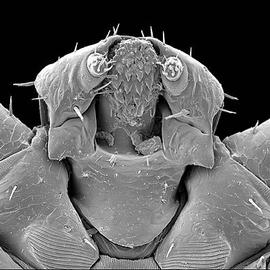
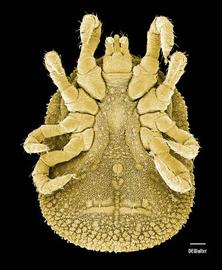
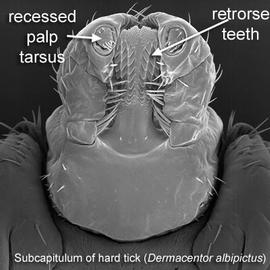
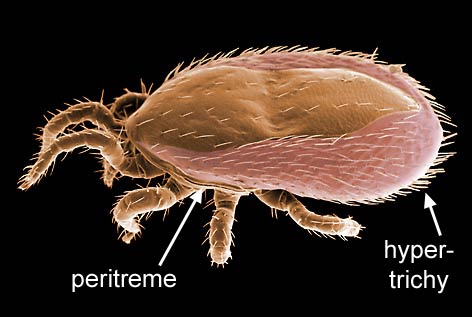
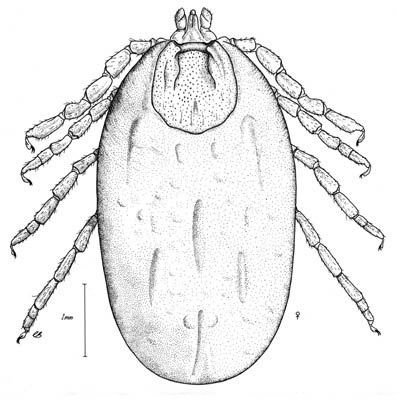
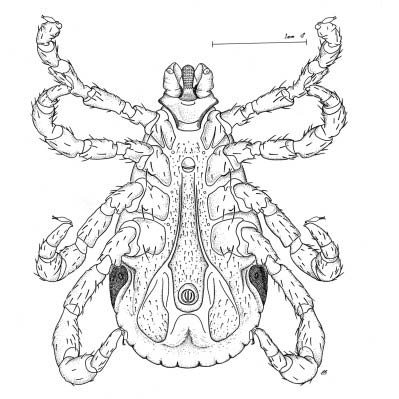
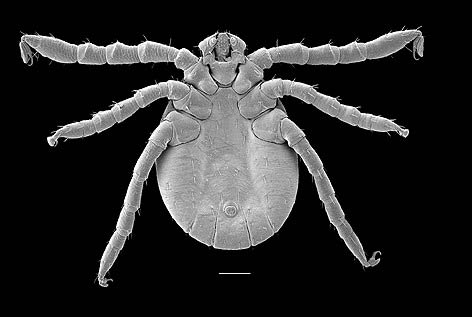
Large parasitiform mites (to 6 mm unfed, 3 cm when engorgedengorged:
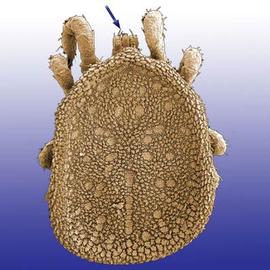
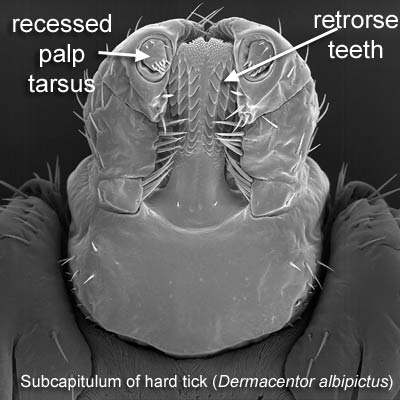
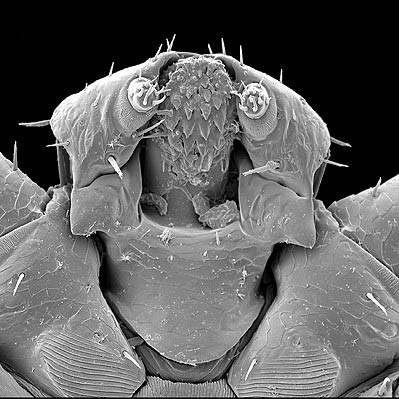
swollen from feeding as in a tick or chigger.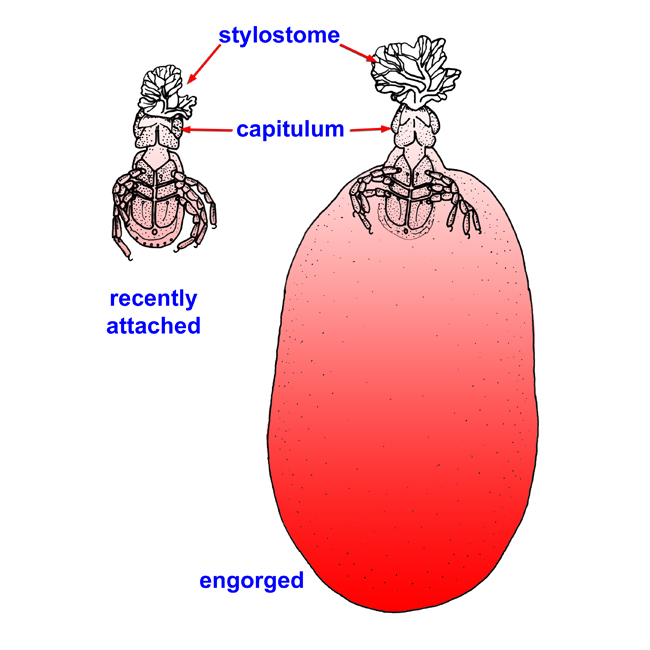 ) with slicing mouthparts and a denticulate hypostome produced anteriorly. Integument leathery to papillate, dorsumdorsum:
the upper or back side; opposed to venter.
with or without a prodorsal scutumscutum:
(pl. scuta) the podonotal shield in ticks (Ixodida).
(covering most of dorsumdorsum:
the upper or back side; opposed to venter.
in males) and with or without one pair of ocelliocellus:
(pl. ocelli) a simple eye. Mites with eyes usually have one or two pairs of lateral ocelli, but some Opilioacarida have three pairs. Additionally, some acariform mites have one or two median ocelli on the underside of the naso.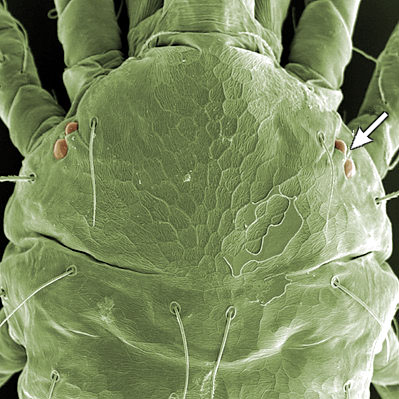 . Stigmatal openings on sieve plates behind coxae IV or lateral to coxae III-IV. Palps 3–4 segmented without apoteleapotele:
(Greek apotelein = to complete)—the terminus of an appendage; the most distal leg segment, often consisting of an empodium and a pair of claws. The apotele of a leg is usually treated as equivalent to the pretarsus or some part thereof (e.g., the claws and empodium), but the palptarsal apotele in Mesostigmata is a tined structure originating at the base of the palptarsus and thought to be a remnant of the claws. The chelicerae are also an appendage and terminate in the movable digit.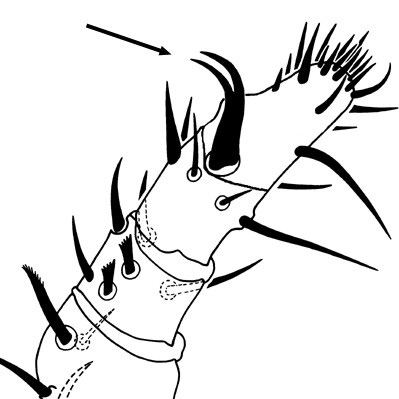 . Tarsustarsus:
(pl. tarsi) the subdistal leg segment between the tibia and the pretarsus (apotele).
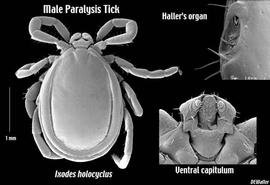
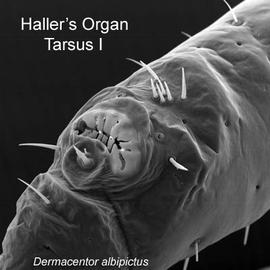
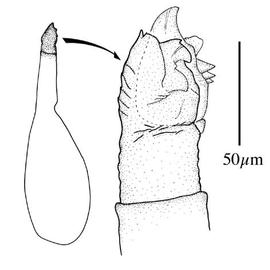
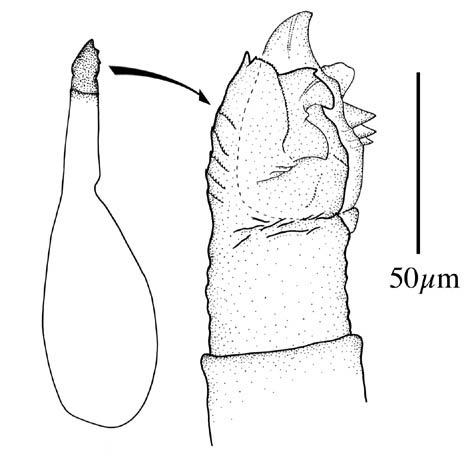
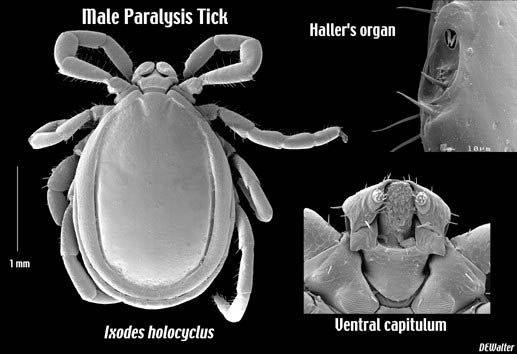
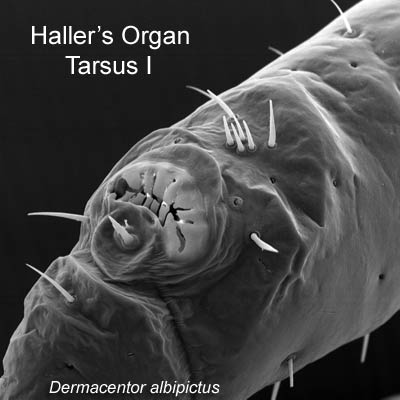
I with Haller's organ well developed.
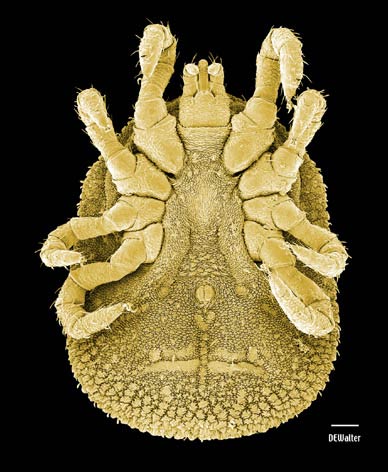
Macronyssidae (Mesostigmata) are superficially ticktick:
any member of the parasitiform suborder Ixodida.
-like mites that feed on the blood of reptiles (Ophionyssus), birds and mammals (Ornithonyssus), but unlike ticks, have a well developed tritosternumtritosternum:
the sternum of the 3rd body segment (between legs I); produced as a biflagellate structure in Mesostigmata, although sometimes the flagellae (laciniae) are partially or completely fused. 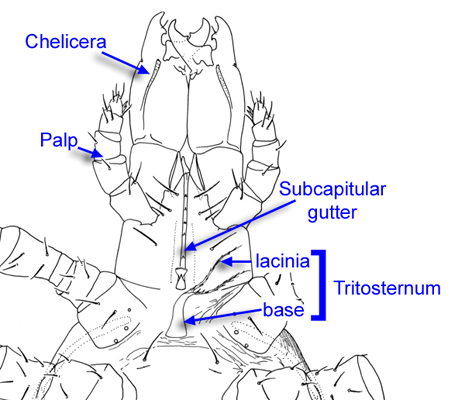 , palp apotelepalptarsal apotele:
(= palp apotele, palptarsal claw) the most distal segment of the palp; absent in Acariformes, claw-like in Opilioacarida, and a subdistal, tined structure in the Mesostigmata.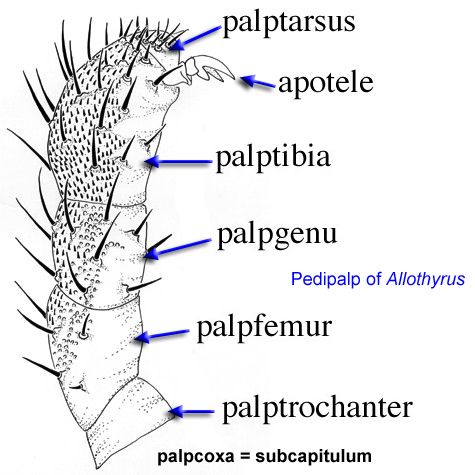 , etc.
Obligate blood-sucking parasites of vertebrates. Living in nests, in soil, on vegetation, and on animals. Nuttalliellidae is poorly known and restricted to southern Africa; the other two families occur worldwide. The paralysis ticktick:
any member of the parasitiform suborder Ixodida.
(Ixodes holocyclus) is a common ixodid ticktick:
any member of the parasitiform suborder Ixodida.
in eastern Australia.
Author: David E. Walter
Content last updated Sept. 2006, unless indicated otherwise
Lucid key player updated Sept. 2025
idtools.org