David Evans Walter, retired
Most of the images used in these keys have been commissioned or created by David Evans Walter. A few of the line drawings of insects have been modified from the 'Agriculture Handbook No. 655, Insect and Mite Pests in Food An Illustrated Key Volume 1 and Volume 2'. The line drawing of a cladoceran is modified from Livingstone at BIODIDAC (http://biodidac.bio.uottawa.ca/). Matthew Boeckner (tardigrades) and Dr Heather C. Proctor (mites, spiders, insects) (http://www.biology.ualberta.ca/faculty/heather_proctor) contributed some of the photographs.
Julia Scher, lead migration and updated classification for this tool. Retired, formally with Identification Technology Program, USDA APHIS PPQ S&T PITL, Sacramento, CA
Robin Boudwin, Center for Integrated Pest Management, North Carolina State University, Raleigh, NC
Ashley Gottlieb, Department of Biology, Colorado State University, Fort Collins, CO
Melissa Islam, Department of Biology, Colorado State University, Fort Collins, CO
Paul Langlois, Department of Biology, Colorado State University, Fort Collins, CO
Hanna Royals, Department of Biology, Colorado State University, Fort Collins, CO
Lindsey Seastone, Department of Biology, Colorado State University, Fort Collins, CO
Aimee Ward, Department of Biology, Colorado State University, Fort Collins, CO
This website was created using Fact Sheet Manager 3, a content-management system, developed and maintained by Center for Integrated Pest Management, North Carolina State University.
For questions about website access or functionality, please contact ITP (itp@usda.gov).
Invasive Mite Identification: Tools for Quarantine and Plant Protection was developed and published by the Center for Plant Health Science and Technology (CPHST) through a cooperative agreement with Colorado State University. CPHST is the scientific support organization for the Plant Protection and Quarantine (PPQ) division of the USDA Animal and Plant Health Inspection Service (APHIS) and is under the direction of Gordon Gordh. CPHST National Science Program Leader Daniel Fieselmann and Identification Technology Program Coordinator Terrence Walters oversaw development of this resource.
Heather C. Proctor, PhD (Biological Sciences, University of Alberta) created original drafts of some of the fact sheet pages in the Major Mite Taxa tool.
Amanda J. Redford (USDA APHIS PPQ) converted the nine Lucid keys to version 3.6 from version 3.3 in December 2017.
Julia Scher (USDA APHIS PPQ S&T) updated the nine Lucid keys and put together a comprehensive website with all nine sections.
George Venable (PXLPWR Multimedia Studio) was a consultant on website formatting and design.
The list of ranked Tetranychoidea mites appears courtesy of PPQ-PERAL (Plant Epidemiology and Risk Analysis Laboratory), May 2006.
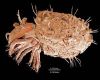 Pthiracaroid with adherent soil, SEM; photo by David E. Walter
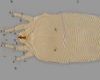 Acaricalus rhodaspris (deutogynedeutogyne:
overwintering or aestivating form of eriophyoid mites; morphologically distinct from the normal or protogyne form.
female, dorsaldorsal:
relating to the upper or back side; opposed to ventral.
view), light microscope; photo by Pavel B. Klimov and Luiz Pedroso
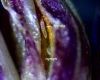 Mite Aceria aff. tosichella on switchgrass, in-situ; photo by Pavel B. Klimov and Luiz Pedroso
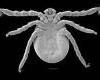 Ixodid ticktick:
any member of the parasitiform suborder Ixodida.
larva, SEM; photo by David Evans Walter
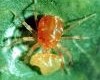 Anystid feeding, in-situ; photo by David Evans Walter and Geoff White
Author: David E. Walter
Content last updated Sept. 2006, unless indicated otherwise
Lucid key player updated Sept. 2025
idtools.org