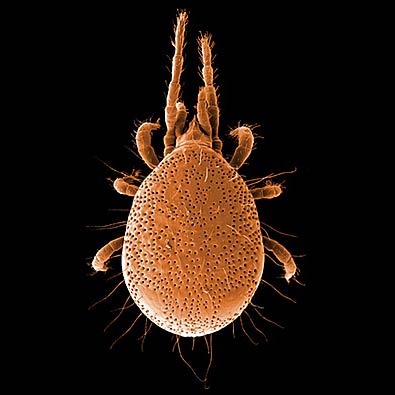
test
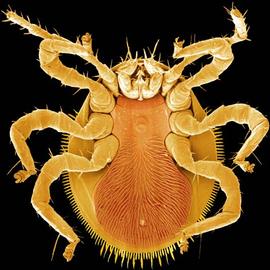
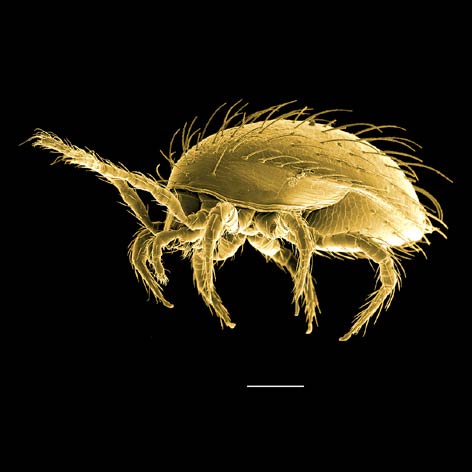
Trigynaspida Camin & Gorirossi, 1955
Superorder Parasitiformes » Order Mesostigmata » Suborder Trigynaspida
infraorders: Antennophorina, Cercomegistina
trigynaspids, cercomegistines, antennophorines
low to medium
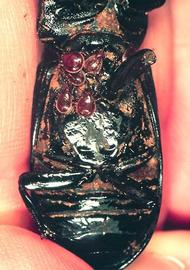
Most are rare and have unknown ecologies; however, many trigynaspids are associated with insects, including species parasitic on ants, and a few are associated with snakes and lizards. None are known to be pests of crops or parasites of livestock or domestic animals.
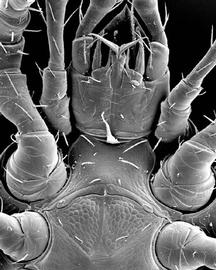
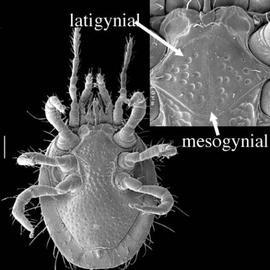
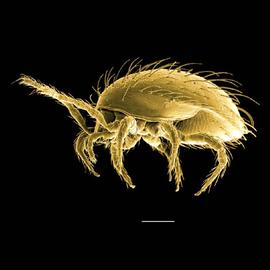
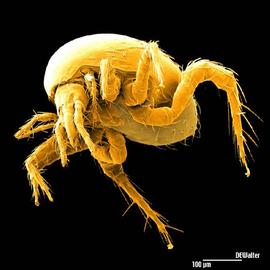
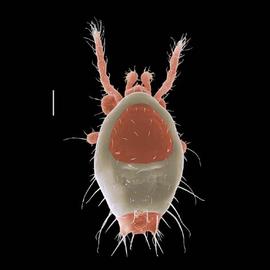
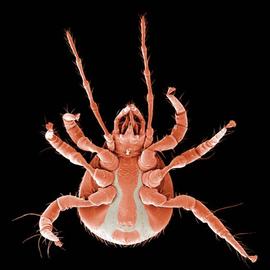
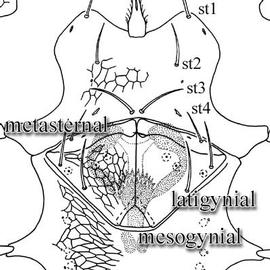
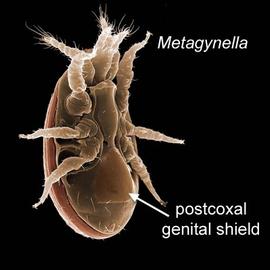
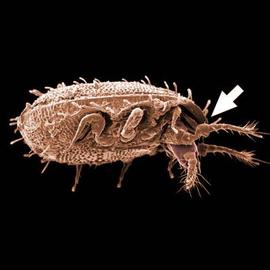
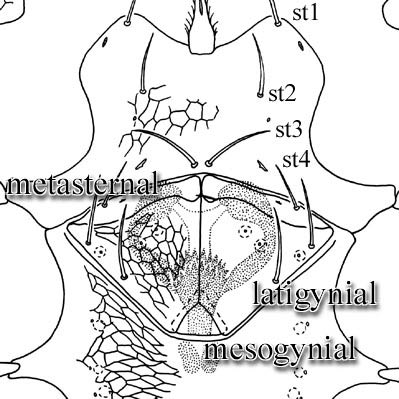
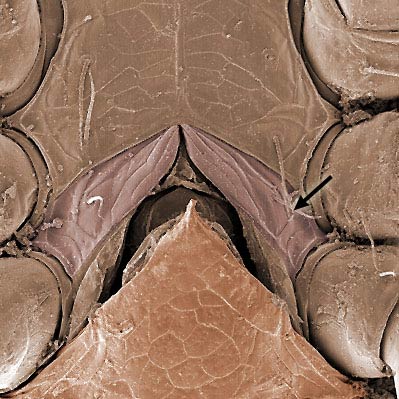
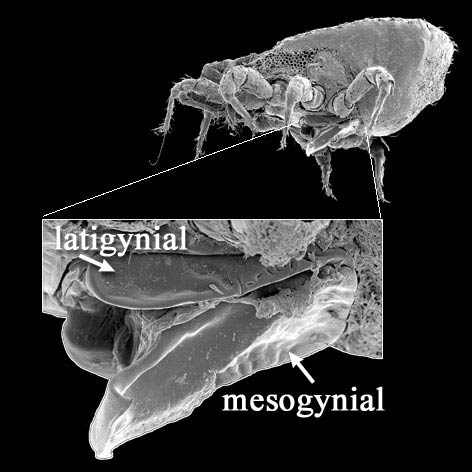
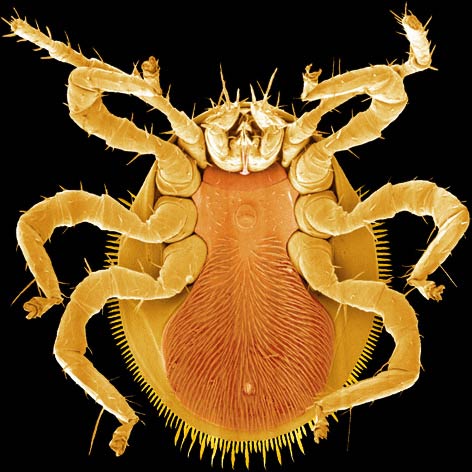
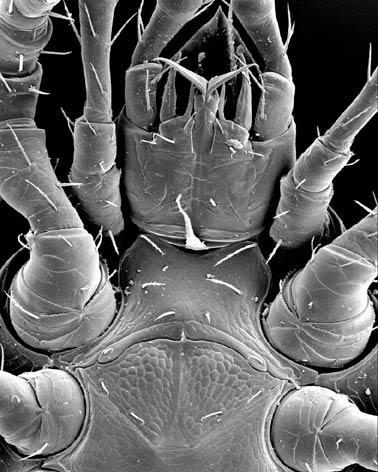
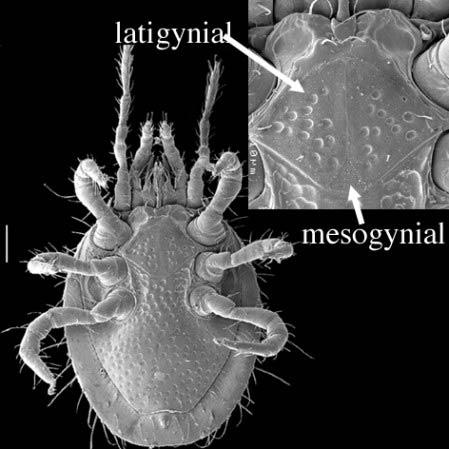
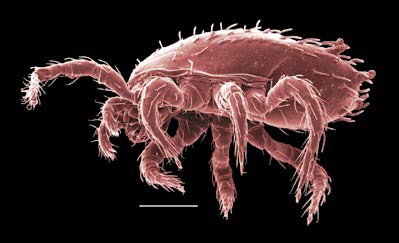
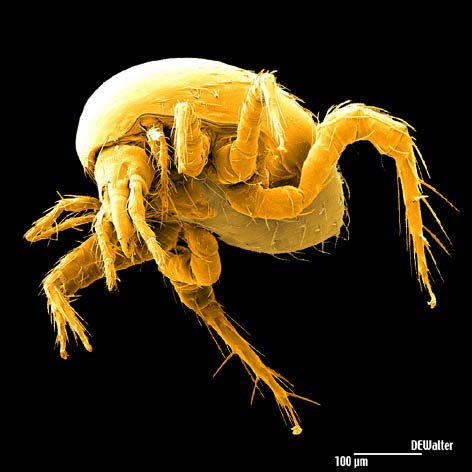
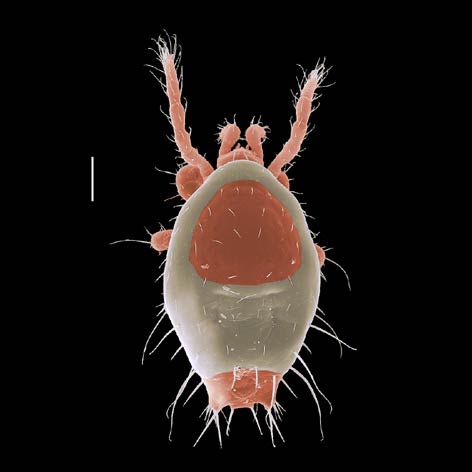
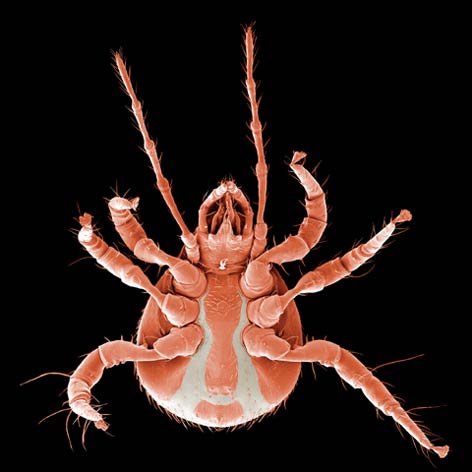
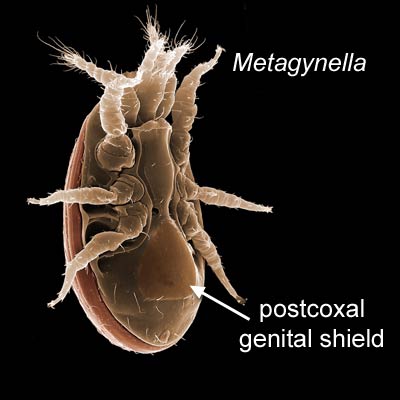
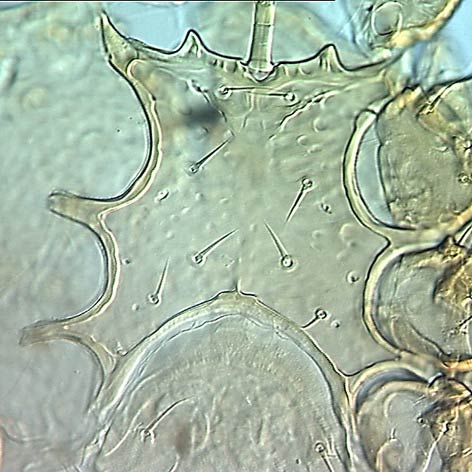
Mesostigmata with the adult female genital region having 2–4 shields or their remnants: mesogynial shieldmesogynal shield :
(also mesogynial shield) an unpaired median sclerites in some female parasitiform mites that helps protect the genital opening; usually nude and sometimes fused to other genital or ventral elements. The single female genital shield in the Gamasina may represent a fusion of the latigynal and mesogynal shields.
often reduced, without setaeseta:
(pl. setae, from L. = bristle) cuticular process composed of a hollow shaft (sometimes filled with a refractive material) produced from a membranous socket (the alveolus); the hair-like, spine-like, branched or variously expanded structures on the surfaces of the legs and body. Most setae function as mechanoreceptors, but others (e.g., solenidia) are chemoreceptors or have unknown or ambiguous functions.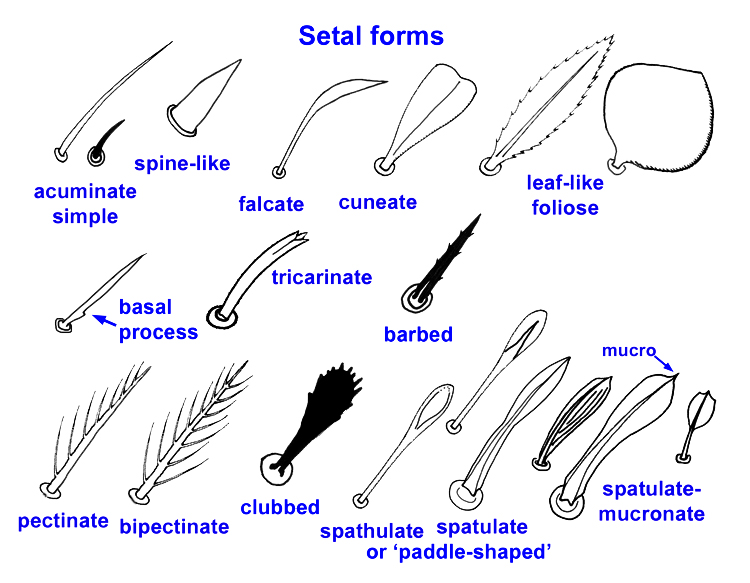 , latigynial shieldslatigynal shields :
(also latigynial shields) a pair of sclerites laterad the mesogynal shield in some female parasitiform mites that help protect the genital opening; usually bearing one or more pairs of setae and sometimes fused to other genital or ventral elements. The single female genital shield in the Gamasina may represent a fusion of the latigynal and mesogynal shields.
often well developed (1- several pairs of setaeseta:
(pl. setae, from L. = bristle) cuticular process composed of a hollow shaft (sometimes filled with a refractive material) produced from a membranous socket (the alveolus); the hair-like, spine-like, branched or variously expanded structures on the surfaces of the legs and body. Most setae function as mechanoreceptors, but others (e.g., solenidia) are chemoreceptors or have unknown or ambiguous functions.); pregenitalpregenital:
in front of (anterior to) the genital opening.
shield (sternogynium) free, fused to sternal elements, or absent (with 0–1 pair of setaeseta:
(pl. setae, from L. = bristle) cuticular process composed of a hollow shaft (sometimes filled with a refractive material) produced from a membranous socket (the alveolus); the hair-like, spine-like, branched or variously expanded structures on the surfaces of the legs and body. Most setae function as mechanoreceptors, but others (e.g., solenidia) are chemoreceptors or have unknown or ambiguous functions.). Tarsustarsus:
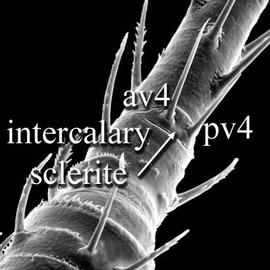
(pl. tarsi) the subdistal leg segment between the tibia and the pretarsus (apotele).
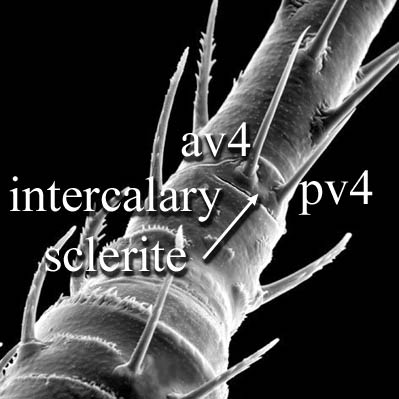
IV with intercalary scleritesclerite:
A component section of an exoskeleton; a plate forming the skeleton of an arthropod.
bearing setaeseta:
(pl. setae, from L. = bristle) cuticular process composed of a hollow shaft (sometimes filled with a refractive material) produced from a membranous socket (the alveolus); the hair-like, spine-like, branched or variously expanded structures on the surfaces of the legs and body. Most setae function as mechanoreceptors, but others (e.g., solenidia) are chemoreceptors or have unknown or ambiguous functions. av4/pv4.
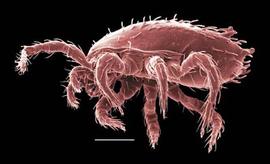
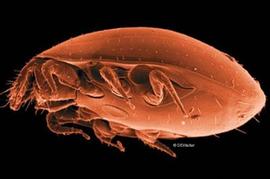
Bodybody:
the idiosoma of mites.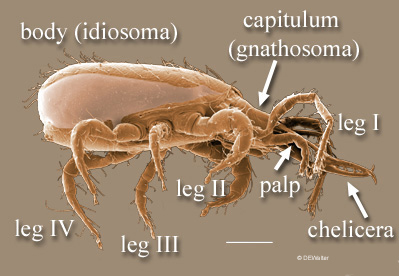 often with moderate hypertrichy and separate podonotalpodonotal:
relating to the dorsal podosoma, the region of the idiosoma over the legs.
and opisthonotalopisthonotal:
dorsal opisthosoma.
shields or holodorsal shieldholodorsal shield:
a shield that covers all of the dorsum. In Mesostigmata, the holodorsal shield is often interpreted as resulting from the fusion of podonotal and opisthonotal shields and a suture between these regions is often visible (see recurved and procurved).
, rarely with opisthonotalopisthonotal:
dorsal opisthosoma.
region with separate mesonotal and pygidial elements. Venterventer:
the lower or under side; opposed to dorsum.
usually with large ventrianal or genitoventral shield, rarely with small anal shieldanal shield:
in Mesostigmata, a ventral shield bearing the anal opening and circumanal setae (po, pa), but without any ventral setae or pores (lyrifissures) [see ventrianal shield]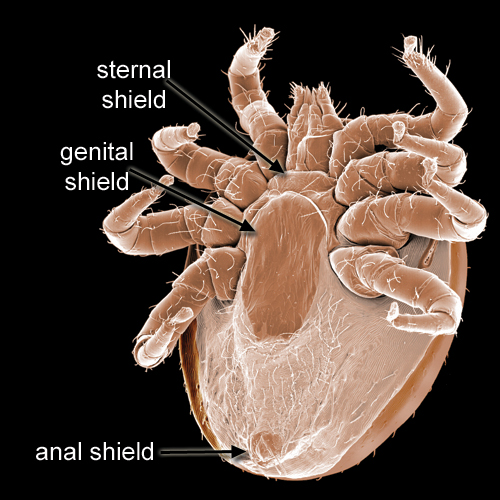 ; sternal shieldsternal shield:
a shield in the anterior intercoxal region of parasitiform mites that bears one or more pairs of sternal setae.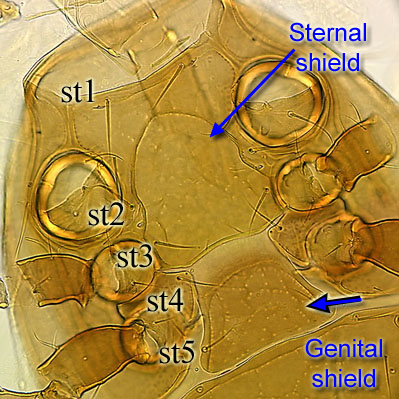 well developed to fragmentedfragmented:
broken up, composed of several discrete parts rather than of a single unit.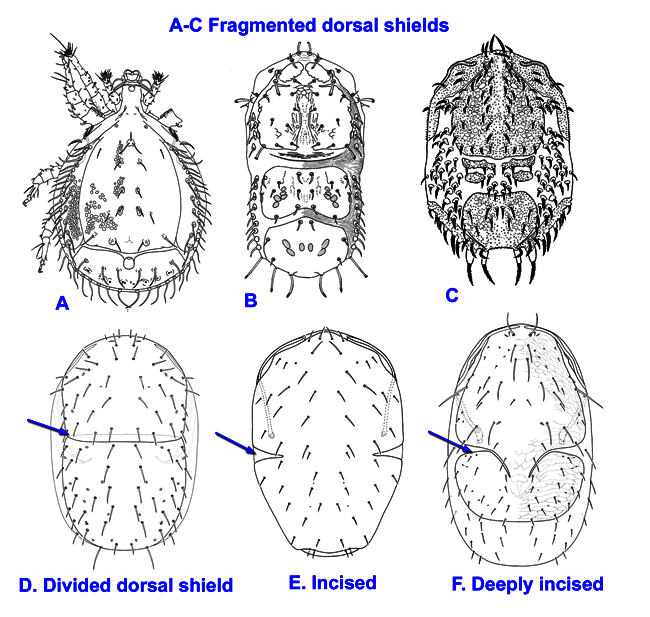 . Tarsustarsus:
(pl. tarsi) the subdistal leg segment between the tibia and the pretarsus (apotele).
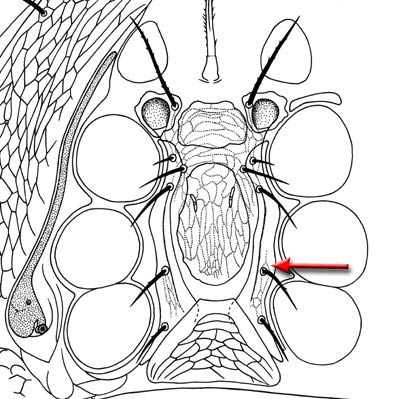
I with or without claws. Unpaired, postanal setapostanal seta:
the unpaired median seta inserted posterior to the anal opening in the Mesostigmata; usually designated po or POS.
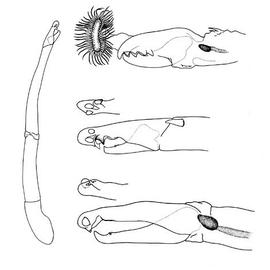
usually present in larva, but absent in adult. Chelicerae chelate-dentatechelate-dentate:
pincer-like chelicerae with teeth.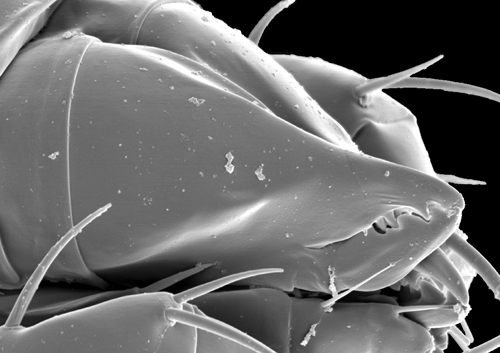 to edentateedentate:
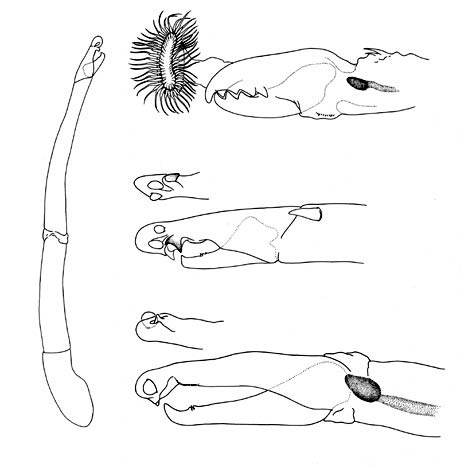
with out teeth; usually referring to chelicerae.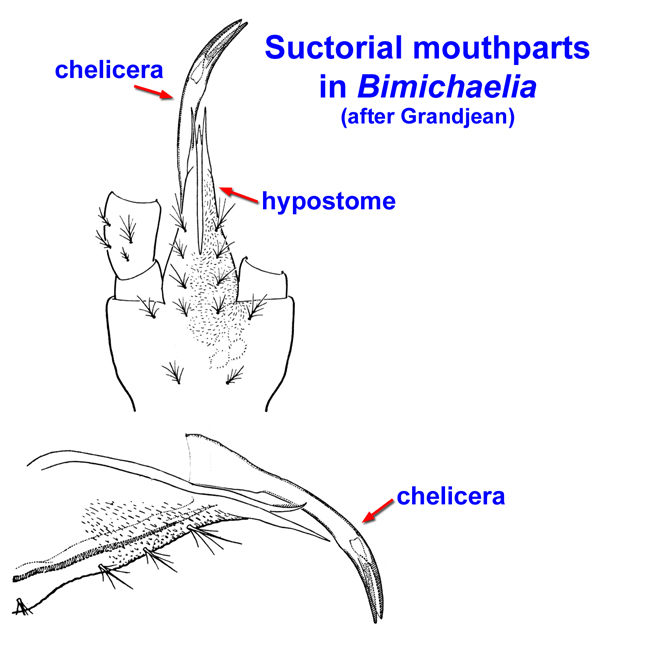 ; movable digit with 1–3 brush-like, mop-like or dendriticdendritic:
branching like a tree or bush, aborescent. excrescences; palppalp:
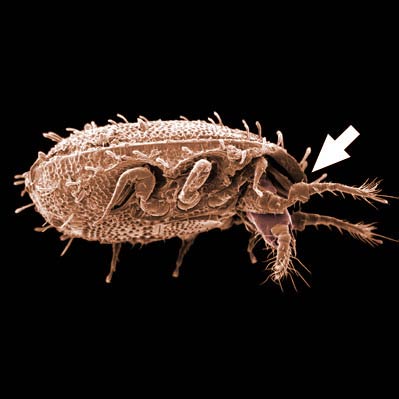
(= pedipalp) the second pair of limbs in arachnids, used in feeding and originating on either side of the chelicerae. In mites, the palps may be vestigial, with only a few segments, or have a maximum of 5 freely articulating segments (rarely the femur is subdivided) and a distal or subdistal apotele.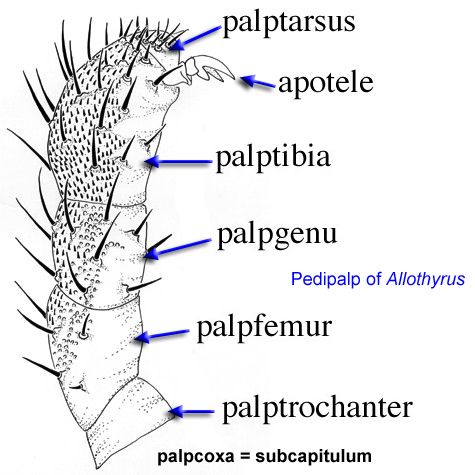 genu with 5–7 setaeseta:
(pl. setae, from L. = bristle) cuticular process composed of a hollow shaft (sometimes filled with a refractive material) produced from a membranous socket (the alveolus); the hair-like, spine-like, branched or variously expanded structures on the surfaces of the legs and body. Most setae function as mechanoreceptors, but others (e.g., solenidia) are chemoreceptors or have unknown or ambiguous functions.. Male genital opening intercoxal or at basebase:
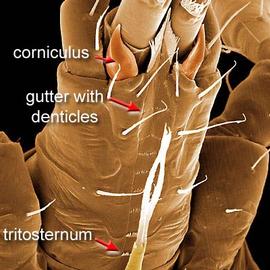
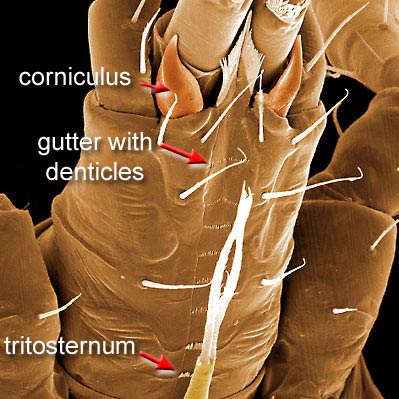
the usually columnar basal part of the tritosternum; sometimes expanded and rectangular or otherwise modified; the most basal part of any structure.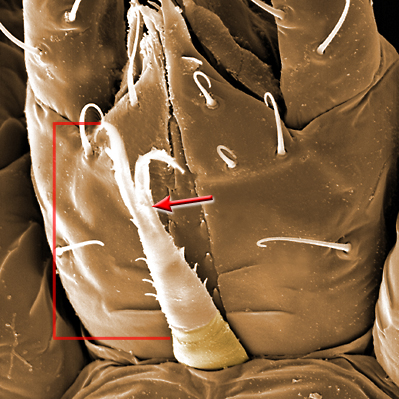 of tritosternumtritosternum:
the sternum of the 3rd body segment (between legs I); produced as a biflagellate structure in Mesostigmata, although sometimes the flagellae (laciniae) are partially or completely fused. 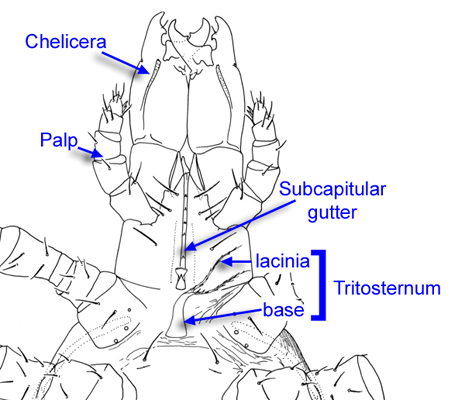 ; spermatodactylspermatodactyl:
(also spermadactyl) the 'sperm finger' on the chelicerae of male dermanyssine Mesostigmata used to transfer sperm to the secondary sperm system in the female; spermatodactyls take various forms, from simple finger-like processes to very long, contorted structures. 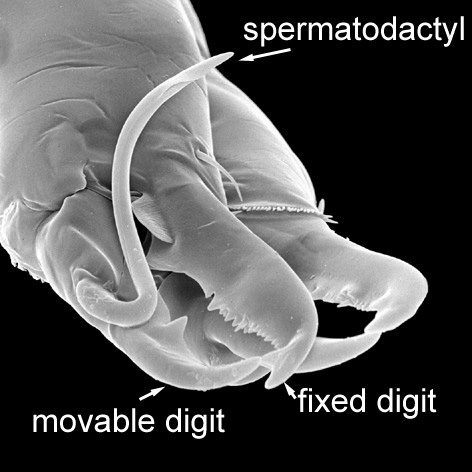 absent.
Parasitina (Mesostigmata) have enlarged metasternal shields that superficially resemble the trigynaspid condition, and some primitive Uropodina (e.g., Trachytes) do retain separate latigynial shields. However, neither of these taxa retain av4/pv4 on tarsustarsus:
(pl. tarsi) the subdistal leg segment between the tibia and the pretarsus (apotele).
IV, and uropodines usually have hidden capitula and elongate chelicerae.
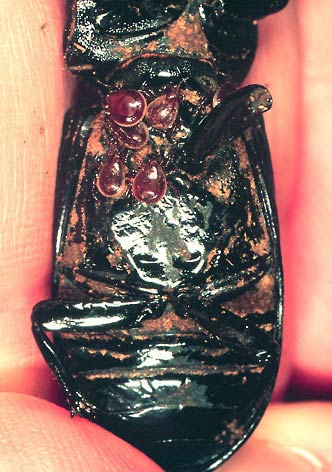
Cercomegistina are mostly free-living predators found in tropical to subtropical forest soil, decaying logs, or in beetle galleries under bark. Antennophorina are mostly insect associates as adults (usually paraphages of beetles (e.g., Passalidae, Carabidae) and millipedes or centipedes) and free-living predators in decaying logs, insect galleries or nests as immatures. However, species in at least 3 families are associated with lizards or snakes and appear to be parasites.
Author: David E. Walter
Content last updated Sept. 2006, unless indicated otherwise
Lucid key player updated Sept. 2025
idtools.org