test
Monogynaspida Camin & Gorirossi, 1955
Superorder Parasitiformes » Order Mesostigmata » Suborder Monogynaspida
infraorders: Gamasina, Uropodina
gamasines, uropodines (turtle mites, tortoise mites), parasitines, ascids, phytoseiids, predatory mites
high
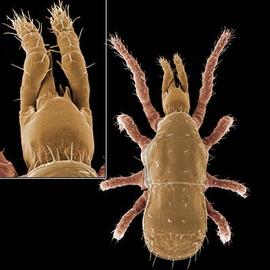
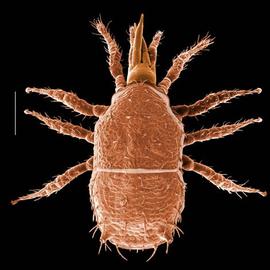
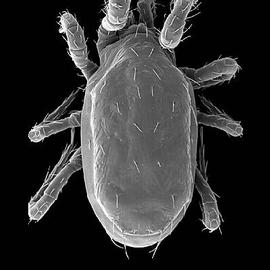
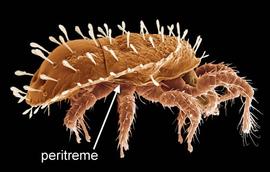
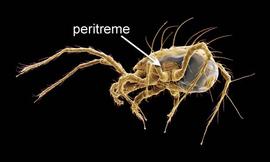
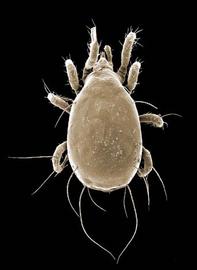
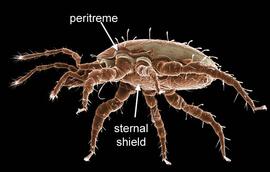
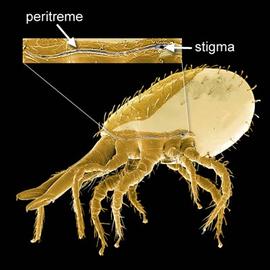
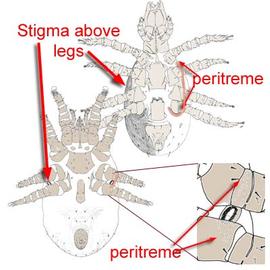
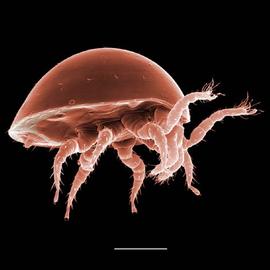
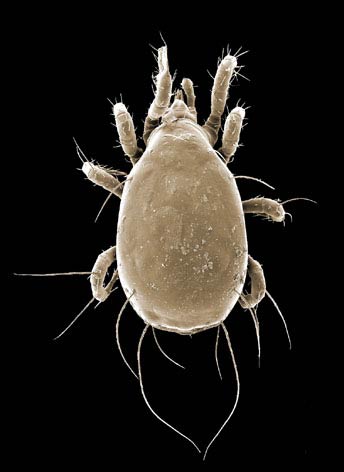
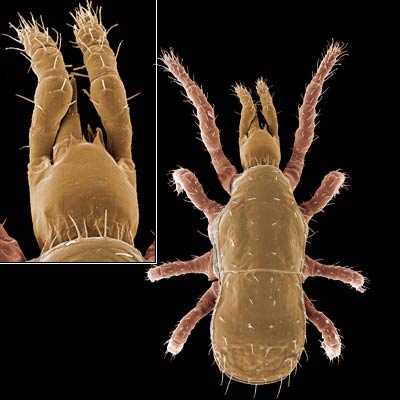
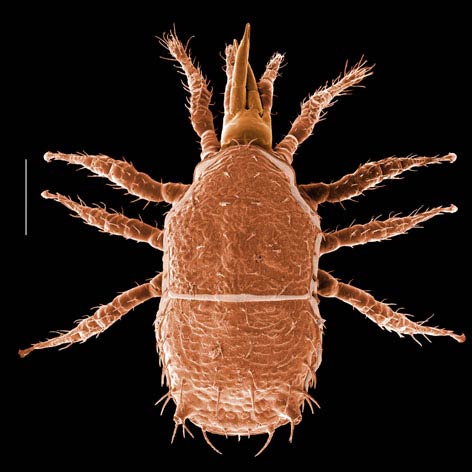
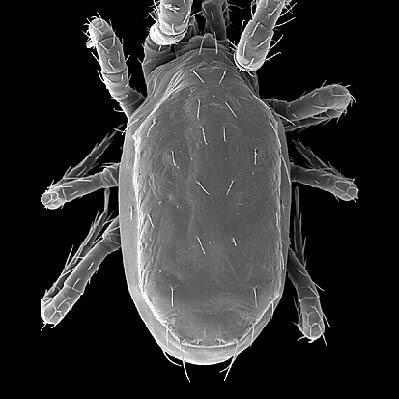
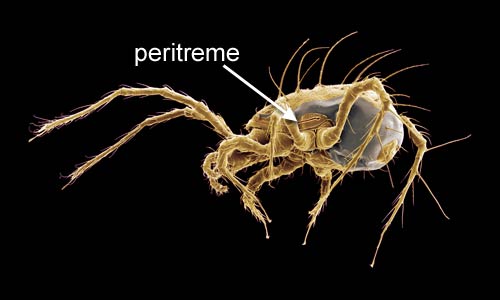
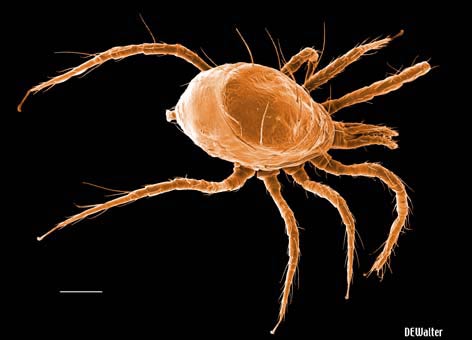
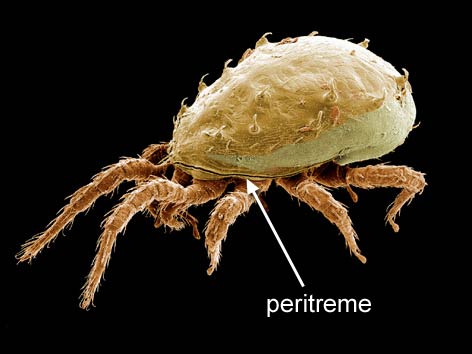
Most of the Mesostigmata encountered in quarantine intercepts are likely to be members of the Monogynapsida, including many species parasitic on birds (e.g., poultry mites), mammals (e.g., rat mites), reptiles (e.g., the snake mite), and bees (e.g, Varroa, Tropilaelaps); predatory mites used in biocontrol; flower mites; stored product predators; and predatory soil mites. Some of the vertebrate parasites (Dermanyssoidea) vector disease.
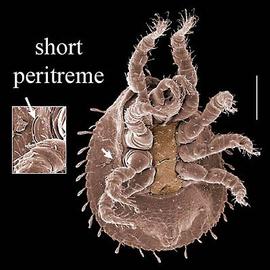
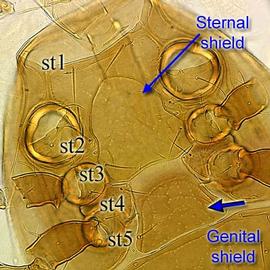
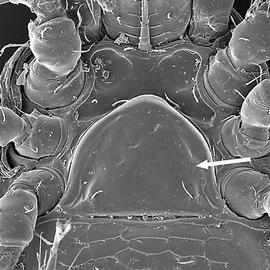
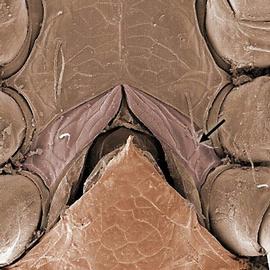
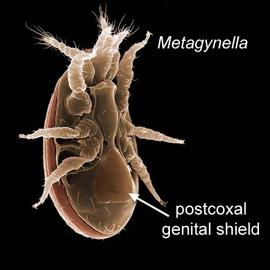
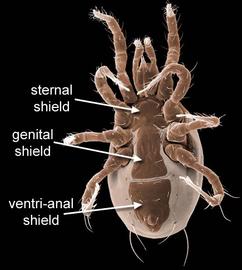
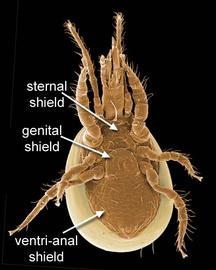
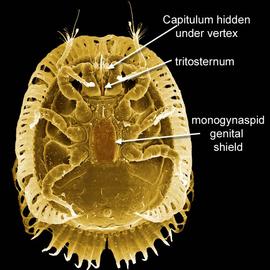
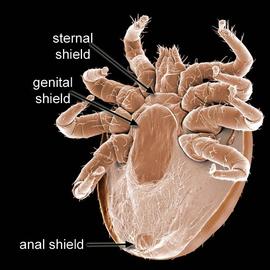
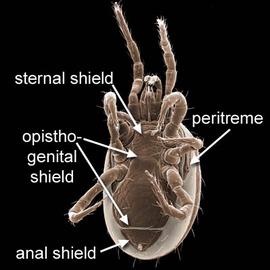
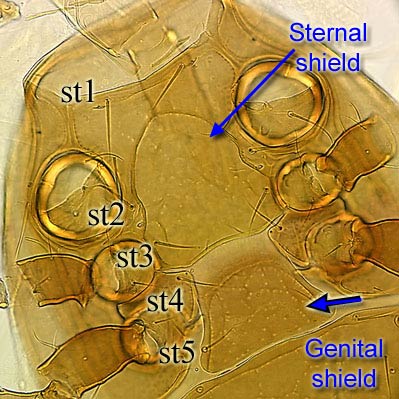
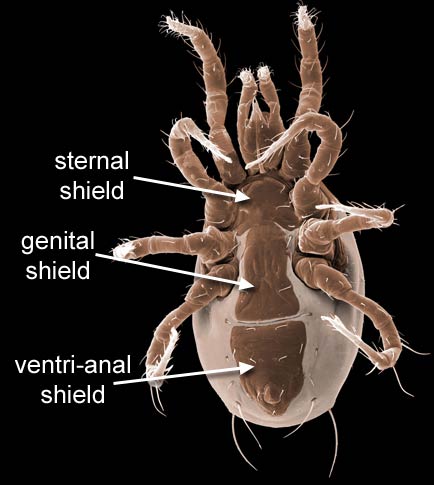
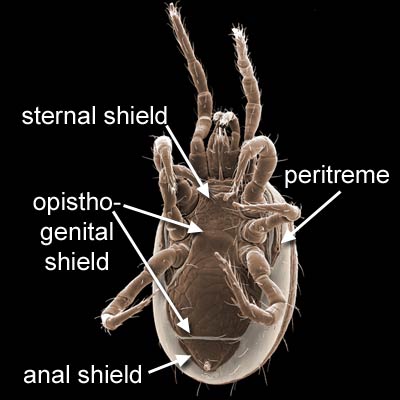
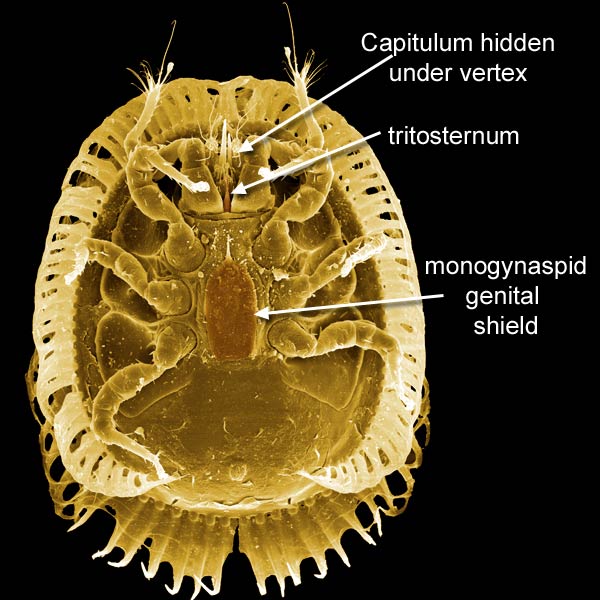
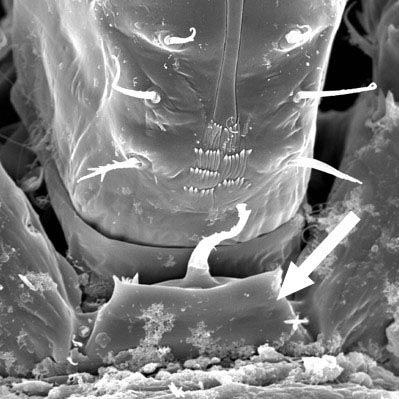
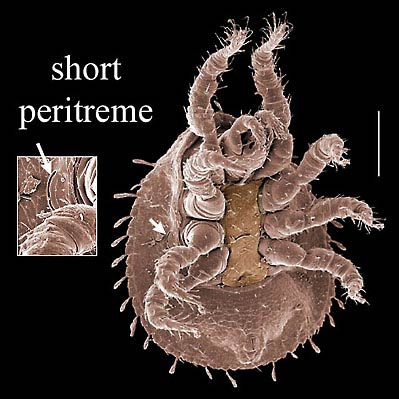
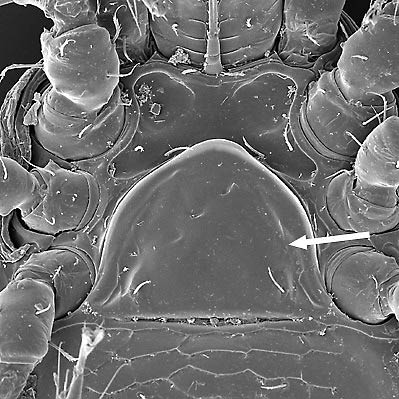
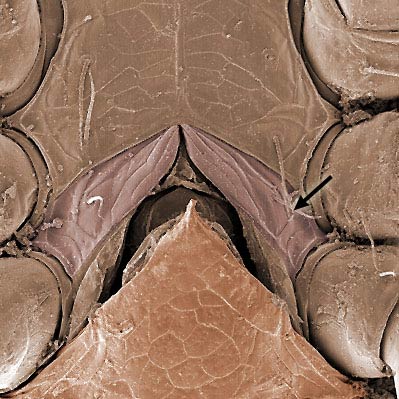
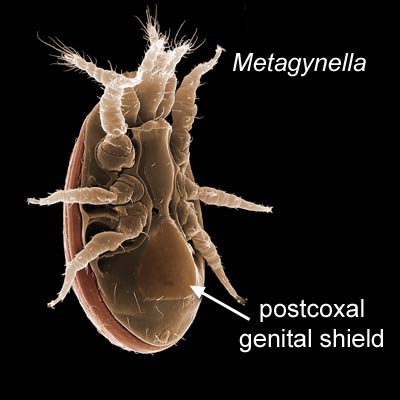
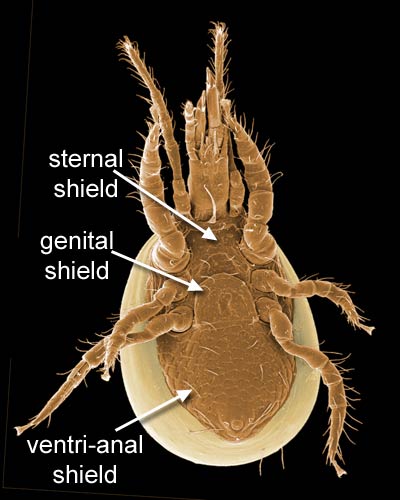
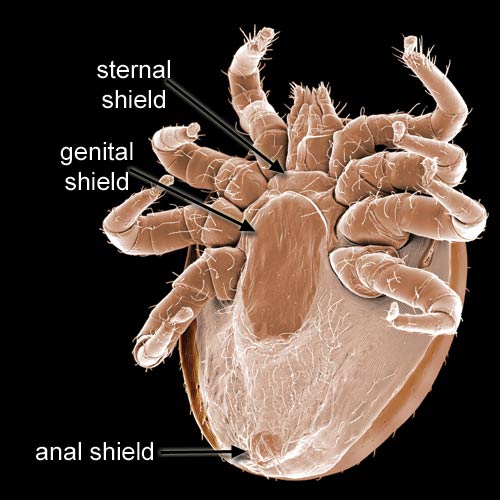
Mesostigmata with the adult female having a single genital shield covering the ovipore and bearing 0–1 (rarely 2) pairs of genital setaeseta:
(pl. setae, from L. = bristle) cuticular process composed of a hollow shaft (sometimes filled with a refractive material) produced from a membranous socket (the alveolus); the hair-like, spine-like, branched or variously expanded structures on the surfaces of the legs and body. Most setae function as mechanoreceptors, but others (e.g., solenidia) are chemoreceptors or have unknown or ambiguous functions.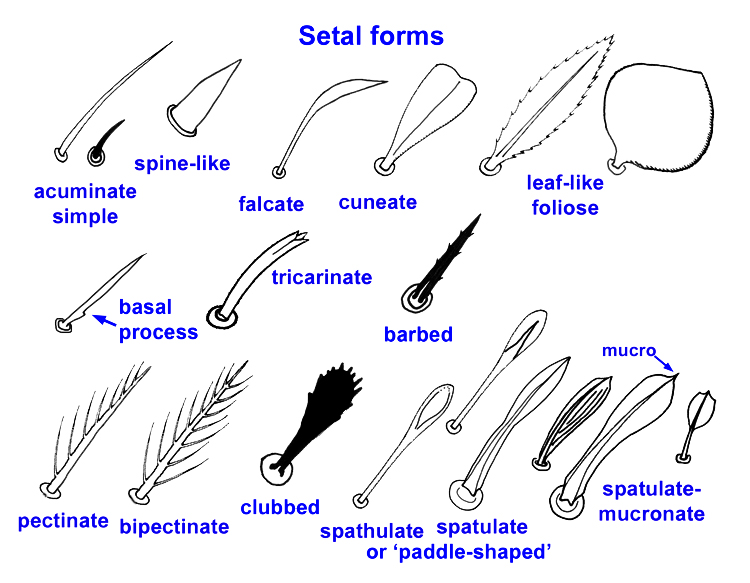 ; genital shieldgenital shield:
a shield or shields covering the genital opening; in female mongynaspine Mesostigmata this shield is usually called the epigynal (epigynial) shield.
truncate or rounded posteriorly, sometimes extending over venterventer:
the lower or under side; opposed to dorsum.
and incorporating ventral setaeseta:
(pl. setae, from L. = bristle) cuticular process composed of a hollow shaft (sometimes filled with a refractive material) produced from a membranous socket (the alveolus); the hair-like, spine-like, branched or variously expanded structures on the surfaces of the legs and body. Most setae function as mechanoreceptors, but others (e.g., solenidia) are chemoreceptors or have unknown or ambiguous functions.; other ventralventral:
relating to the lower or under side; opposed to dorsal.
shields highly variable. Tarsustarsus:
(pl. tarsi) the subdistal leg segment between the tibia and the pretarsus (apotele).
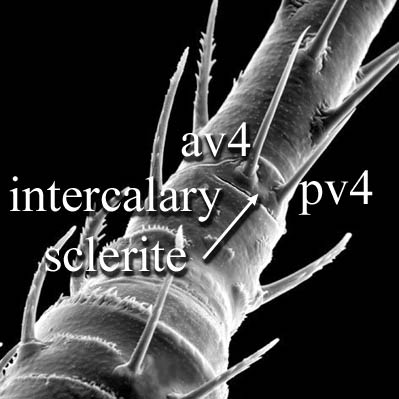
IV without intercalary scleritesclerite:
A component section of an exoskeleton; a plate forming the skeleton of an arthropod.
bearing setaeseta:
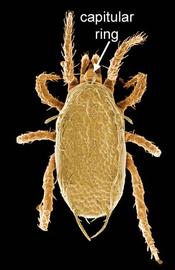
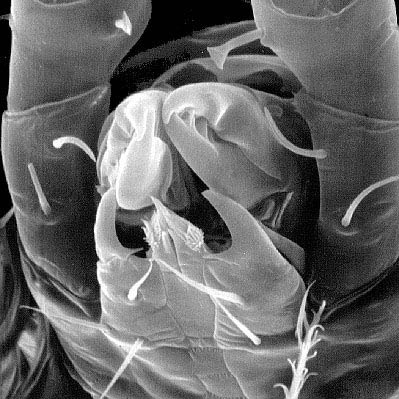
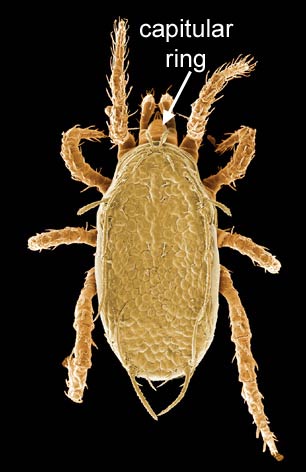
(pl. setae, from L. = bristle) cuticular process composed of a hollow shaft (sometimes filled with a refractive material) produced from a membranous socket (the alveolus); the hair-like, spine-like, branched or variously expanded structures on the surfaces of the legs and body. Most setae function as mechanoreceptors, but others (e.g., solenidia) are chemoreceptors or have unknown or ambiguous functions. av4/pv4. Capitulumgnathosoma:
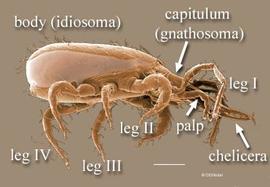
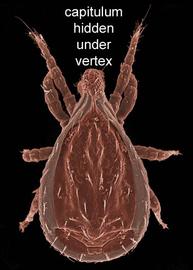
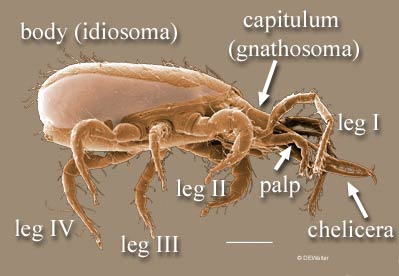
(= capitulum) the anteriormost part of a mite or ricinuleid, composed of the cheliceral and pedipalpal segments and separated from the body (idiosoma) by a ring of soft cuticle.
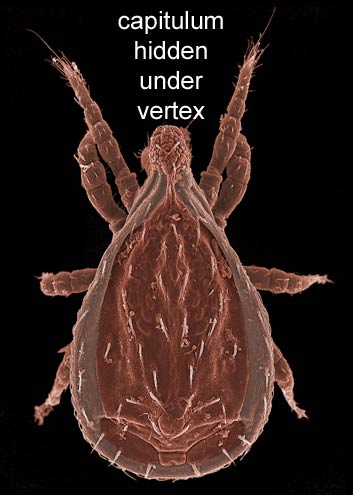
exposed or hidden under vertexvertex:
an anterior extension of the idiosoma that covers the capitulum in many uropodid mites.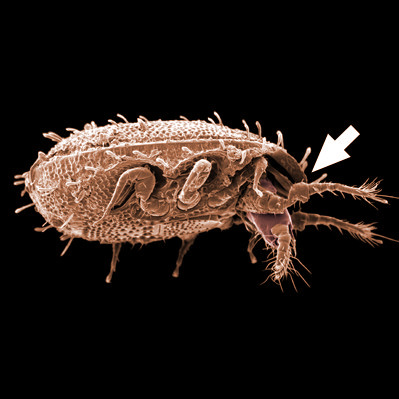 .
.
Body chaetomechaetome:
a complement of setae; the setal array present on a stage or body part.
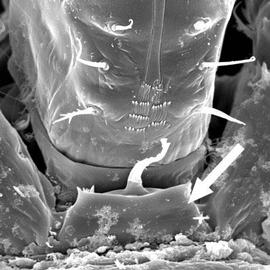
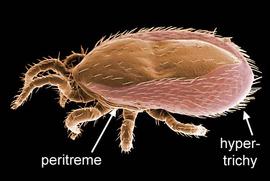
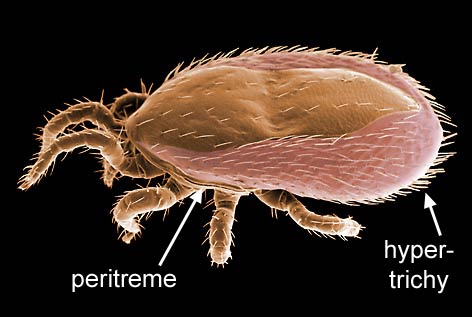
variable, sometimes hypertrichous but usually with 65 or fewer pairs of setaeseta:
(pl. setae, from L. = bristle) cuticular process composed of a hollow shaft (sometimes filled with a refractive material) produced from a membranous socket (the alveolus); the hair-like, spine-like, branched or variously expanded structures on the surfaces of the legs and body. Most setae function as mechanoreceptors, but others (e.g., solenidia) are chemoreceptors or have unknown or ambiguous functions.; dorsaldorsal:
relating to the upper or back side; opposed to ventral.
shielding entireentire:
a shield or sclerite with a continuous margin without incisions.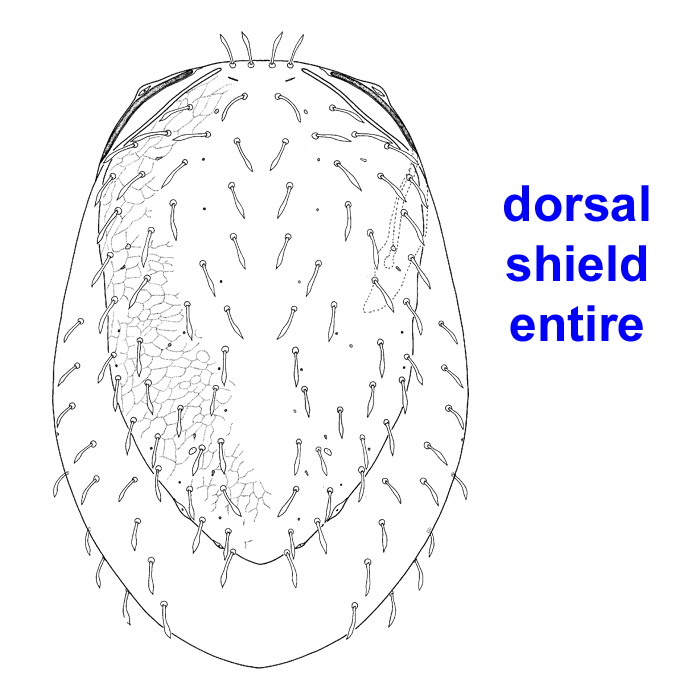 (holodorsal) or fragmentedfragmented:
broken up, composed of several discrete parts rather than of a single unit.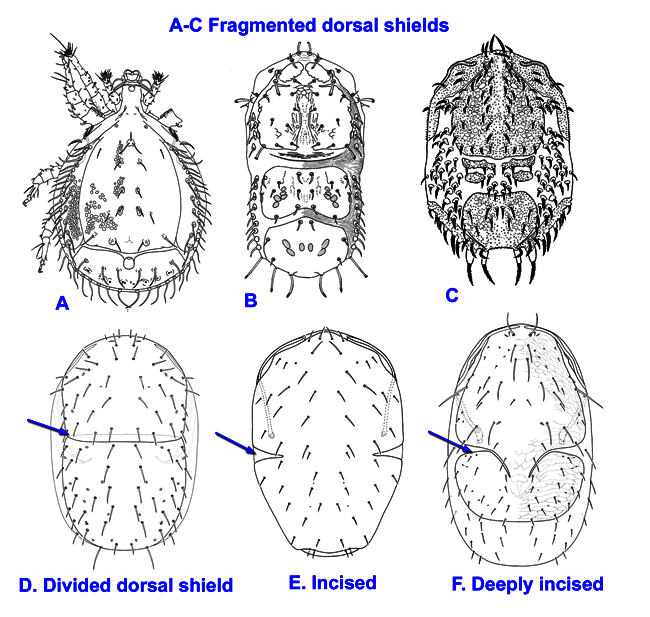 with variously formed podonotalpodonotal:
relating to the dorsal podosoma, the region of the idiosoma over the legs.
, mesonotal and pygidial shields or divided into two subequal shields (podonotalpodonotal:
relating to the dorsal podosoma, the region of the idiosoma over the legs.
, opisthonotalopisthonotal:
dorsal opisthosoma.
). Unpaired, postanal setapostanal seta:
the unpaired median seta inserted posterior to the anal opening in the Mesostigmata; usually designated po or POS.
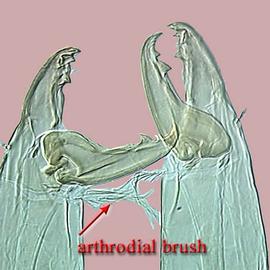
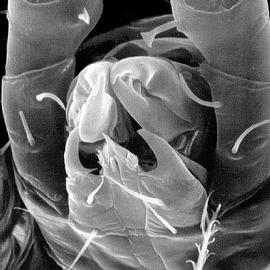
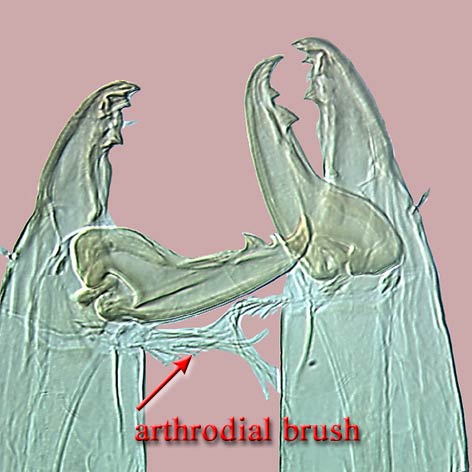
usually present in all stages. Chelicerae various; movable digit without excrescences except in Microgyniina, but arthrodial coronaarthrodial corona:
(arthrodial coronet) a crown-like array of fine processes from the arthrodial membrane at the juncture of the fixed and movable digits in Mesostigmata.
or brush may be present; palppalp:
(= pedipalp) the second pair of limbs in arachnids, used in feeding and originating on either side of the chelicerae. In mites, the palps may be vestigial, with only a few segments, or have a maximum of 5 freely articulating segments (rarely the femur is subdivided) and a distal or subdistal apotele.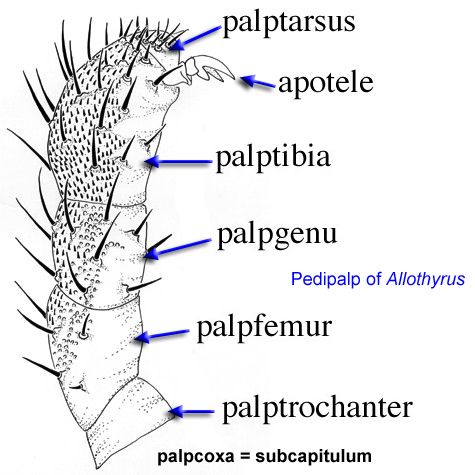 genu with 6 or fewer setaeseta:
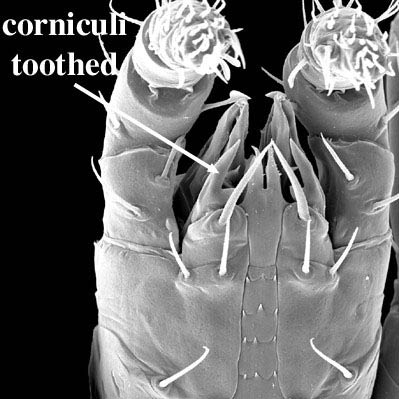
(pl. setae, from L. = bristle) cuticular process composed of a hollow shaft (sometimes filled with a refractive material) produced from a membranous socket (the alveolus); the hair-like, spine-like, branched or variously expanded structures on the surfaces of the legs and body. Most setae function as mechanoreceptors, but others (e.g., solenidia) are chemoreceptors or have unknown or ambiguous functions.. Corniculicorniculus:
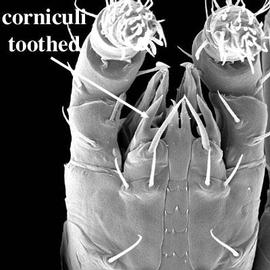
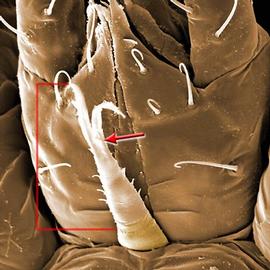
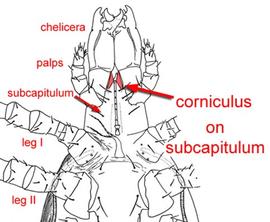
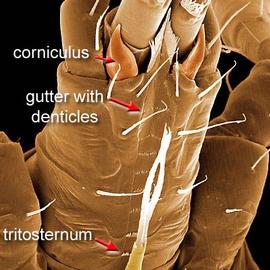
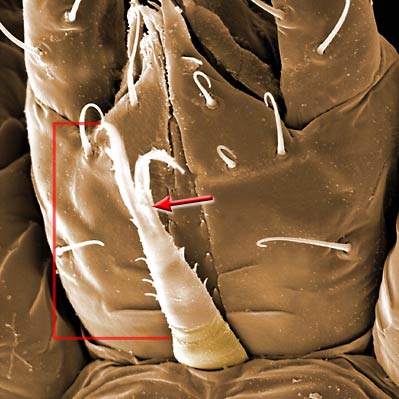
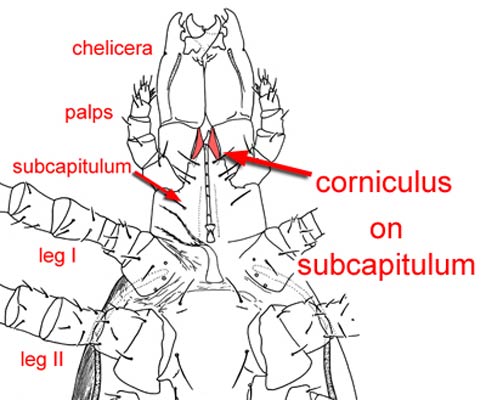
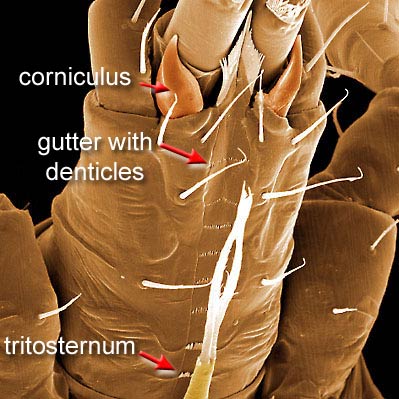
(pl. corniculi) (also, external malae) a usually horn-like process (sometimes toothed, bifurcate, trifurcate, spine-like, spatulate, or membranous) on the subcapitulum of parasitiform mites that usually supports the salivary styli. A toothed corniculus could be confused with a rutellum, a possibly homologous structure in Acariformes and Opilioacarida. Phytoseiid image is spatulate corniculus.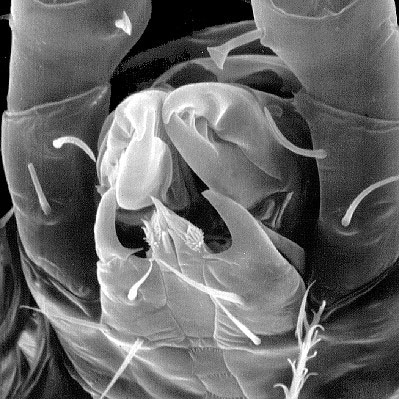 horn-like, bifurcatebifurcate:
split into two distally or with two projections. 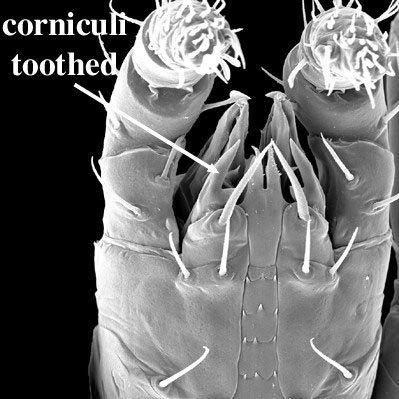 , or rarely truncate; hypostomal groove usually broad and with 1-many denticlesdenticles:
small tooth-like processes, e.g., on the subcapitula of ticks and many mesostigmatans.
; epistomegnathotectum:
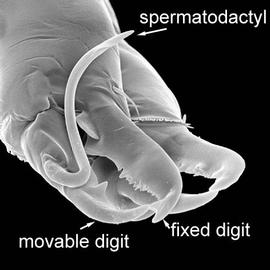
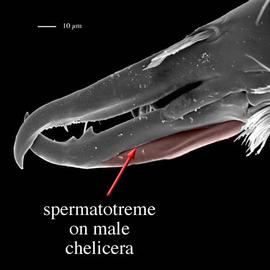
(= epistome, tectum) an often membranous dorsal projection of the anterior margin of the basis capitulum in Mesostigmata; often diagnostic at family-, genus- or species-levels; also often difficult to see without high magnification and good optics.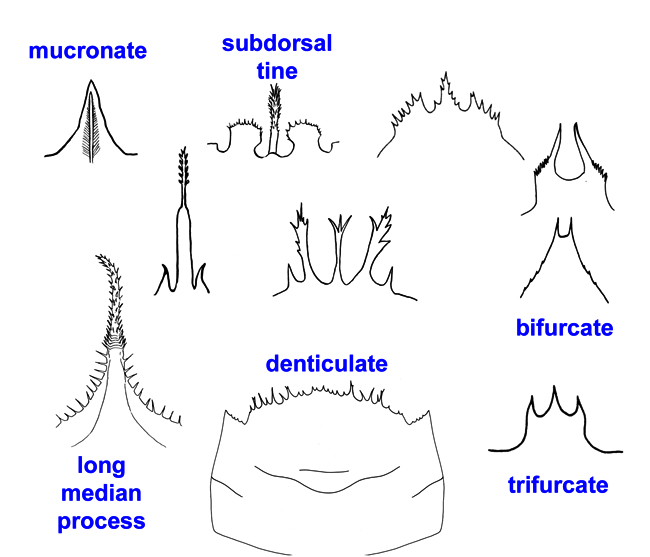 various. Males with genital opening mid-coxal or at basebase:
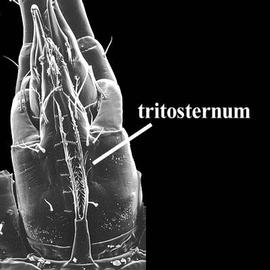
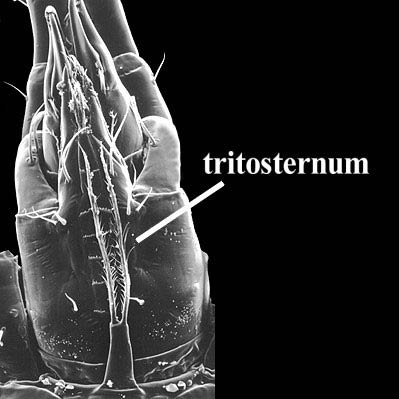
the usually columnar basal part of the tritosternum; sometimes expanded and rectangular or otherwise modified; the most basal part of any structure.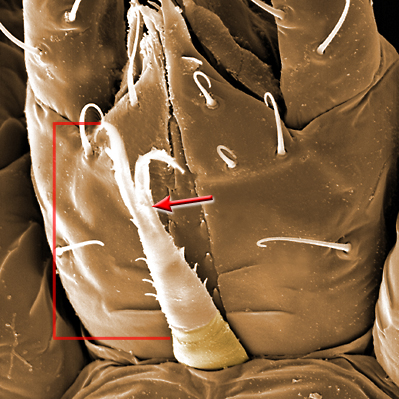 of tritosternumtritosternum:
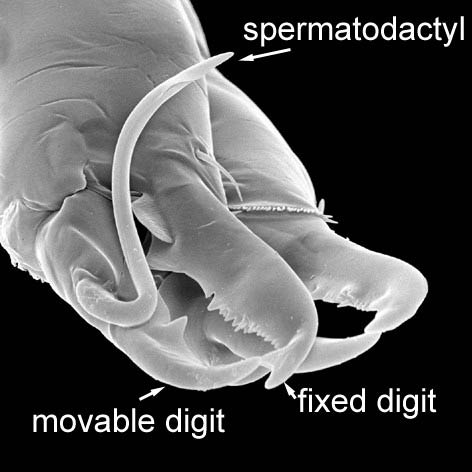
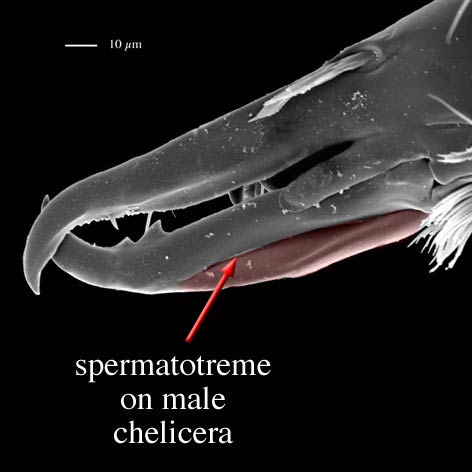
the sternum of the 3rd body segment (between legs I); produced as a biflagellate structure in Mesostigmata, although sometimes the flagellae (laciniae) are partially or completely fused. 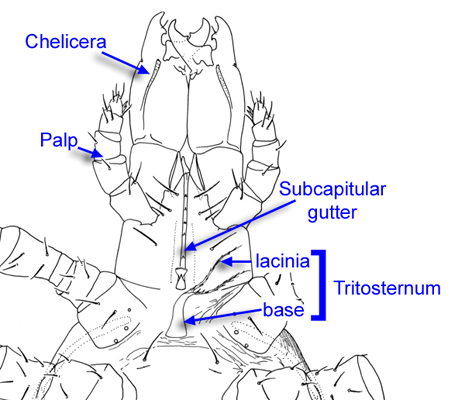 ; movable digit with or without spermatodactylspermatodactyl:
(also spermadactyl) the 'sperm finger' on the chelicerae of male dermanyssine Mesostigmata used to transfer sperm to the secondary sperm system in the female; spermatodactyls take various forms, from simple finger-like processes to very long, contorted structures. 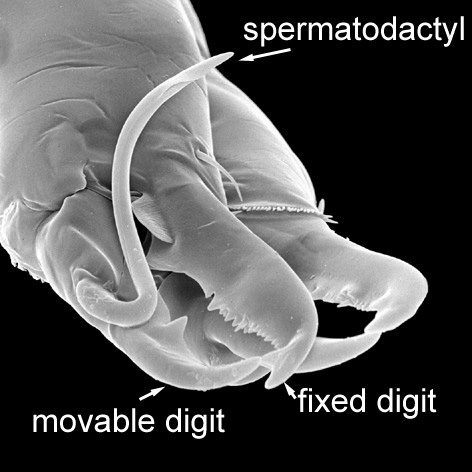 or spermatotremespermatotreme:
a slit-like opening on the movable digit of male Parasitidae that grasps the neck of the spermatophore during sperm transfer; considered to be a foramen left by the distal fusion of a spermatodactyl to the movable digit.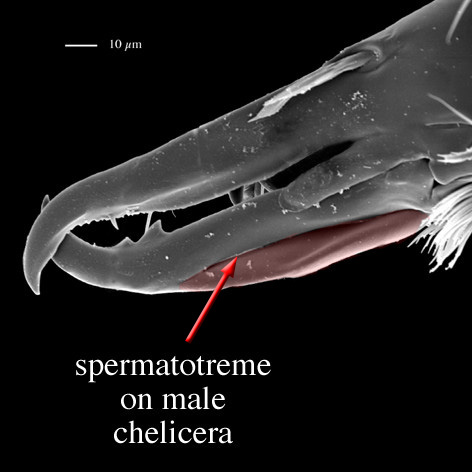 ; legs II and IV often with tubercles.
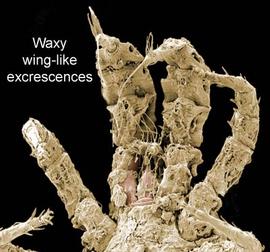
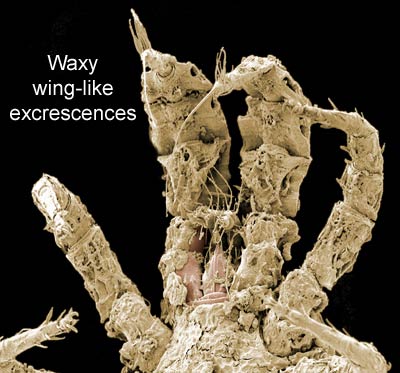
Trigynaspida usually have 2–4 distinct genital shields, cheliceralcheliceral:
of or pertaining to the chelicera.
excrescences, and an intercalary sclerite bearing setaeseta:
(pl. setae, from L. = bristle) cuticular process composed of a hollow shaft (sometimes filled with a refractive material) produced from a membranous socket (the alveolus); the hair-like, spine-like, branched or variously expanded structures on the surfaces of the legs and body. Most setae function as mechanoreceptors, but others (e.g., solenidia) are chemoreceptors or have unknown or ambiguous functions. av4/pv4; SejinaSejina:
older name for the suborder Sejida
have av4/pv4 and a single large genital shieldgenital shield:
a shield or shields covering the genital opening; in female mongynaspine Mesostigmata this shield is usually called the epigynal (epigynial) shield.
that usually bears 3 or more pairs of setaeseta:
(pl. setae, from L. = bristle) cuticular process composed of a hollow shaft (sometimes filled with a refractive material) produced from a membranous socket (the alveolus); the hair-like, spine-like, branched or variously expanded structures on the surfaces of the legs and body. Most setae function as mechanoreceptors, but others (e.g., solenidia) are chemoreceptors or have unknown or ambiguous functions..
Monogynaspides accounts for most of the 12,000 or so described species of Mesostigmata and are found on every continent, including two species known from Antarctica. Most species are either free-living predators or parasites of vertebrates and invertebrates, but others are fungivores, scavengers, or feed on pollen or nectar.
Author: David E. Walter
Content last updated Sept. 2006, unless indicated otherwise
Lucid key player updated Sept. 2025
idtools.org