test
Sphaerolichida OConnor, 1984
Superorder Acariformes » Order Trombidiformes » Suborder Sphaerolichida
sphaerolichids, lordalychids
very low
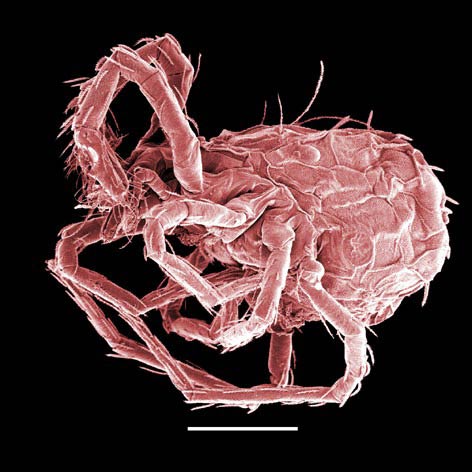
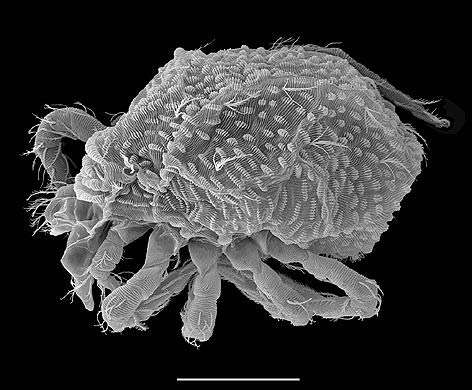
The mites in this suborder are poorly known and of no known economic importance. Sphaerolichids are probably ambush predators and lordalychids are probably fungivores.
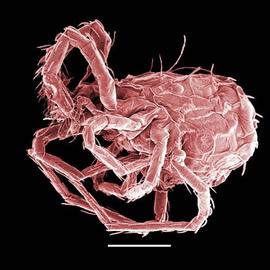
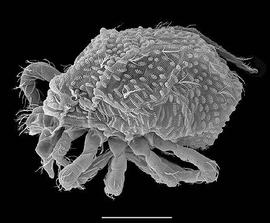
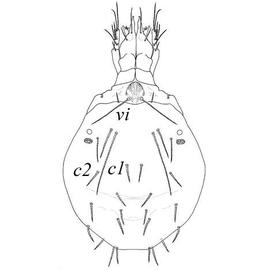
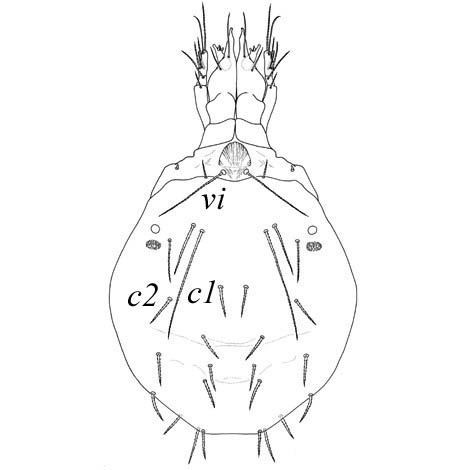
Globular, soft-bodied mites, white, yellow, yellow brown, pink or red in colour. Prodorsumprodorsum:
the dorsal surface of the propodosoma.
with 2 pairs of filamentous trichobothriatrichobothrium:
(pl. trichobothria) (= bothridial sensillum) an often elaborately modified seta set in a cup-like base; forms include filiform, ciliate, pectinate or variously thickened or clubbed (bat-like to globose or capitate).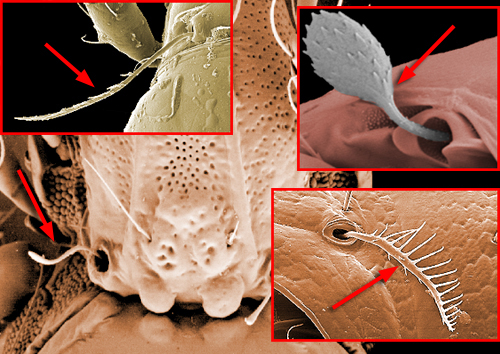 (sci, vi) and one (sce) to four (in, ve, exp) pairs of setae; naso nude (anterior pair of trichobothriatrichobothrium:
(pl. trichobothria) (= bothridial sensillum) an often elaborately modified seta set in a cup-like base; forms include filiform, ciliate, pectinate or variously thickened or clubbed (bat-like to globose or capitate). may be inserted near its basebase:
the usually columnar basal part of the tritosternum; sometimes expanded and rectangular or otherwise modified; the most basal part of any structure.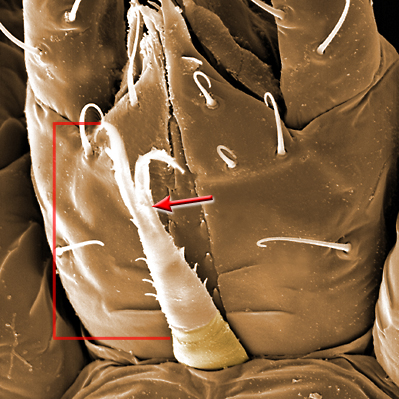 ) or absent; median eye present on underside of naso or absent, 0–2 pairs of lateral eyes; rutellarutellum:
(pl. rutella) In Sarcoptiformes, the hypertrophied setae on the hypostome, often toothed; not to be confused with a corniculus (although possibly a homologue). In Astigmata, the rutellum may be referred to as a pseudorutellum, although it is the same structure. Various forms of rutella are recognized, including the atelebasic and pantelebasic.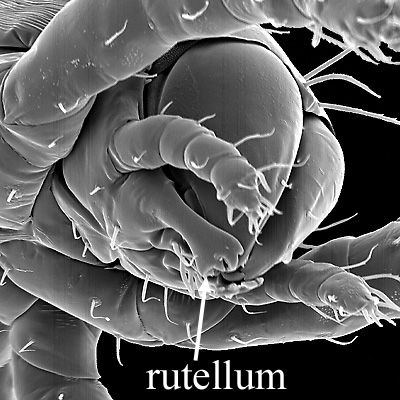 absent. Body chaetomechaetome:
a complement of setae; the setal array present on a stage or body part.
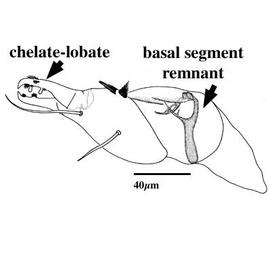
reduced, setae c3–4 absent, segments AN and PA not added during ontogeny. Rutellarutellum:
(pl. rutella) In Sarcoptiformes, the hypertrophied setae on the hypostome, often toothed; not to be confused with a corniculus (although possibly a homologue). In Astigmata, the rutellum may be referred to as a pseudorutellum, although it is the same structure. Various forms of rutella are recognized, including the atelebasic and pantelebasic. absent, palps with 4–5 free segments, chelicerae each with 2 setae.
Key to Endeostigmata and Sphaerolichida
Endeostigmata and Sphaerolichida fact sheet index
Sphaerolichida (Sphaerolichidae, Lordalychidae) used to be considered Endeostigmata, but are now considered the sister group to the Prostigmata. However, sphaerolichids have only 2 pairs of setae in the first row of the hysterosoma and lack rutella.
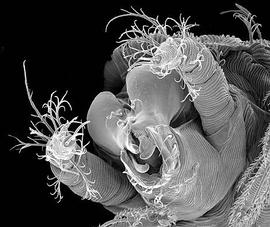
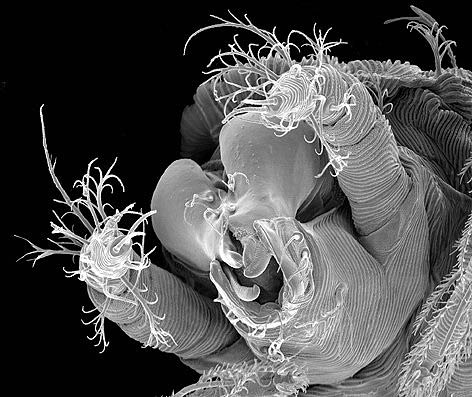
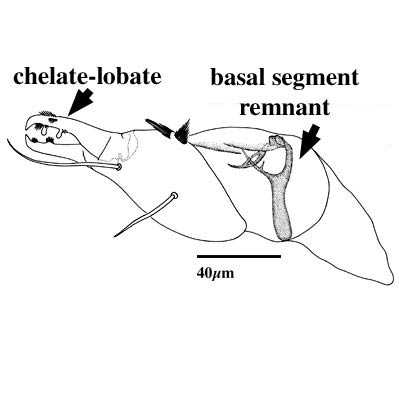
Australian species of Sphaerolichus are a bright pink in life and move slowly while waving their highly modified front legs. They climb readily and may be ambush predators, although guts of South African species have been reported to contain fungal material. Lordalychids (Hybalicus) are distinctive mites with globular bodies and strongly ornamented cuticle and are common worldwide. Little is known about the biology of any species, although species of Hybalicus often have poorly consolidated fungal materials in their guts and an inactive prelarva with well developed dorsal setae.
Author: David E. Walter
Content last updated Sept. 2006, unless indicated otherwise
Lucid key player updated Sept. 2025
idtools.org