test
Labidostommatina Krantz, 1978Krantz, 1978:
Krantz GW. 1978. A manual of acarology [2nd ed.]. Oregon State University Book Stores, Corvallis.
Superorder Acariformes » Order Trombidiformes » Suborder Prostigmata » Infraorder Labidostommatina
superfamily: Labidostommatoidea
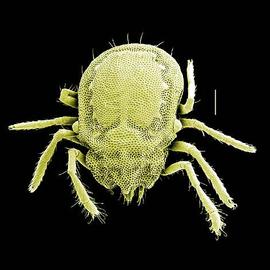
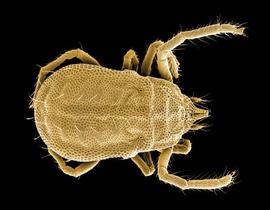
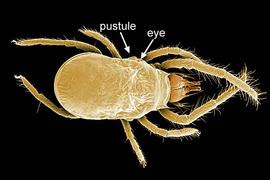
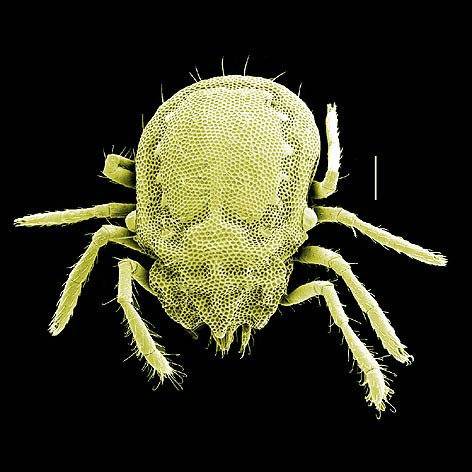
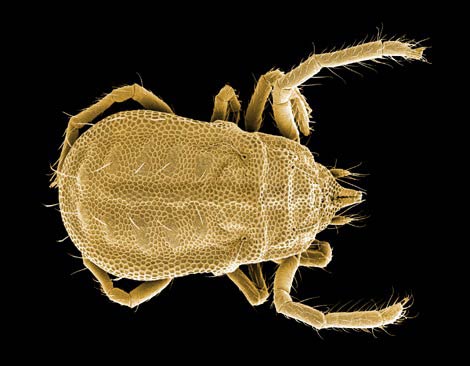
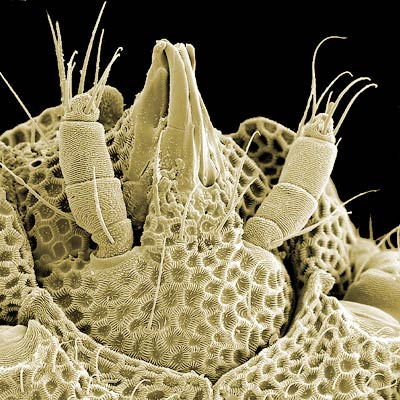
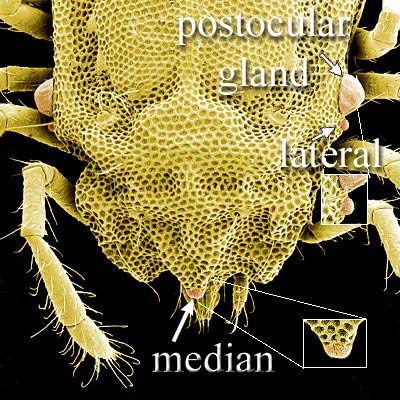
Medium to large-bodied; heavily sclerotized with a single holodorsal shieldholodorsal shield:
a shield that covers all of the dorsum. In Mesostigmata, the holodorsal shield is often interpreted as resulting from the fusion of podonotal and opisthonotal shields and a suture between these regions is often visible (see recurved and procurved).
; green or yellow in color. Body holoidholoid:
lacking flexible cuticle between legs II-III.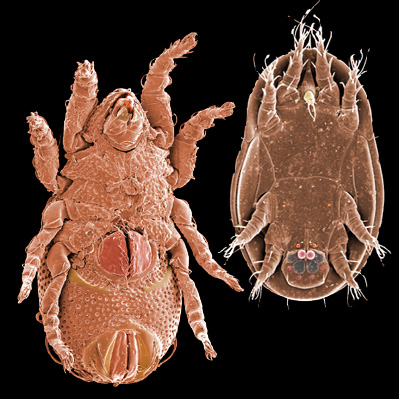 , coxal fieldscoxal fields:
the venter of acariform mites where the coxae have fused to the body wall covering the sternal region.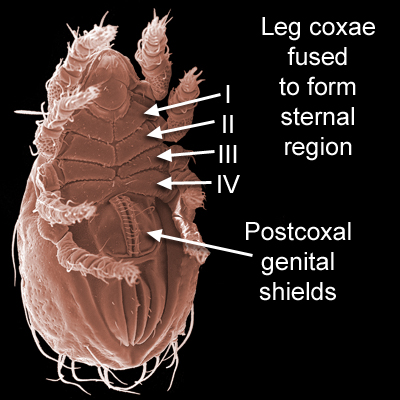 expanded and contiguous, forming a ventralventral:
relating to the lower or under side; opposed to dorsal.
'cross-hatch' pattern. Dorso-sejugal furrow absent. Chelicerae astegasimeastegasime:
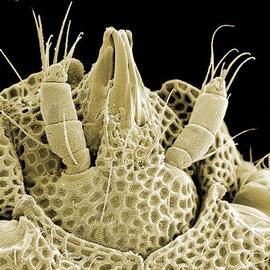
having the chelicerae exposed dorsally: the rostral tectum is reduced or absent (see stegasime), as in many Prostigmata, Astigmata and some early derivative oribatids.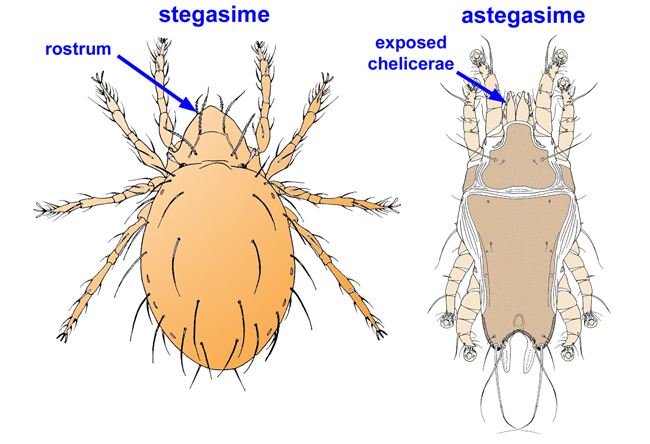 , robust and strongly chelatechelate:
pincer-like, as in a crab's claws, a scorpion's pedipalps or many chelicerae; in water mites (Hydrachnida), chelate palps have a dorsal palptibial process opposed to a ventral movable palptarsus (opposed to uncate).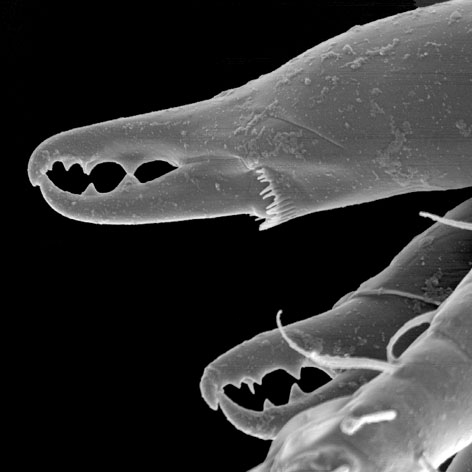 , bases separate; stigmatal openings between cheliceralcheliceral:
of or pertaining to the chelicera.
bases; peritremes absent. Palps 4-segmented, linear, lacking a thumb-clawthumb-claw:
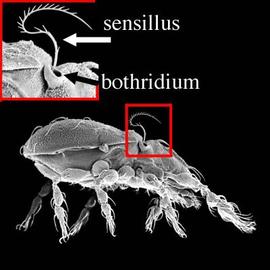
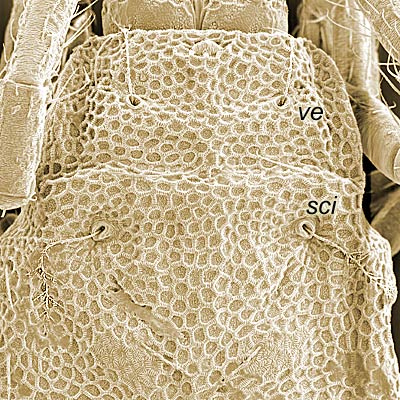
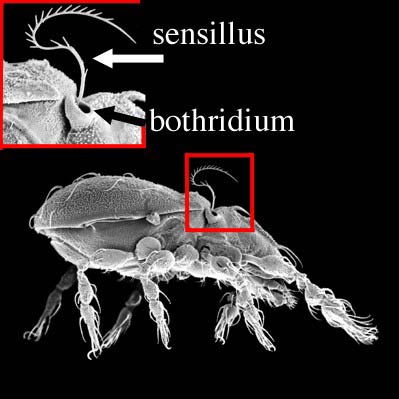
a hypertrophied, usually claw-like seta on the dorso-distal margin of the palptibia that forms a pincer with the palptarsus of some Prostigmata; the palp thumb-claw complex.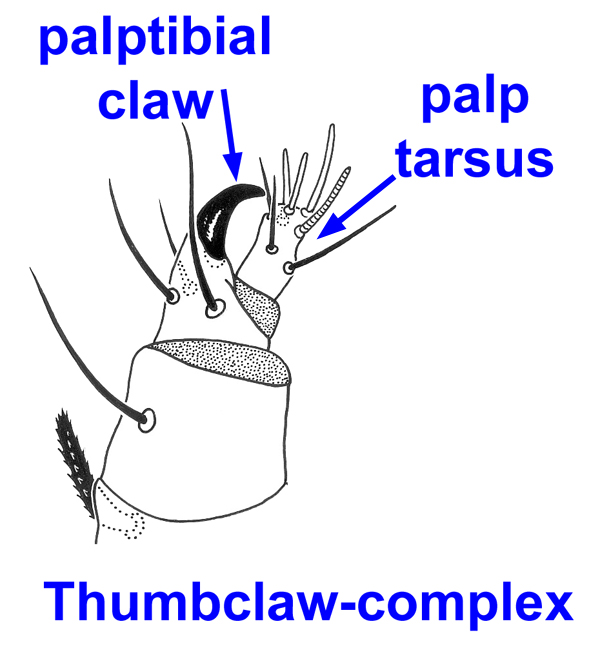 complex. Two pairs of prodorsal trichobothriatrichobothrium:
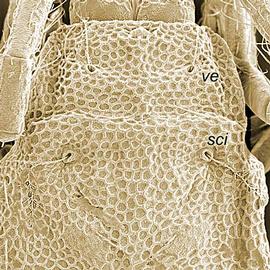
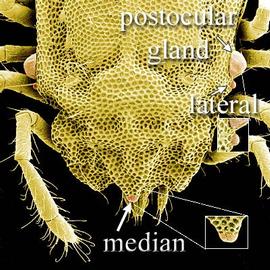
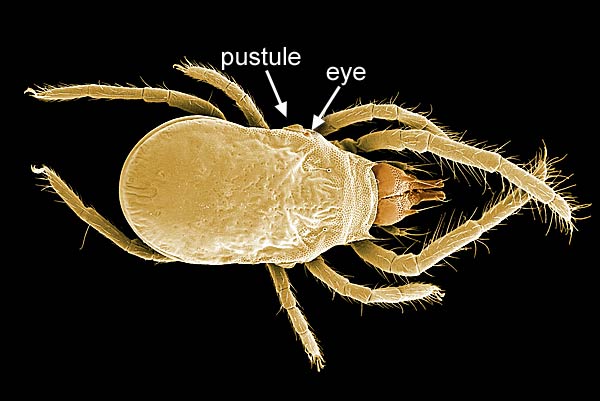
(pl. trichobothria) (= bothridial sensillum) an often elaborately modified seta set in a cup-like base; forms include filiform, ciliate, pectinate or variously thickened or clubbed (bat-like to globose or capitate).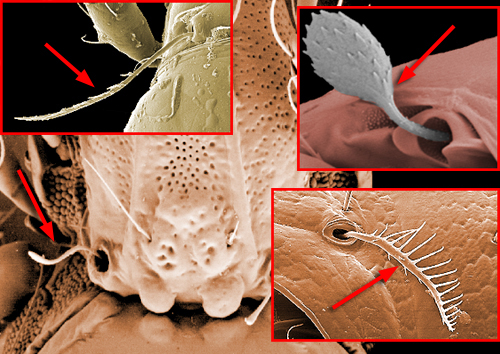 ; median and lateral eyes present; eye-like postocular pustules present in some species. Body setaeseta:
(pl. setae, from L. = bristle) cuticular process composed of a hollow shaft (sometimes filled with a refractive material) produced from a membranous socket (the alveolus); the hair-like, spine-like, branched or variously expanded structures on the surfaces of the legs and body. Most setae function as mechanoreceptors, but others (e.g., solenidia) are chemoreceptors or have unknown or ambiguous functions.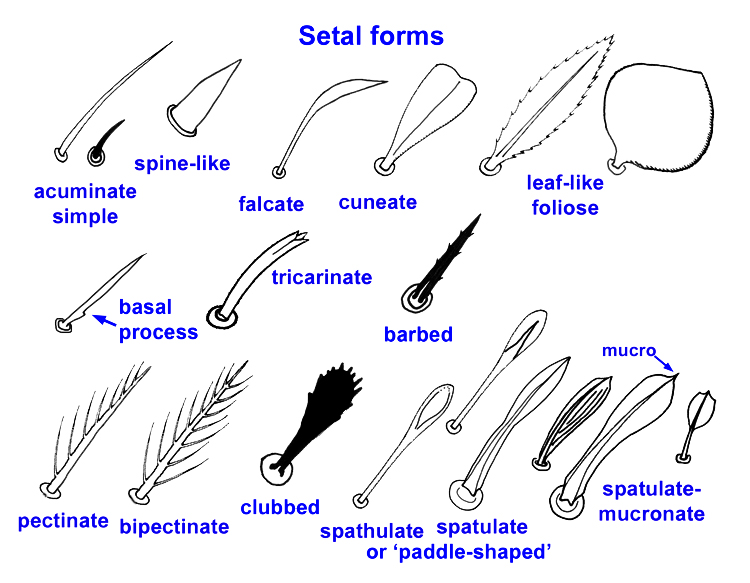 short and sparse; 2 pairs of genital papillaegenital papillae:
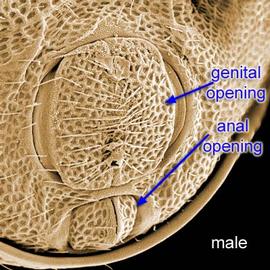
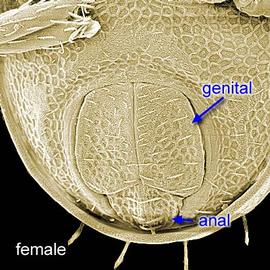
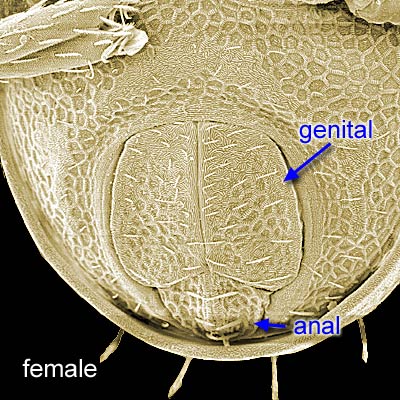
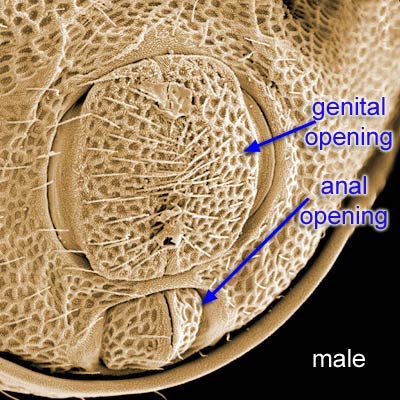
1-3 pairs of extrusible finger-like to button-like projections, usually retracted into in the genital vestibule of acariform mites; sometimes formed as sessile disks around the genital opening; thought to be osmoregulatory structures; modified or multiplied and dispersed over the body in many freshwater mites. Genital papillae are absent in the larva, but may be added ontogenetically: protonymphs have one pair, deutonymphs two pairs, and tritonymphs (and adults) three pairs. The tritonymphal pair of papillae is often lost. The serially homologous Claparède's organ is usually present in the larvae (and prelarvae) of mites exhibiting genital papillae in nymphs and adults (Oudeman's Rule).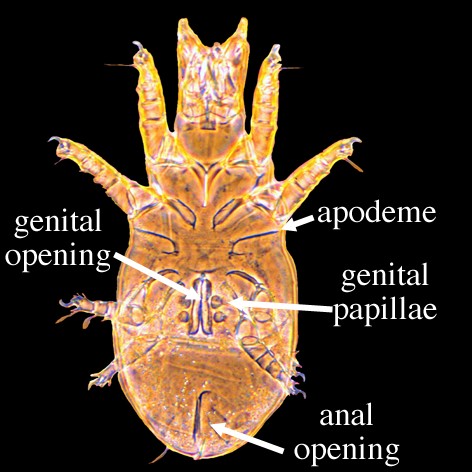 in adults. Female genital and anal openings contiguous; male genital and anal openings separate.
Oribatida have only a single pair of prodorsal trichobothria.
Labidostommatid mites are striking, morphologically distinctive animals. They are relatively common in moist forest litter and on rough tree bark. They also inhabit mosses and lichens. These mites are ambush or stalking predators of small arthropods. They walk about on their hind three pairs of legs and use legs I to sense and capture prey.
Author: David E. Walter
Content last updated Sept. 2006, unless indicated otherwise
Lucid key player updated Sept. 2025
idtools.org