test
Eriophyoidea Nalepa, 1898Nalepa, 1898:
Nalepa A. 1898. Neue Gallmilben (16 Fortsetzung). Anzeiger der Kaiserlichen Akademie der Wissenschaften, Mathematisch-Naturwissenschaftliche Classe 35 (17): 163–164.
TetrapodiliTetrapodili:
an obsolete name for the Eriophyoidea; the name reflects the presence of four legs.
Superorder Acariformes » Order Sarcoptiformes » Suborder Endeostigmata » Infraorder Nematalycina » Superfamily Eriophyoidea
families: Diptilomiopidae, Eriophyidae, Phytoptidae
gall mites, blister mites, bud mites, rust mitesrust mite:
leaf vagrant forms of the Eriophyoidea whose feeding causes a russet coloration on leaves.
, erinose mites, eriophyoids
very high
Very high. The Eriophyoidea contains many important pests of crops, including species that transmit plant diseases, especially viruses.
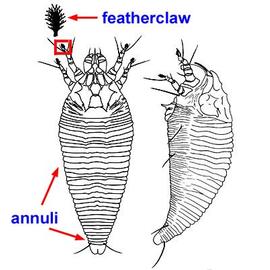
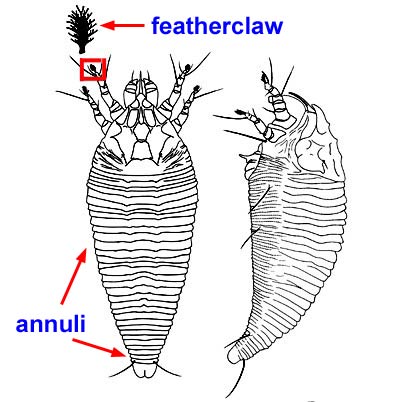
Minute, wormlike, fusiform, or rarely flattened or lobulate mites with annulate bodies bearing only 2 pairs of legs; bodybody:
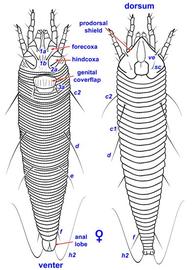
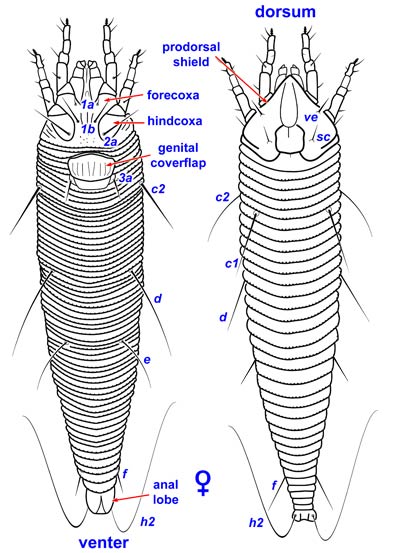
the idiosoma of mites.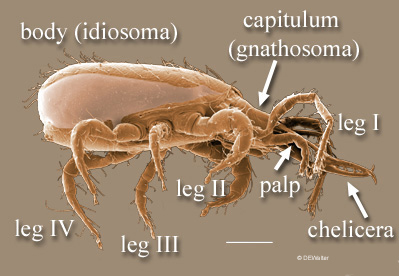 usually 0.12 mm long or less (rarely to 0.5 mm) and white to yellowish. Palps minute, weakly 4-segmented, closely appressed to stylets, truncate apically; mouthparts composed of 7–9 minute stylets encased in infracapitular gutter. Prodorsal shieldprodorsal shield:
a shield on the anterior dorsal surface of acariform mites.
present and bearing 0, 1, 2, 3, 4 or 5 setae; trichobothriatrichobothrium:
(pl. trichobothria) (= bothridial sensillum) an often elaborately modified seta set in a cup-like base; forms include filiform, ciliate, pectinate or variously thickened or clubbed (bat-like to globose or capitate).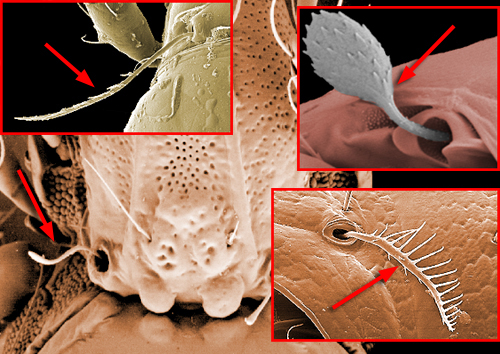 absent. Peritremes absent; naso absent; distinct eyes absent. Opisthosomaopisthosoma:
(= abdomen) the posterior body division in arachnids; usually not distinct in mites because of the fusion of the opisthosoma with part of the prosoma to form the idiosoma.
annulate, setation reduced (maximum = 7 pairs of 'dorsal' setae: c1, c2, d, e, f, h1, h2 and 4 pairs of coxisternal setae: 1b, 1a, 2a, 3a [=genital seta].) Leg setation highly reduced (maximum of 0–1–1–1–3 setae on trochantertrochanter:
the leg segment between the coxa and the femur.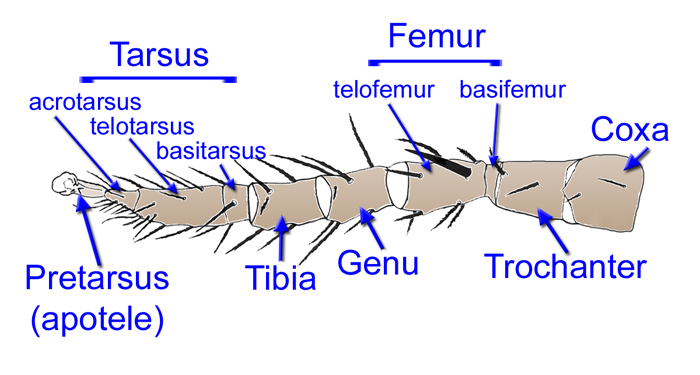 , femurfemur:
(pl. femora) major leg segment between trochanter and genu; often subdivided into a basifemur and a telofemur., genugenu:
(pl. genua) (= patella) the 4th leg segment, between the femur and tibia.
, tibiatibia:
(pl. tibiae) the leg segment between the genu and the tarsus., tarsustarsus:
(pl. tarsi) the subdistal leg segment between the tibia and the pretarsus (apotele).
, respectively); tarsustarsus:
(pl. tarsi) the subdistal leg segment between the tibia and the pretarsus (apotele).
without lateral claws, empodiumempodium:
(pl. empodia) an unpaired structure arising between the tarsal claws, ranging from pad-like to claw-like and often bearing structures such as tenent hairs, dense setulae, or taking the form of a featherclaw (Eriophyoidea)..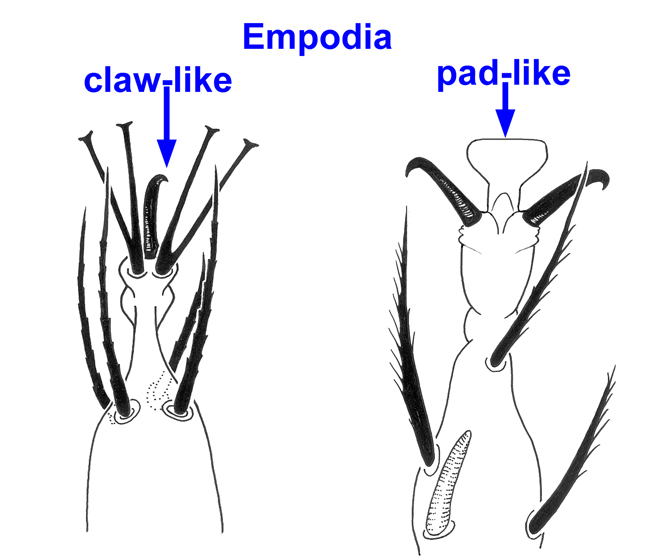 in form of highly branched featherclawfeatherclaw:
the highly divided bipectinate empodial claw found in the Eriophyoidea.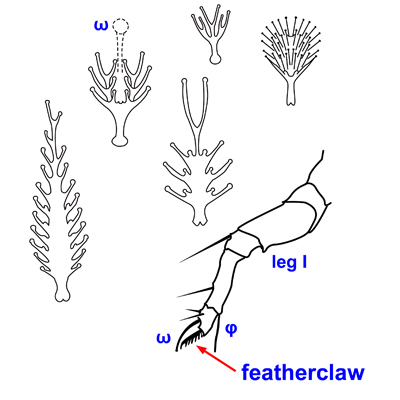 . Females have a genital flap posteriorposterior:
the back part of the body or towards that region in comparison, e.g., 'posterior to'.
to coxae of legs II and lay spherical eggs; genital papillaegenital papillae:
1-3 pairs of extrusible finger-like to button-like projections, usually retracted into in the genital vestibule of acariform mites; sometimes formed as sessile disks around the genital opening; thought to be osmoregulatory structures; modified or multiplied and dispersed over the body in many freshwater mites. Genital papillae are absent in the larva, but may be added ontogenetically: protonymphs have one pair, deutonymphs two pairs, and tritonymphs (and adults) three pairs. The tritonymphal pair of papillae is often lost. The serially homologous Claparède's organ is usually present in the larvae (and prelarvae) of mites exhibiting genital papillae in nymphs and adults (Oudeman's Rule).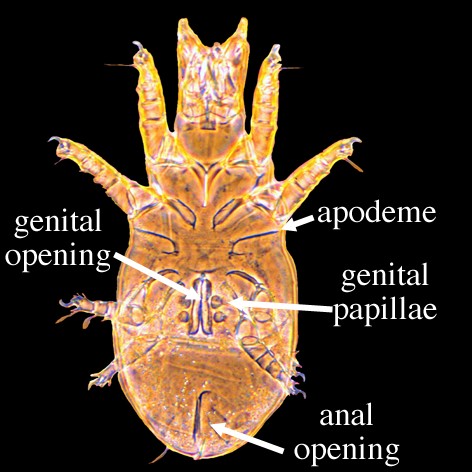 absent. Males have reduced genital flaps and produce stalkedstalked:
raised up or otherwise produced on a stalk.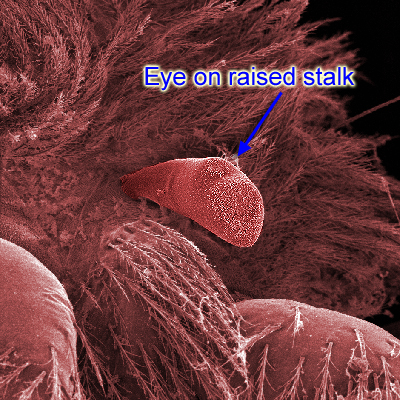 spermatophores.
Immature Tarsonemidae have 3 pairs of legs and a gnathosomal capsulegnathosomal capsule:
a fusion of the gnathosomal elements (chelicerae and subcapitulum) into a single structure, as seen in protigmatans such as Heterostigmata, Myobiidae, and Cheyletoidea (also tegmen).
. Nematalycidae have 4 pairs of legs in post-larval instars.
The Eriophyoidea (gall and rust mitesrust mite:
leaf vagrant forms of the Eriophyoidea whose feeding causes a russet coloration on leaves.
) consists of more than 3,500 described species in >300 genera, all of which are plant parasites. Most are tiny vermiform animals and bear only two pairs of legs in all active stages (larva, nymph and adult). Some species have two adult female forms, a normal feeding form (protogyneprotogyne:
the normal feeding form, as opposed to the overwintering or aestivating form (deutogyne), of eriophyoid mites.
) and an overwintering or otherwise aestivating form (deutogynedeutogyne:
overwintering or aestivating form of eriophyoid mites; morphologically distinct from the normal or protogyne form.
).
How to prepare eriophyideriophyid:
(eriophyoid) of or relating to a member of the family Eriophyidae (superfamily Eriophyoidea) which contains minute, worm-like and quadripod mites that cause galls, erinea, and other damage to plants.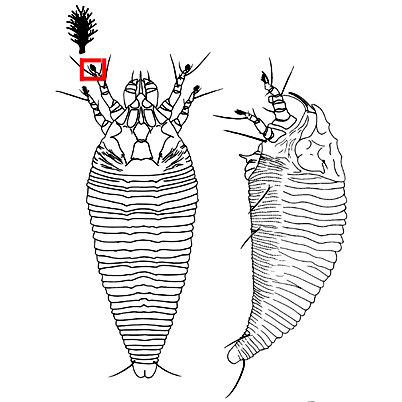 mites for examination under the microscope
General overview of the mite superfamily Eriophyoidea
Using a dichotomous key to identify eriophyideriophyid:
(eriophyoid) of or relating to a member of the family Eriophyidae (superfamily Eriophyoidea) which contains minute, worm-like and quadripod mites that cause galls, erinea, and other damage to plants. mites to family
Author: David E. Walter
Content last updated Sept. 2006, unless indicated otherwise
Lucid key player updated Sept. 2025
idtools.org