test
Anystina van der Hammen, 1972
Superorder Acariformes » Order Trombidiformes » Suborder Prostigmata » Infraorder Anystina
hyporders: Anystae, Parasitengona
whirligig mites, footballers, anystids, caeculids, red velvet mites, water mites, scrub itch mites, chiggers
high
General predators used in biological control occur in the Anystidae and some rarely bite people. Most Parasitengona are parasitic as larvae on insects, but Trombiculoidea attack vertebrates and may cause serious harm to livestock and wildlife through their feeding. Larval trombiculoids (chiggers) also attack people causing a nasty, but transient dermatitis (scrub itch) and may transmit rickettsia that cause scrub typhus.
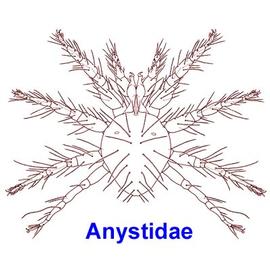
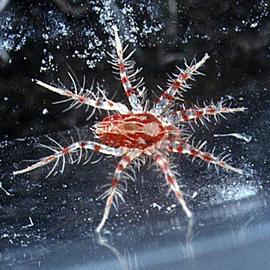
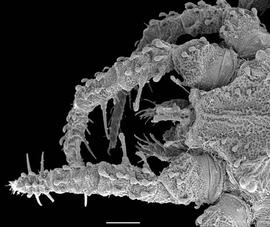
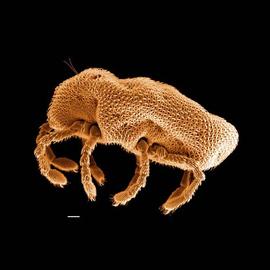
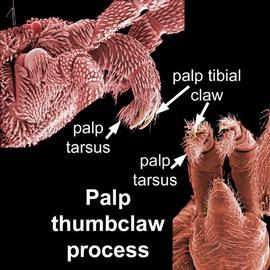
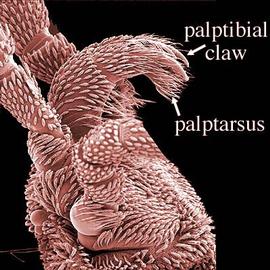
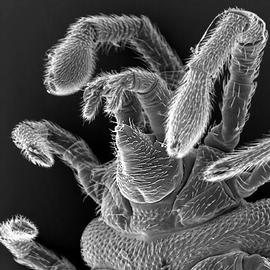
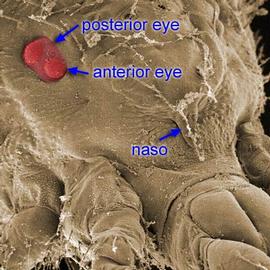
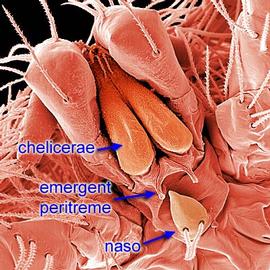
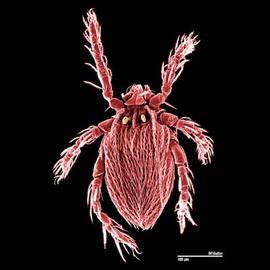
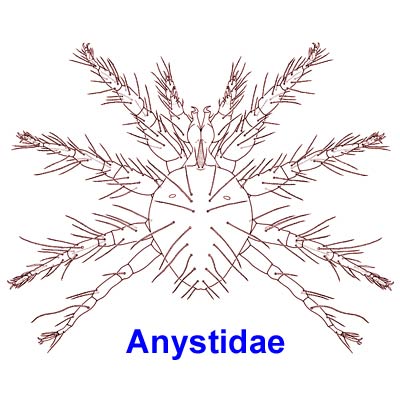
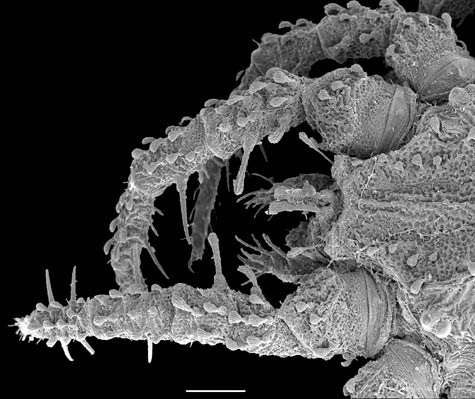
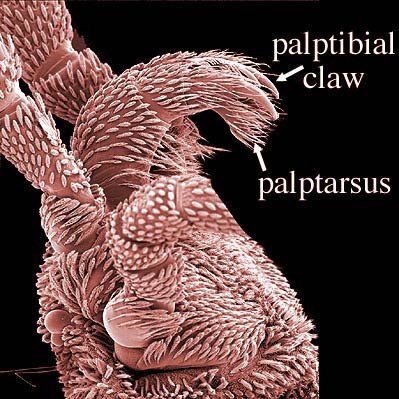
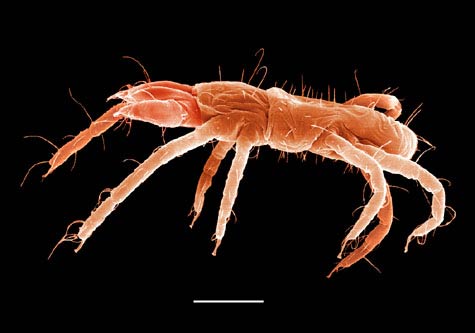
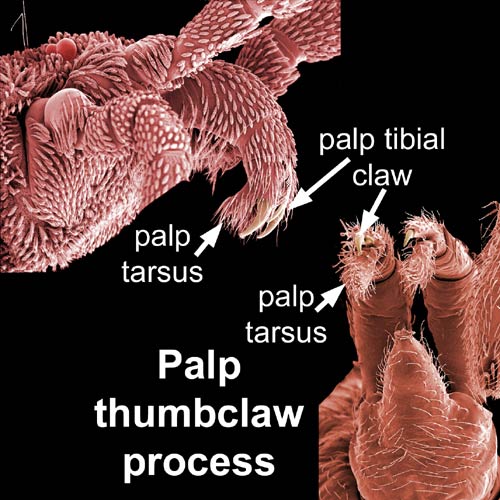
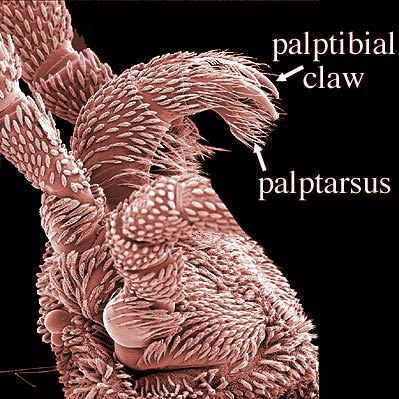
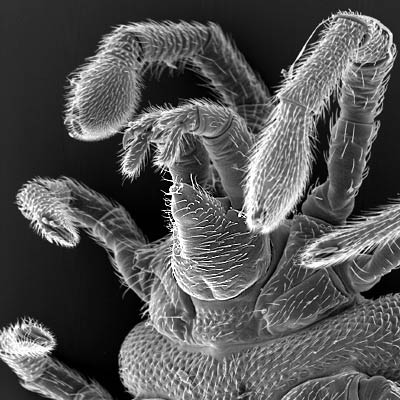
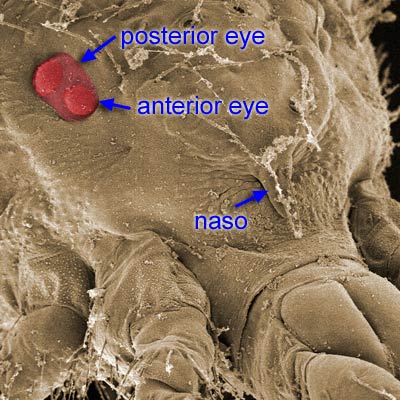
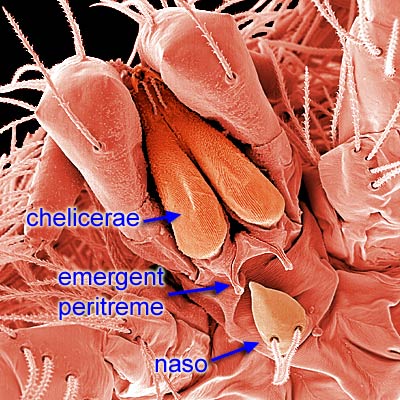
Anystina are small to large, subspherical to elongate mites with soft to heavily sclerotized bodies; purple, red, pink or brown in color. Cheliceralcheliceral:
of or pertaining to the chelicera.
bases separate; fixed digitfixed digit:
the distal extension of the middle article of the chelicera; usually bearing teeth and a distal hook and opposed to the movable digit in chelate-dentate forms, but often regressed; in Mesostigmata the fixed digit may bear the pilus dentilis.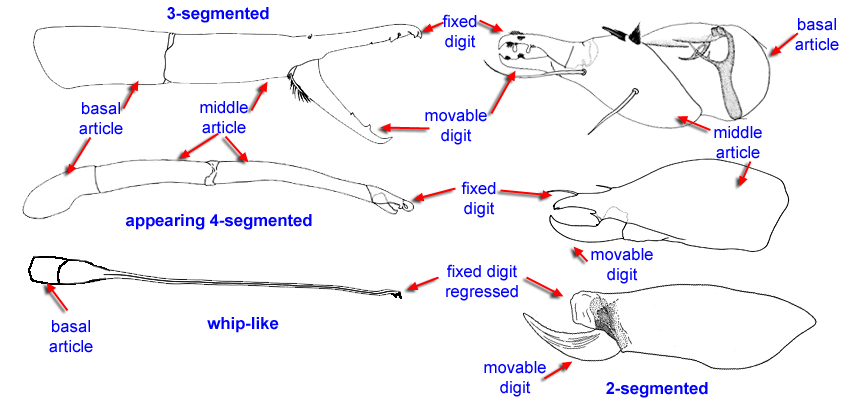 of chelicerachelicera:
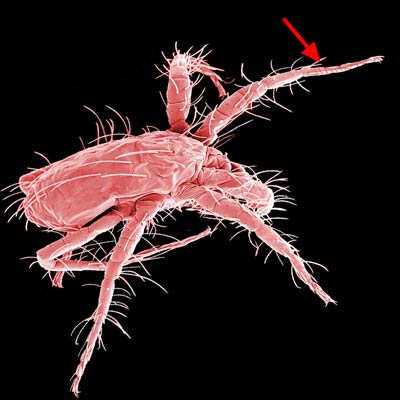
a limb on the presumed first body segment in chelicerate arthropods, the primary mouthparts. In mites the chelicerae are primitively chelate-dentate, but may be modified into almost unrecognizable forms. In Acariformes, the chelicerae are usually 2-segmented, but in other mites and some basal acariforms they have three segments. Rarely, in some Uropodoidea (Mesostigmata), a subdivision makes them appear 4-segmented.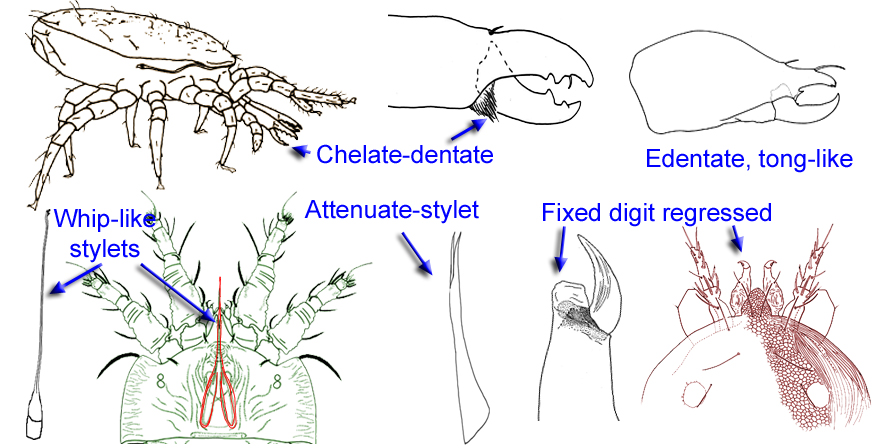 reduced or absent, movable digit usually short and hooked. Palps usually raptorialraptorial:
(Latin raptor = robber) modified for capturing prey; predatory. The pedipalps (e.g., many Cunaxidae) or legs I may be raptorial in mites.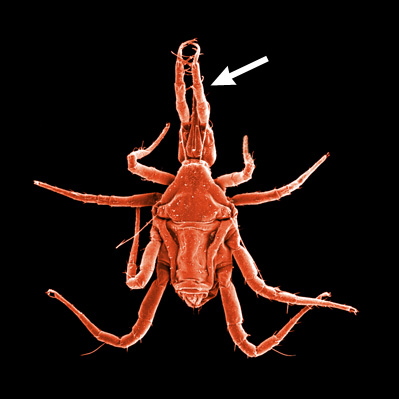 with a well-developed clawclaw:
like - having a distal hook; resembling a claw.
-like seta on the tibiatibia:
(pl. tibiae) the leg segment between the genu and the tarsus.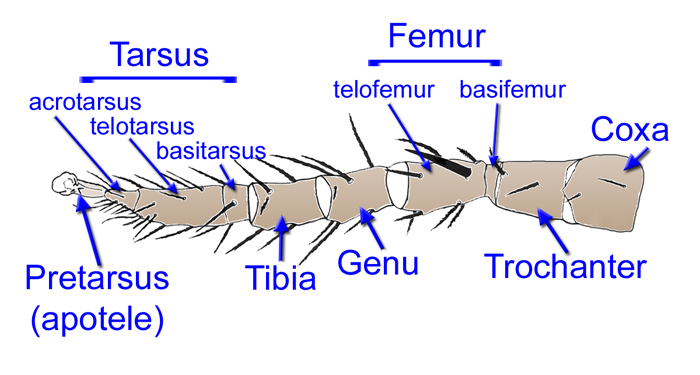 ; development of the palp tarsustarsus:
(pl. tarsi) the subdistal leg segment between the tibia and the pretarsus (apotele).
ranges from subterminal and thumb-like or button-like, to terminal, to absent. Peritremes well-developed and may be emergentemergent:
rising above, projecting, as in the peritremes of some Prostigmata which range from small bumps to elongate processes.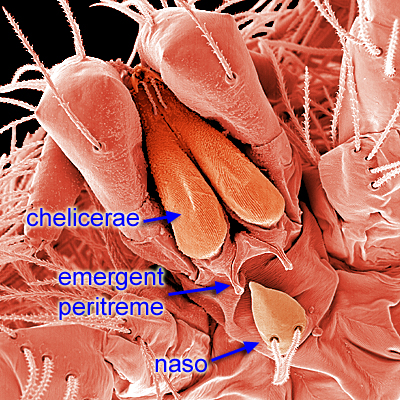 or adherent to the prodorsal margin. Naso present or absent; one or two pairs of prodorsal trichobothriatrichobothrium:
(pl. trichobothria) (= bothridial sensillum) an often elaborately modified seta set in a cup-like base; forms include filiform, ciliate, pectinate or variously thickened or clubbed (bat-like to globose or capitate).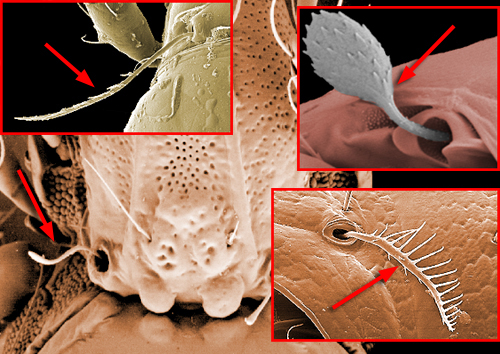 present; lateral eyes present or absent. Body setae range from short and scanty to long and hypertrichous; genital papillaegenital papillae:
1-3 pairs of extrusible finger-like to button-like projections, usually retracted into in the genital vestibule of acariform mites; sometimes formed as sessile disks around the genital opening; thought to be osmoregulatory structures; modified or multiplied and dispersed over the body in many freshwater mites. Genital papillae are absent in the larva, but may be added ontogenetically: protonymphs have one pair, deutonymphs two pairs, and tritonymphs (and adults) three pairs. The tritonymphal pair of papillae is often lost. The serially homologous Claparède's organ is usually present in the larvae (and prelarvae) of mites exhibiting genital papillae in nymphs and adults (Oudeman's Rule).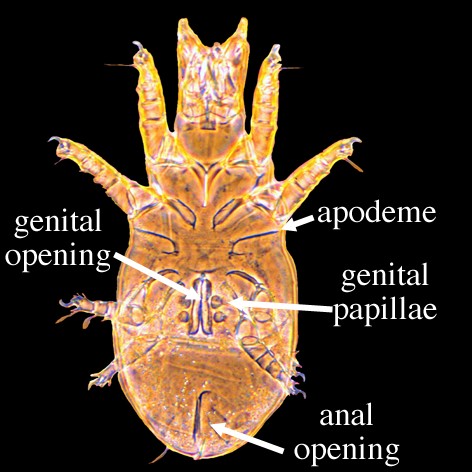 usually present but often reduced in size and number.
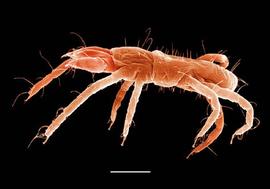
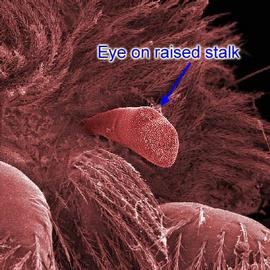
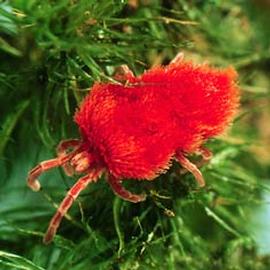
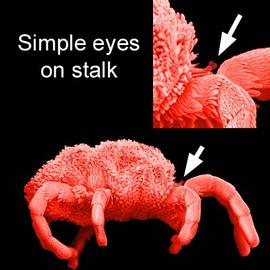
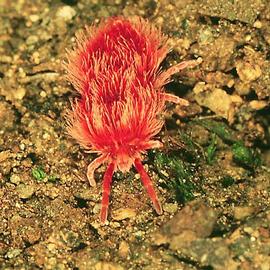
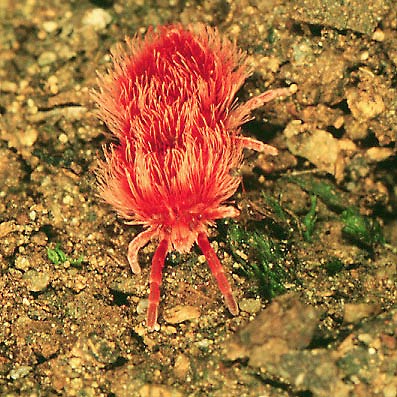
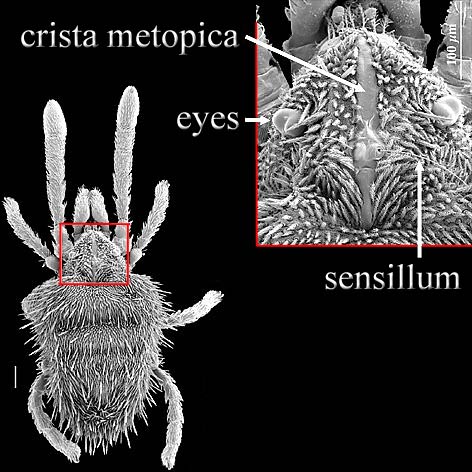
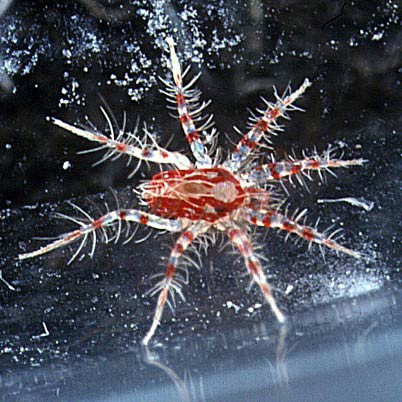
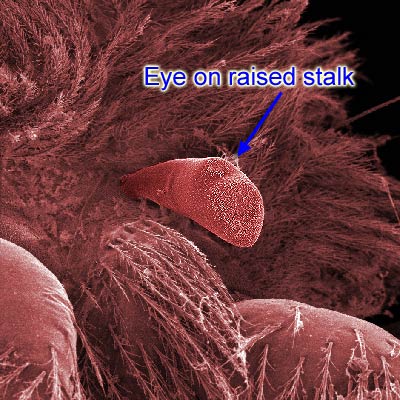
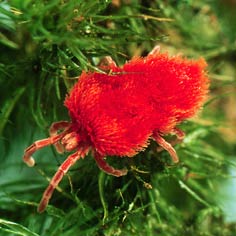
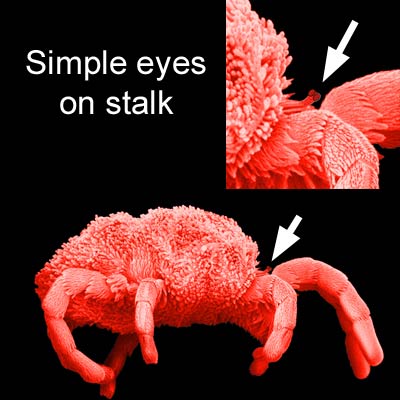
Parasitengona are medium to very large; soft-bodied to heavily sclerotized; primarily red or orange but can be any color. Terrestrial species often conspicuously hypertrichous, displaying a velvety red pelage. Cheliceralcheliceral:
of or pertaining to the chelicera.
bases separate; fixed digitfixed digit:
the distal extension of the middle article of the chelicera; usually bearing teeth and a distal hook and opposed to the movable digit in chelate-dentate forms, but often regressed; in Mesostigmata the fixed digit may bear the pilus dentilis. of chelicerachelicera:
a limb on the presumed first body segment in chelicerate arthropods, the primary mouthparts. In mites the chelicerae are primitively chelate-dentate, but may be modified into almost unrecognizable forms. In Acariformes, the chelicerae are usually 2-segmented, but in other mites and some basal acariforms they have three segments. Rarely, in some Uropodoidea (Mesostigmata), a subdivision makes them appear 4-segmented. absent, movable digit hooked or linear. Palps often raptorialraptorial:
(Latin raptor = robber) modified for capturing prey; predatory. The pedipalps (e.g., many Cunaxidae) or legs I may be raptorial in mites. with a well-developed claw-like seta on the tibiatibia:
(pl. tibiae) the leg segment between the genu and the tarsus.; development of the palp tarsustarsus:
(pl. tarsi) the subdistal leg segment between the tibia and the pretarsus (apotele).
ranges from subterminal and thumblike, to terminal, to absent. Gnathosomagnathosoma:
(= capitulum) the anteriormost part of a mite or ricinuleid, composed of the cheliceral and pedipalpal segments and separated from the body (idiosoma) by a ring of soft cuticle.
retractile in some species. Stigmata and peritremes, when present, between the cheliceralcheliceral:
of or pertaining to the chelicera.
bases. Terrestrial species usually with one or two pairs of prodorsal trichobothriatrichobothrium:
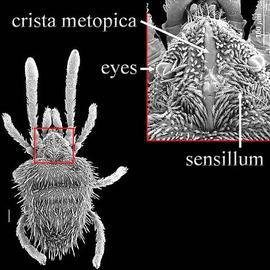
(pl. trichobothria) (= bothridial sensillum) an often elaborately modified seta set in a cup-like base; forms include filiform, ciliate, pectinate or variously thickened or clubbed (bat-like to globose or capitate)., often mounted on a linear sclerotised plate (the crista metopica); eye lenses almost always well-developed. Genital papillaegenital papillae:
1-3 pairs of extrusible finger-like to button-like projections, usually retracted into in the genital vestibule of acariform mites; sometimes formed as sessile disks around the genital opening; thought to be osmoregulatory structures; modified or multiplied and dispersed over the body in many freshwater mites. Genital papillae are absent in the larva, but may be added ontogenetically: protonymphs have one pair, deutonymphs two pairs, and tritonymphs (and adults) three pairs. The tritonymphal pair of papillae is often lost. The serially homologous Claparède's organ is usually present in the larvae (and prelarvae) of mites exhibiting genital papillae in nymphs and adults (Oudeman's Rule). usually present but variable in size and number.
Raphignathina lack prodorsal trichobothriatrichobothrium:
(pl. trichobothria) (= bothridial sensillum) an often elaborately modified seta set in a cup-like base; forms include filiform, ciliate, pectinate or variously thickened or clubbed (bat-like to globose or capitate)..
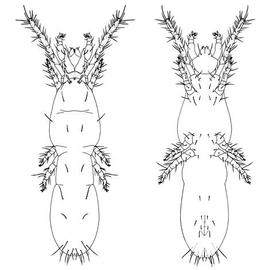
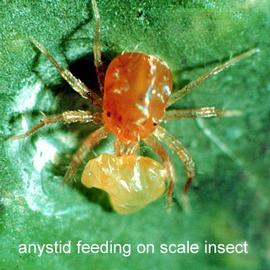
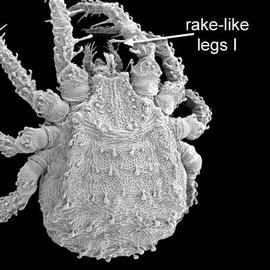
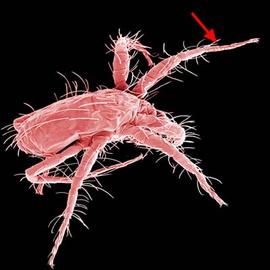
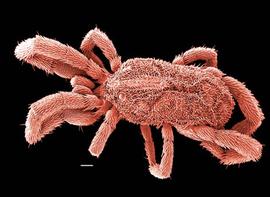
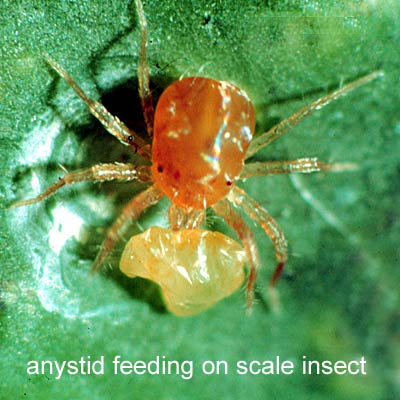
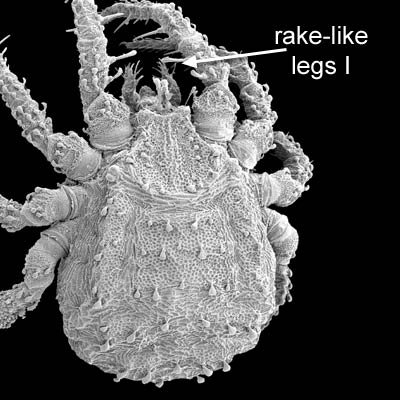
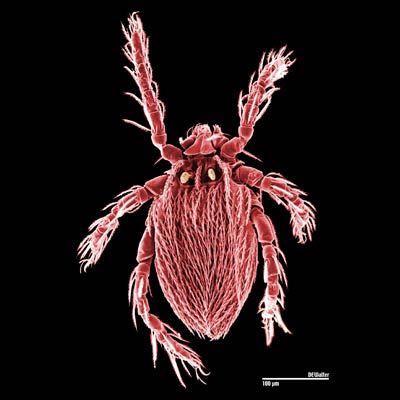
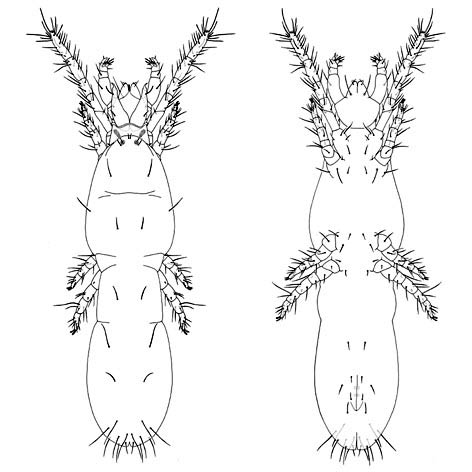
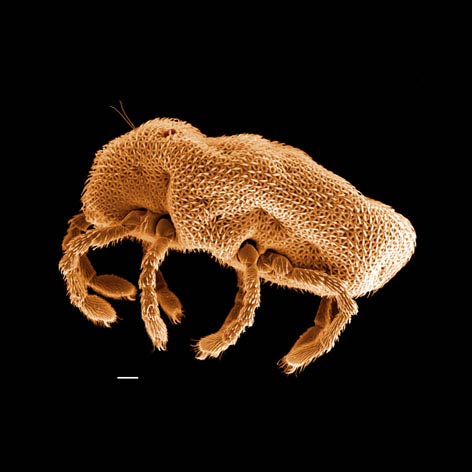
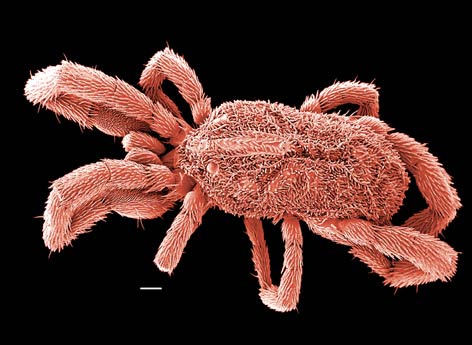
Most Anystides are thought to be predators of small arthropods. They are common in dry habitats, including deserts, where they are found in leaf litter and on rock surfaces, bark, and foliage. The Anystidae are known as 'whirligig mites' because of the rapid, spinning style of running exhibited by many species; some are useful biocontrol agents of mite and insect pests. The Caeculidae are also common in dry soils and in rocky habitats. These are distinctive sit-and-wait predators with massive spiny legs I; however, at least one species has been cultured on fungi. The Paratydeidae are small elongate mites with a distinctive idiosomalidiosomal:
(idiosomatic) adjectival form of idiosoma.
furrow posteriorposterior:
the back part of the body or towards that region in comparison, e.g., 'posterior to'.
of legs IV. Their ecology is poorly understood. The same can be said of the less elongate Pseudocheylidae that are characteristic of dry soils.
The Parasitengona are united on the basis of their complex life cycle. Larvae are parasites of invertebrates or vertebrates and are usually heteromorphicheteromorphic:
having different morphological forms; referring either to different forms within a particular life stage (e.g., normal and heteromorphic deutonymphs in some Mesostigmata; protogynes vs. deutogynes in Eriophyoidea; heteromorphic vs. homeomorphic males in the Astigmata) or to a developmental stage that differs radically from other stages (e.g., the heteromorphic deutonymph or hypopus in the Astigmata).
to the nymphal and adult stages. The predatory deutonymphal stagestage:
a distinct developmental form, e.g., the egg, larval, nymphal and adult stages. Since mite instars are usually morphologically distinct, they are also stages (and see stase). Some authors, however, insist that instar should be apolysis to apolysis and stage ecdysis to ecdysis. Since apolysis can be a discontinuous process and, in any case, is difficult to determine, in practice the difference between a stage and an instar is abstract and of importance only if you have a contentious referee.
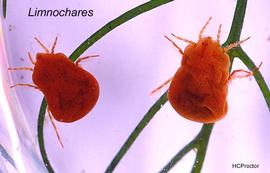
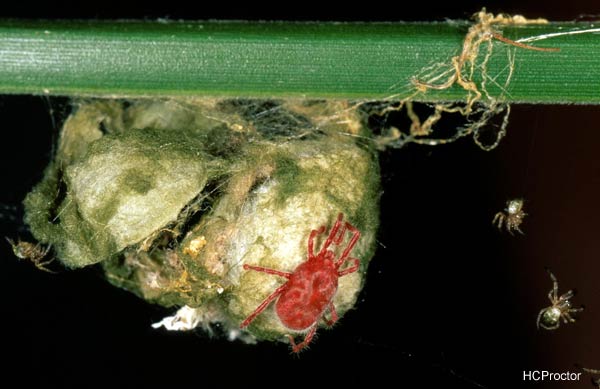
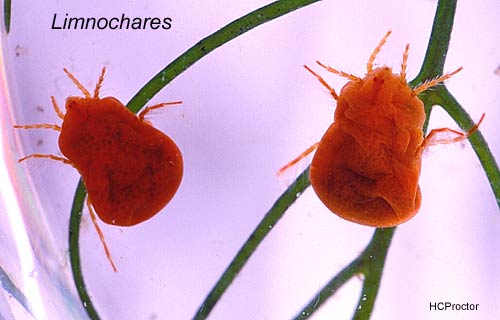
takes place in between the inactive pupa-like proto- and tritonymphal stages. Most postlarval Parasitengona are predators of small invertebrates, particularly arthropods, but a few species are parasitic as adults. The majority of the described species belong to the Hydrachnidiae, or 'water mites'. The approximately 2,000 named species of terrestrial Parasitengona fall into two groups: the Erythraiae, which have chelicerae that can be retracted within the idiosoma; and the Trombidiae, which have non-retractable chelicerae. Members of both groups are often large (5–8 mm), bright red and furry, resulting in the common name 'velvet mites'. They are abundant and diverse inhabitants of leaf litter, moss, the upper layers of soil, and foliage. The families Leeuwenhoekiidae and Trombiculidae are the well known chiggers.
Author: David E. Walter
Content last updated Sept. 2006, unless indicated otherwise
Lucid key player updated Sept. 2025
idtools.org