test
Raphignathina Kethley, 1982
Superorder Acariformes » Order Trombidiformes » Suborder Prostigmata » Infraorder EleutherengonaEleutherengona:
(also Eleutherengonida, Eleutherengonina, Eleutherengonides) an infraorderwithin the Prostigmata consisting of the two hyporders Raphignathina and Heterostigmata. Eleutherengona includes many of the most important plant-parasitic mites, e.g., spider mites, broad mite, cyclamen mite.
» Hyporder Raphignathina
superfamilies: Cheyletoidea, Myobioidea, Pterygosomatoidea, Raphignathoidea, Tetranychoidea
spider mites, peacock mites, false spider mites, raphignathoids, cheyletoids, myobiids, cheyletiella, follicle mites, quill mites, skin mites, walking dandruff
very high
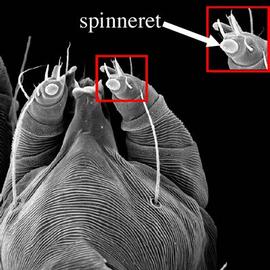
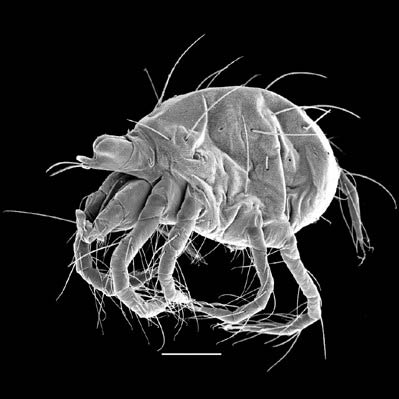
Very high. The Tetranychoidea contains most of the important plant-parasitic mites outside of the Eupodides, including the spider mites and false spider mites. The Cheyletoidea contains many important parasites of wildlife and some important pests of pets, laboratory animals, livestock, and people.
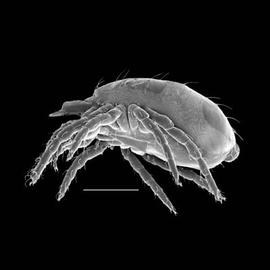
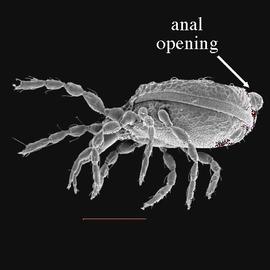
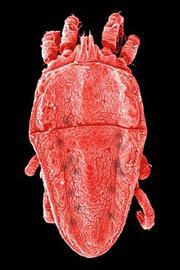
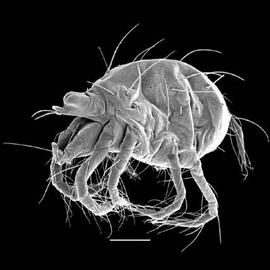
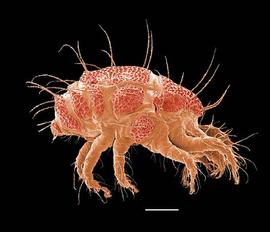
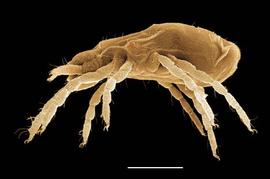
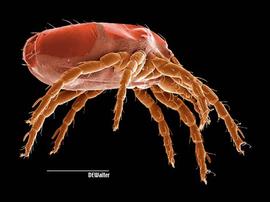
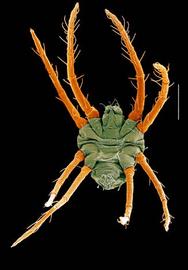
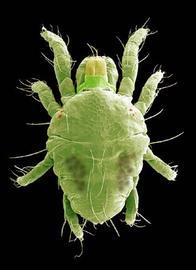
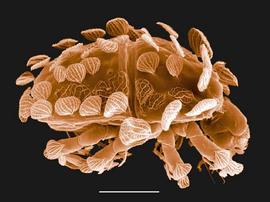
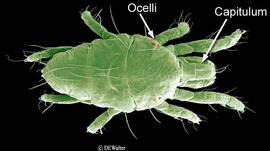
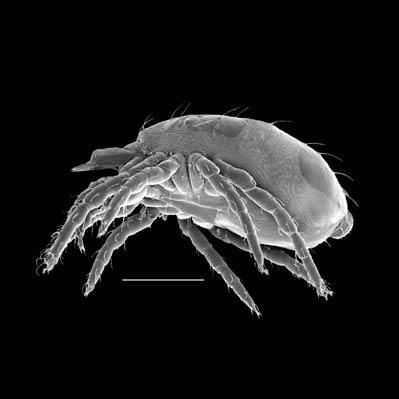
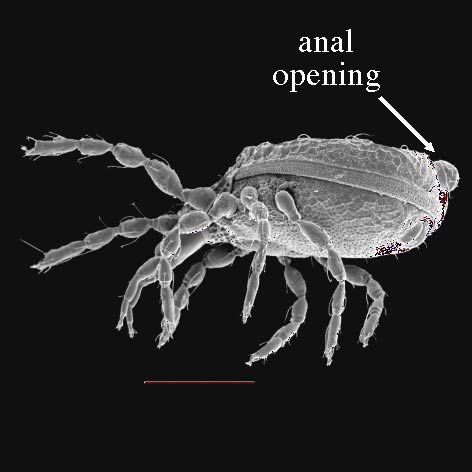
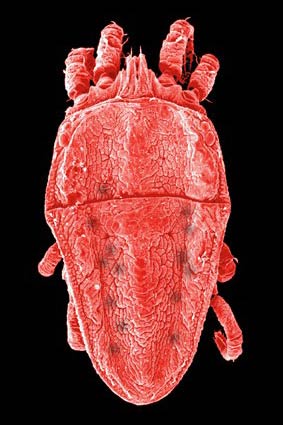
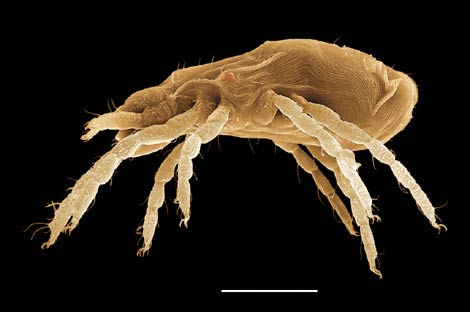
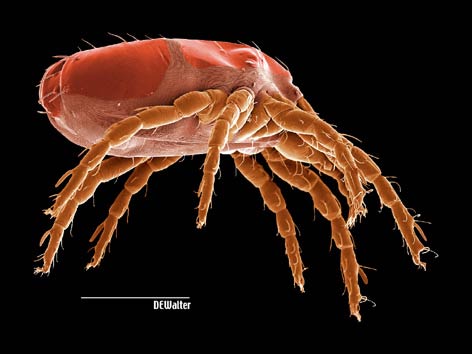
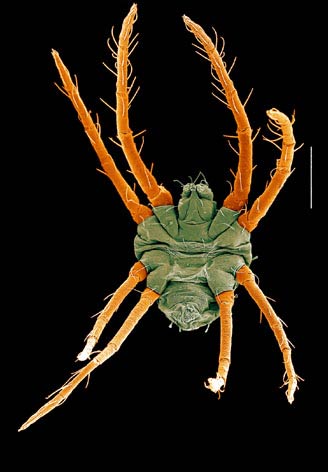
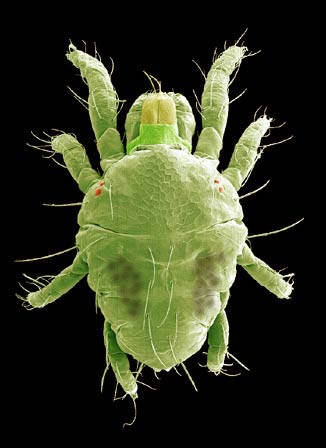
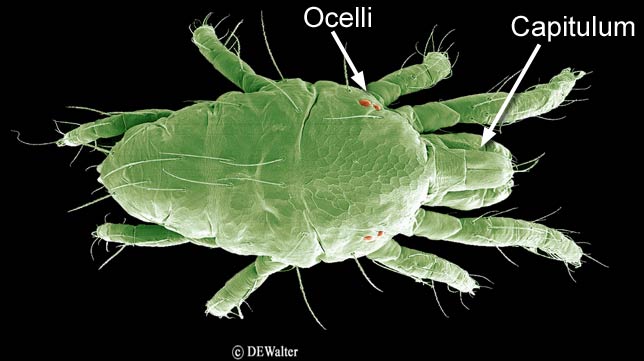
Raphignathina are small to medium in size; most species soft-bodied, others with varying degrees of dorsaldorsal:
relating to the upper or back side; opposed to ventral.
sclerotization; mostly white, red, yellow, or green in color. Cheliceralcheliceral:
of or pertaining to the chelicera.
bases free, adnate, fused mesally into a stylophorestylophore:
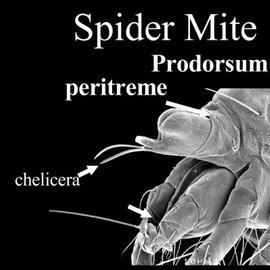
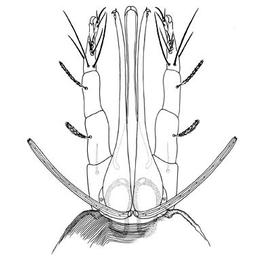
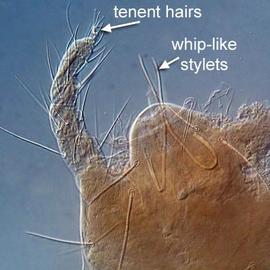
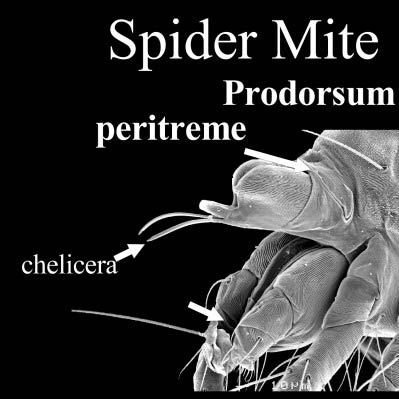
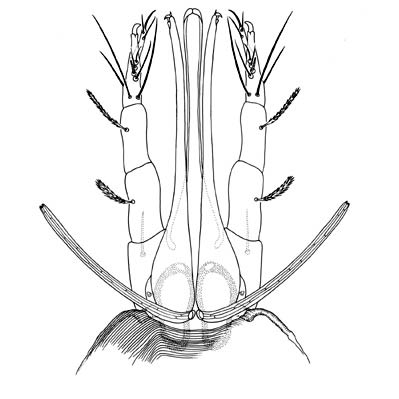
chelicerae formed of fused cheliceral bases bearing stylet-like movable digits as in Raphignathae (Prostigmata), e.g., the plant parasitic spider mites and their relatives (Tetranychoidea). In predatory and parasitic Cheyletoidea and parasitic Myobiidae, the stylophore and subcapitulum are fused into a gnathosomal capsule.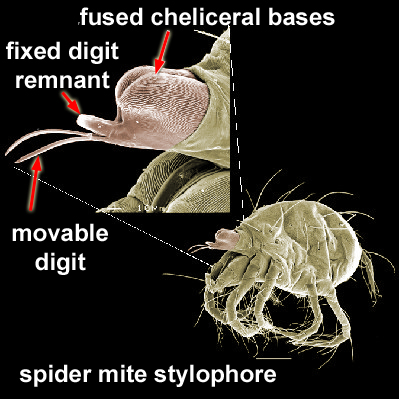 (sometimes withdrawn into the bodybody:
the idiosoma of mites.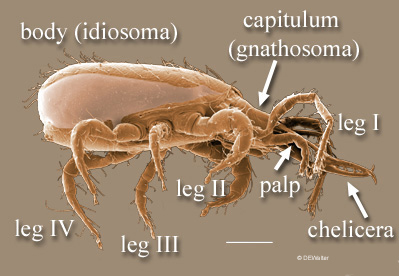 ), or forming a gnathosomal capsulegnathosomal capsule:
a fusion of the gnathosomal elements (chelicerae and subcapitulum) into a single structure, as seen in protigmatans such as Heterostigmata, Myobiidae, and Cheyletoidea (also tegmen).
; chelicerae with fixed digitfixed digit:
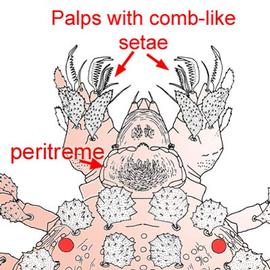
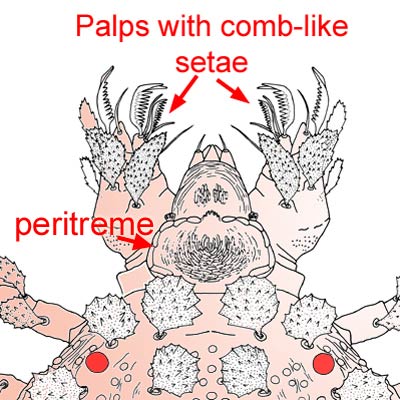
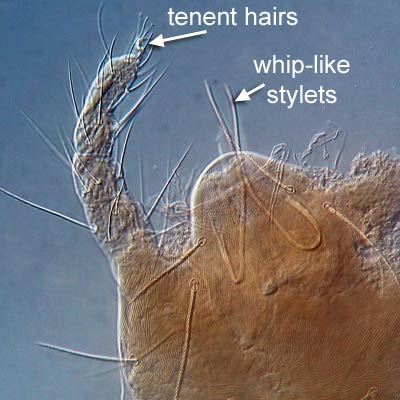
the distal extension of the middle article of the chelicera; usually bearing teeth and a distal hook and opposed to the movable digit in chelate-dentate forms, but often regressed; in Mesostigmata the fixed digit may bear the pilus dentilis.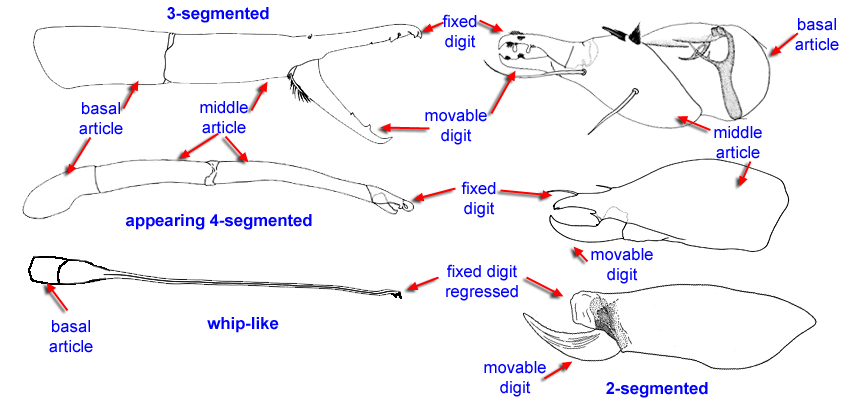 reduced and movable digit bladelike, needle-like, or whiplike. Peritremes, when present, often elaborate chamberedchambered:
a structure with discrete compartments, e.g., the peritremes of some ologamasids (Mesostigmata) and prostigmatans.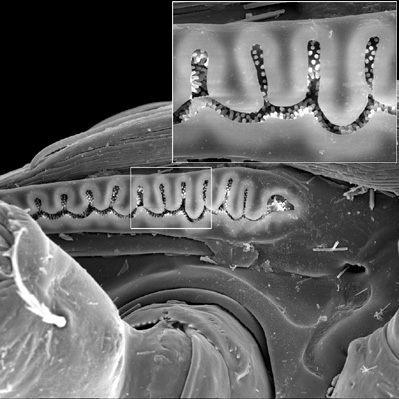 structures on the dorsaldorsal:
relating to the upper or back side; opposed to ventral.
surface of the prodorsumprodorsum:
the dorsal surface of the propodosoma.
or chelicerae; naso absent; prodorsal trichobothriatrichobothrium:
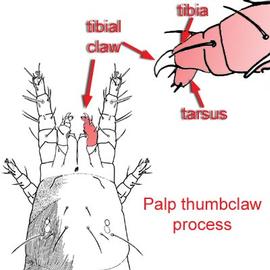
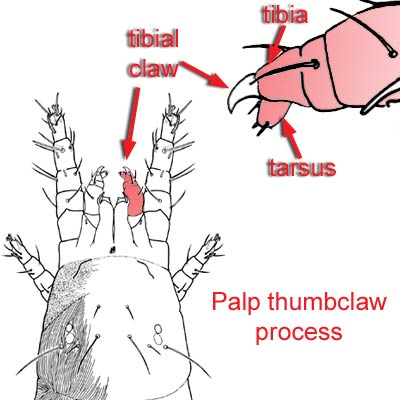
(pl. trichobothria) (= bothridial sensillum) an often elaborately modified seta set in a cup-like base; forms include filiform, ciliate, pectinate or variously thickened or clubbed (bat-like to globose or capitate).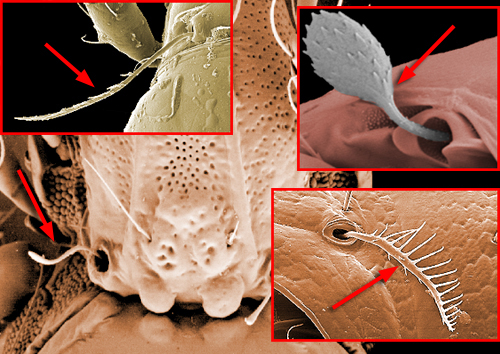 absent; eye lenses usually present. Palps 4–5 segmented; usually with one or more clawclaw:
like - having a distal hook; resembling a claw.
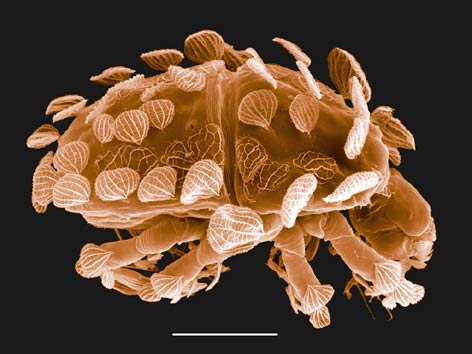
-like setaeseta:
(pl. setae, from L. = bristle) cuticular process composed of a hollow shaft (sometimes filled with a refractive material) produced from a membranous socket (the alveolus); the hair-like, spine-like, branched or variously expanded structures on the surfaces of the legs and body. Most setae function as mechanoreceptors, but others (e.g., solenidia) are chemoreceptors or have unknown or ambiguous functions.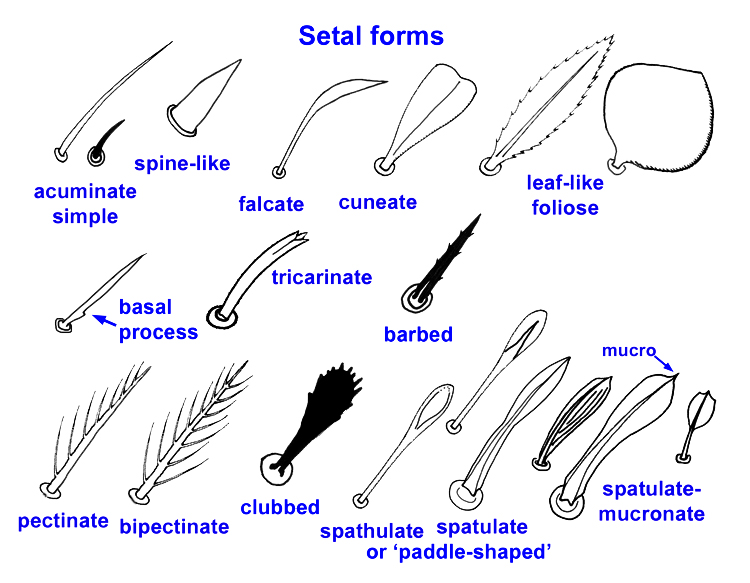 on the palp tibiatibia:
(pl. tibiae) the leg segment between the genu and the tarsus.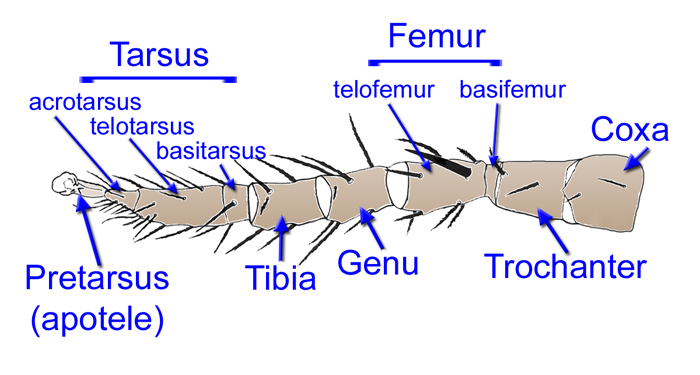 and with a thumb- or button-like subterminal palp tarsustarsus:
(pl. tarsi) the subdistal leg segment between the tibia and the pretarsus (apotele).
. Body setaeseta:
(pl. setae, from L. = bristle) cuticular process composed of a hollow shaft (sometimes filled with a refractive material) produced from a membranous socket (the alveolus); the hair-like, spine-like, branched or variously expanded structures on the surfaces of the legs and body. Most setae function as mechanoreceptors, but others (e.g., solenidia) are chemoreceptors or have unknown or ambiguous functions. range from short and sparse, to long and barbed, to dentritic, to plate-like. Leg tarsitarsus:
(pl. tarsi) the subdistal leg segment between the tibia and the pretarsus (apotele).
usually with tenent hairs on claws or empodiumempodium:
(pl. empodia) an unpaired structure arising between the tarsal claws, ranging from pad-like to claw-like and often bearing structures such as tenent hairs, dense setulae, or taking the form of a featherclaw (Eriophyoidea)..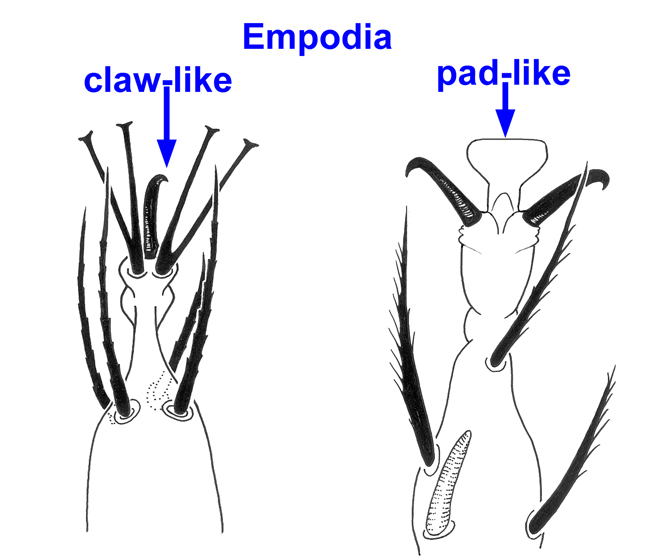 . Genital papillaegenital papillae:
1-3 pairs of extrusible finger-like to button-like projections, usually retracted into in the genital vestibule of acariform mites; sometimes formed as sessile disks around the genital opening; thought to be osmoregulatory structures; modified or multiplied and dispersed over the body in many freshwater mites. Genital papillae are absent in the larva, but may be added ontogenetically: protonymphs have one pair, deutonymphs two pairs, and tritonymphs (and adults) three pairs. The tritonymphal pair of papillae is often lost. The serially homologous Claparède's organ is usually present in the larvae (and prelarvae) of mites exhibiting genital papillae in nymphs and adults (Oudeman's Rule).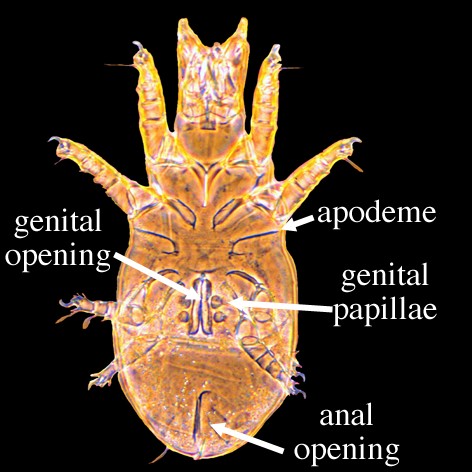 absent; males with an intromittent aedeagusaedeagus:
a male intromittent organ, especially when sclerotized (e.g., in Tetranycoidea, Raphignathoidea); a penis is a flexible, membranous intromittent organ, although 'penis' is often used for aedeagi (e.g., in Astigmata).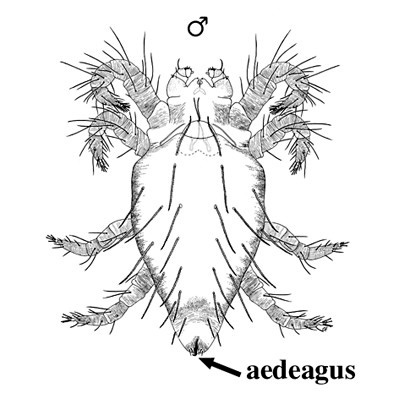 .
.
Anystides and Eupodides usually have genital papillaegenital papillae:
1-3 pairs of extrusible finger-like to button-like projections, usually retracted into in the genital vestibule of acariform mites; sometimes formed as sessile disks around the genital opening; thought to be osmoregulatory structures; modified or multiplied and dispersed over the body in many freshwater mites. Genital papillae are absent in the larva, but may be added ontogenetically: protonymphs have one pair, deutonymphs two pairs, and tritonymphs (and adults) three pairs. The tritonymphal pair of papillae is often lost. The serially homologous Claparède's organ is usually present in the larvae (and prelarvae) of mites exhibiting genital papillae in nymphs and adults (Oudeman's Rule). and prodorsal trichobothriatrichobothrium:
(pl. trichobothria) (= bothridial sensillum) an often elaborately modified seta set in a cup-like base; forms include filiform, ciliate, pectinate or variously thickened or clubbed (bat-like to globose or capitate)., both of which are lacking in the Raphignathina.
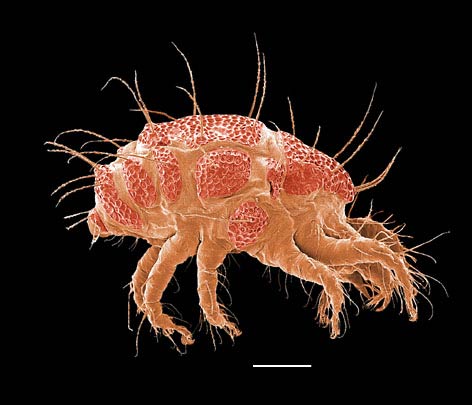
The Raphignathoidea is composed of several families of predatory and herbivorous mites, and are very common in soil, moss and on foliage. The Stigmaeidae are the most ecologically diverse, acting as predators in leaf litter and in trees, and herbivores in moss. Barbutiidae, Caligonellidae, Camerobiidae, Cryptognathidae, Dasythyreidae, Eupalopsellidae and Raphignathidae are frequently encountered in the drier soil microhabitats (e.g., dry soil, bark, moss). Homocaligidae, on the other hand, appear restricted to semi-aquatic habitats. Most families of Cheyletoidea are parasites that are unlikely to turn up in soil samples. The exception is Cheyletidae, which includes many free-living predators inhabiting litter, soil, tree bark, foliage, as well as stored products and vertebrate nests. Myobiidae are fur parasites of rodents, insectivores and bats. The Tetranychoidea are plant-associated mites, and includes the infamous spider mites (Tetranychidae). Tetranychoid species that feed on grasses or pasture legumes may occasionally appear in soil samples.
Author: David E. Walter
Content last updated Sept. 2006, unless indicated otherwise
Lucid key player updated Sept. 2025
idtools.org