test
Heterostigmata Berlese, 1899
Superorder Acariformes » Order Trombidiformes » Suborder Prostigmata » Infraorder EleutherengonaEleutherengona:
(also Eleutherengonida, Eleutherengonina, Eleutherengonides) an infraorderwithin the Prostigmata consisting of the two hyporders Raphignathina and Heterostigmata. Eleutherengona includes many of the most important plant-parasitic mites, e.g., spider mites, broad mite, cyclamen mite.
» Hyporder Heterostigmata
superfamilies: Dolichocyboidea, Heterocheyloidea, Pyemotoidea, Pygmephoroidea, Tarsocheyloidea, TarsonemoideaTarsonemoidea:
(also Tarsonemina) a superfamily within Prostigmata > infraorder Eleutherengona > hyporder Heterostigmata consisting of two families: Tarsonemidae and Podapolipidae.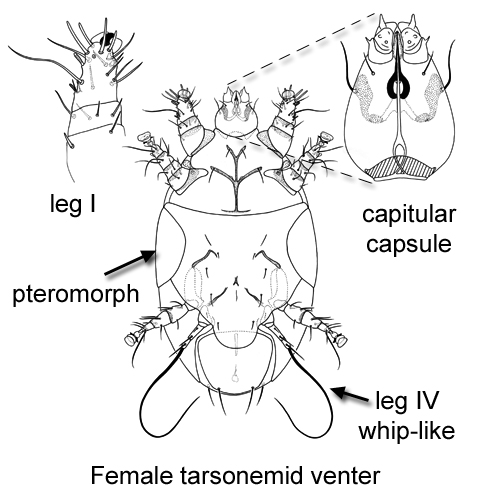 , Trochometridioidea
tarsonemids, pygmephorids, scutacarids, pyemotids, straw itch mites, red pepper mites, tracheal mites, broad mitebroad mite:
(also tea mite) Polyphagotarsonemus latus (Banks) a plant-parasitic tarsonemid mite.
, cyclamen mite.
very high
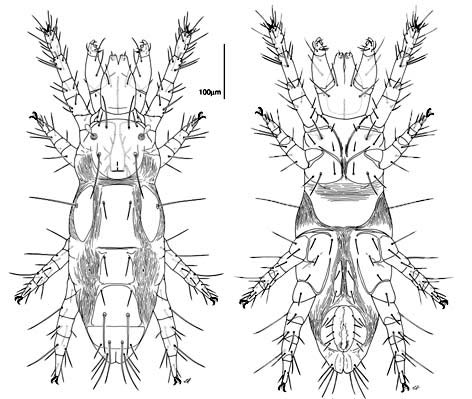
High. The Heterostigmata contains a couple of important crop pests (broad mite, cyclamen mite) and some pests of ferns, mushroom culture (red pepper mites), and bees (tracheal mites), as well as parasitoids of insects, including those that sometimes bite people (straw itch mites).
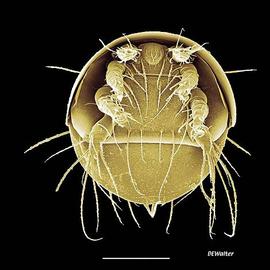
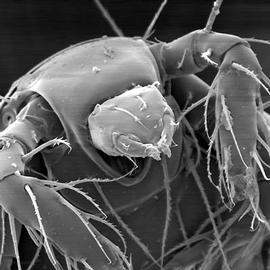
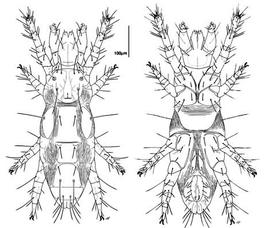
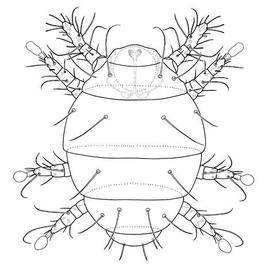
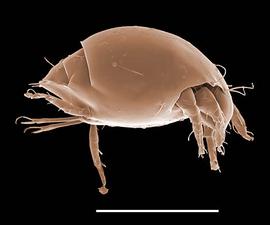
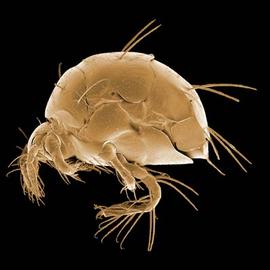
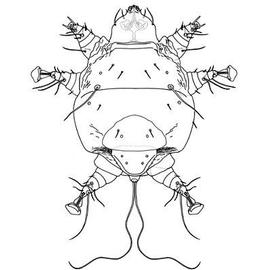
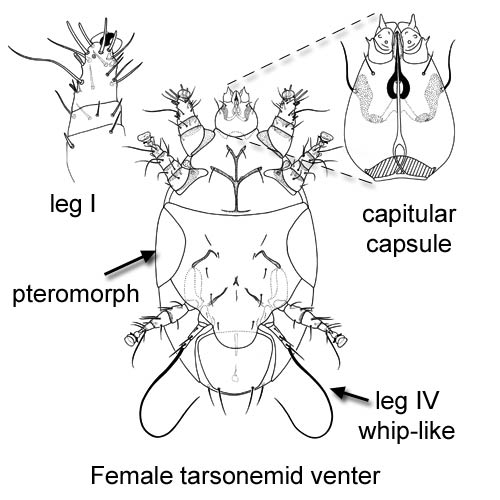
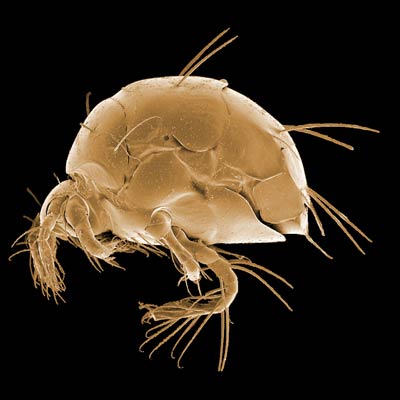
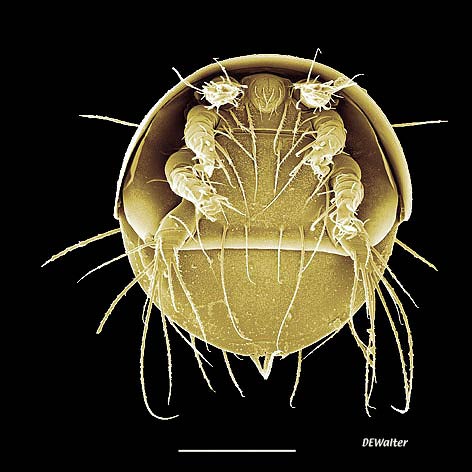
Heterostigmata are minute to medium-sized; usually well armored, with several large dorsaldorsal:
relating to the upper or back side; opposed to ventral.
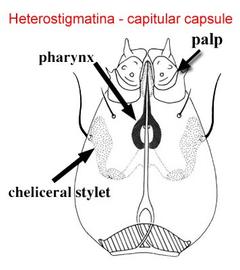
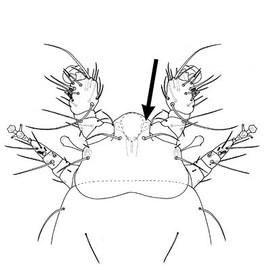
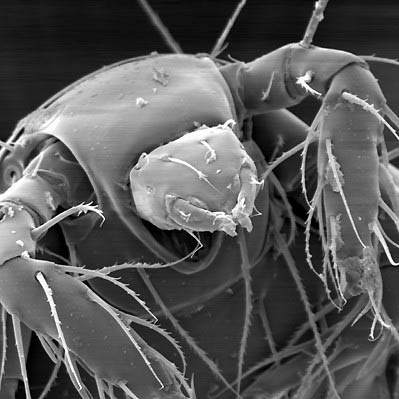
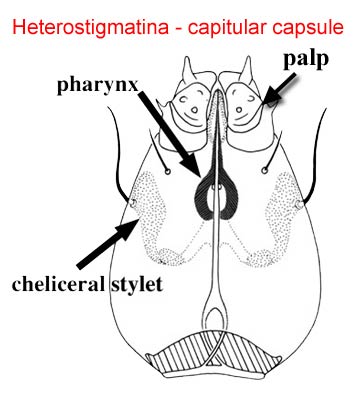
sclerites; white, yellow, or brown in color. Capitulumgnathosoma:
(= capitulum) the anteriormost part of a mite or ricinuleid, composed of the cheliceral and pedipalpal segments and separated from the body (idiosoma) by a ring of soft cuticle.
typically head-like; cheliceralcheliceral:
of or pertaining to the chelicera.
bases fused into a single unit (stylophorestylophore:
chelicerae formed of fused cheliceral bases bearing stylet-like movable digits as in Raphignathae (Prostigmata), e.g., the plant parasitic spider mites and their relatives (Tetranychoidea). In predatory and parasitic Cheyletoidea and parasitic Myobiidae, the stylophore and subcapitulum are fused into a gnathosomal capsule.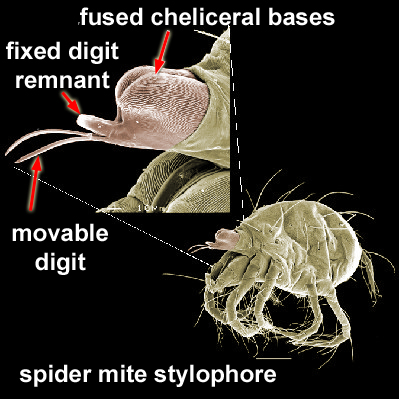 ) that may or may not be fused with the subcapitulumsubcapitulum:
(also infracapitulum) the venter of the capitulum; the ventral faces of the fused palpcoxae; apparently formed independently in the two superorders of mites.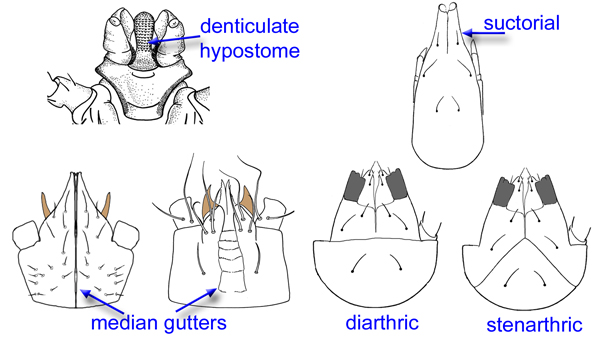 ; fixed digitfixed digit:
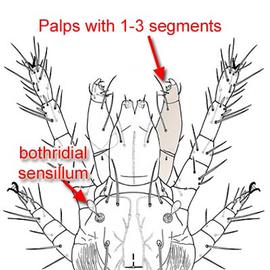
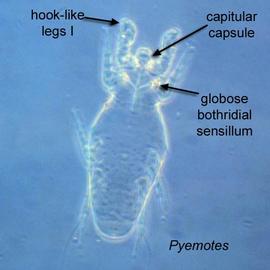
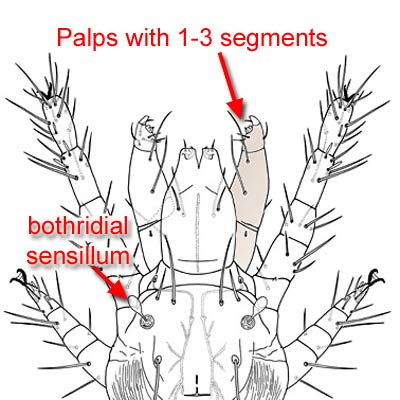
the distal extension of the middle article of the chelicera; usually bearing teeth and a distal hook and opposed to the movable digit in chelate-dentate forms, but often regressed; in Mesostigmata the fixed digit may bear the pilus dentilis.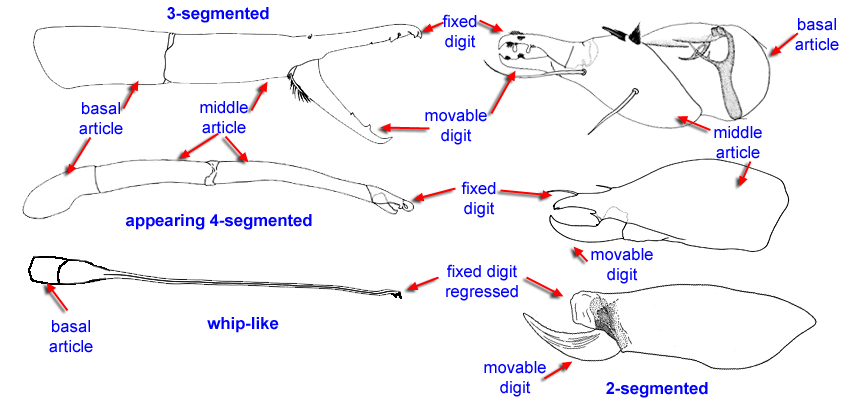 of the chelicera absent, movable digit blade-like or styletiform. Palps linear and reduced to 3 or fewer segments; palps may appear to be absent. In females stigmata open anterolaterally on the 'shoulders' of the prodorsumprodorsum:
the dorsal surface of the propodosoma.
, and the single pair of prodorsal trichobothriatrichobothrium:
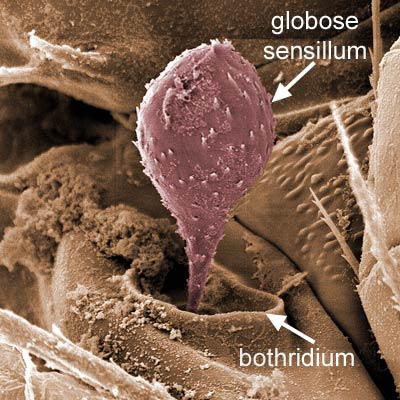
(pl. trichobothria) (= bothridial sensillum) an often elaborately modified seta set in a cup-like base; forms include filiform, ciliate, pectinate or variously thickened or clubbed (bat-like to globose or capitate).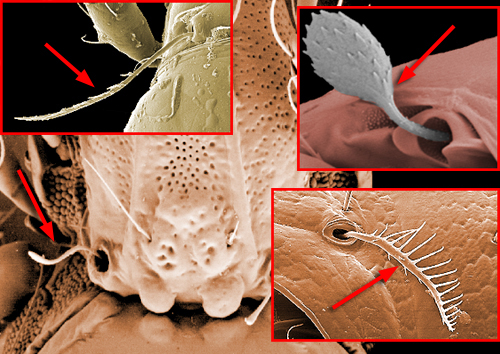 is capitate; stigmata and trichobothriatrichobothrium:
(pl. trichobothria) (= bothridial sensillum) an often elaborately modified seta set in a cup-like base; forms include filiform, ciliate, pectinate or variously thickened or clubbed (bat-like to globose or capitate). absent in males (except Tarsocheyloidea); eyes absent. Dorsaldorsal:
relating to the upper or back side; opposed to ventral.
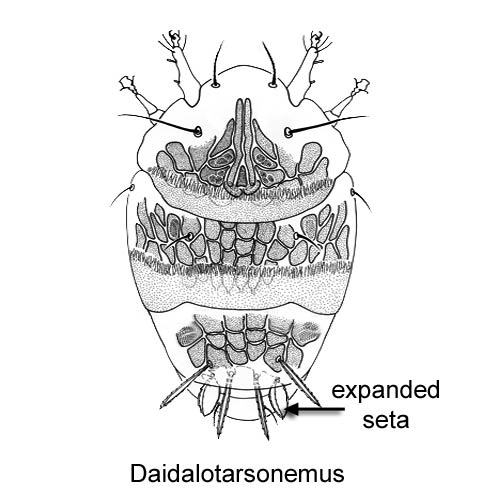
setation reduced, usually slender setaeseta:
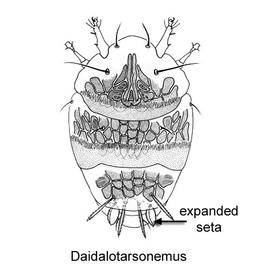
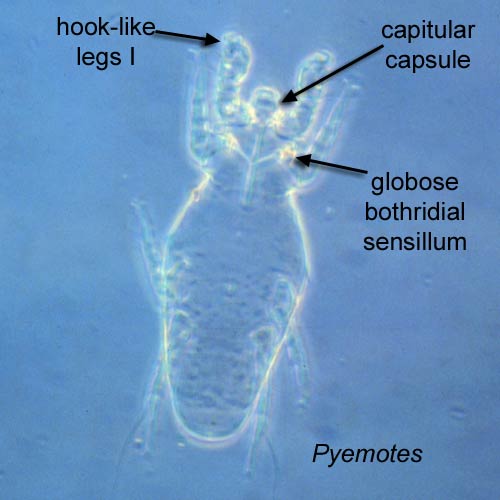
(pl. setae, from L. = bristle) cuticular process composed of a hollow shaft (sometimes filled with a refractive material) produced from a membranous socket (the alveolus); the hair-like, spine-like, branched or variously expanded structures on the surfaces of the legs and body. Most setae function as mechanoreceptors, but others (e.g., solenidia) are chemoreceptors or have unknown or ambiguous functions.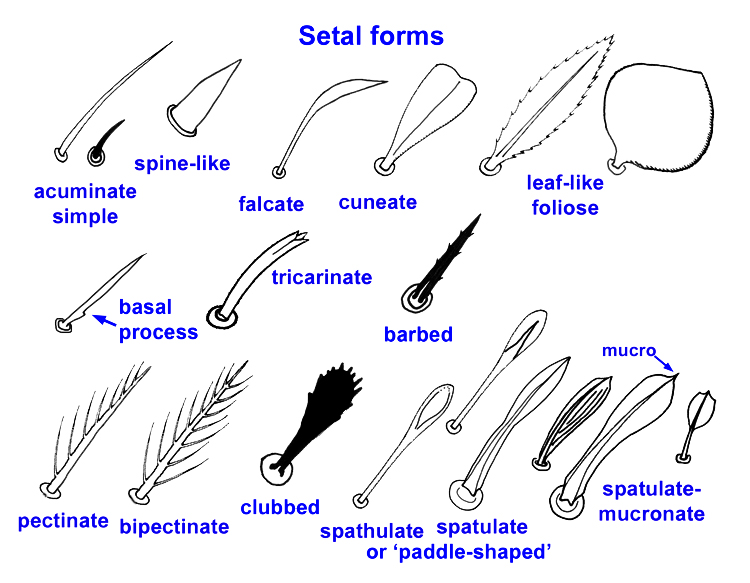 , but sometimes expanded, leaf-like. Legs I often with tarsal clawclaw:
like - having a distal hook; resembling a claw.
modified as a hookhook:
(as in cheliceral hook) the distal hook-like tips of chelicerae in the Mesostigmata, as opposed to cheliceral teeth.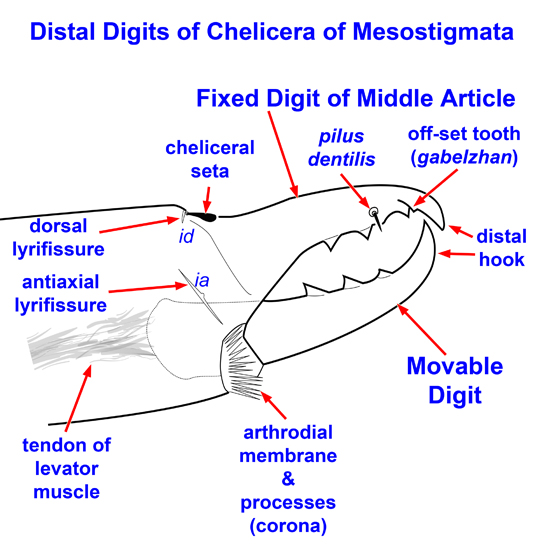 ; legs IV in females often reduced or absent; coxal fieldscoxal fields:
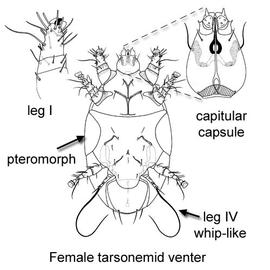
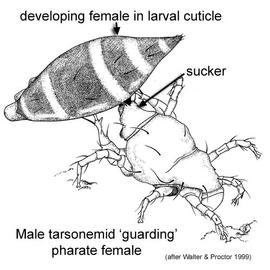
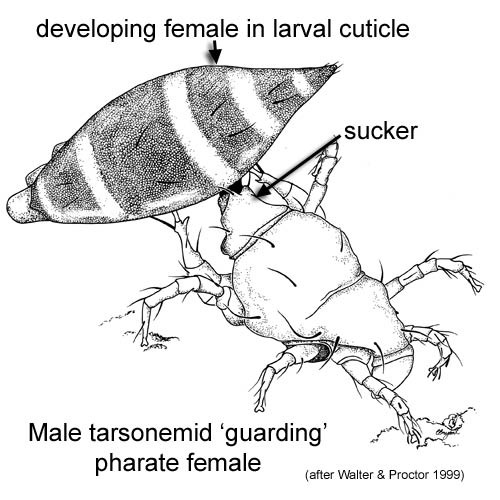
the venter of acariform mites where the coxae have fused to the body wall covering the sternal region.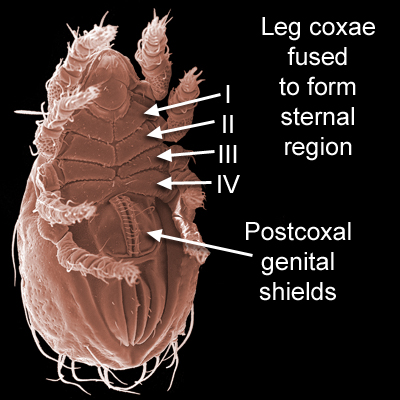 fused to varying degrees so that apodemes form cross-like patterns ventrally. Genital papillae absent. Males often with genital sucker for sequestering pharatepharate:
a mite or other arthropod between apolysis and ecdysis; the fully formed instar before it breaks through the previous cuticle.
female. Many species exhibit polymorphism related to phoresyphoresy:
a type of migration where mites board larger animals (usually insects or other arthropods) and cease or otherwise alter normal behaviors (e.g., feeding, reproduction, movement) until some cue elicits the departure from the animal and the resumption of normal behavior. Phoresy usually results in the dispersal of populations, but may result in reaggregation, especially for mites using highly specialized habitats (e.g., pitcher plants and other phytotelmata). Some mites hold on to their phoretic carriers with specialized structures (e.g., the anal pedicel in Uropodina; modified legs I in phoretomorphic Pygmephoridae; a specialized tooth on the chelicerae of many Macrocheles), but others simply use their feet or grip a seta with unmodified mouthparts. Phoretic relationships my be highly host specific, very general, or anywhere in between, depending on the species. In earlier work, phoresy was differentiated from parasitism by whether or not feeding occurred on the host. However, recent work has shown that some phoretic mites may also feed on or otherwise harm their host.
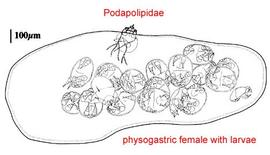
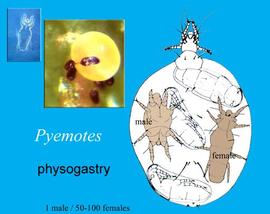
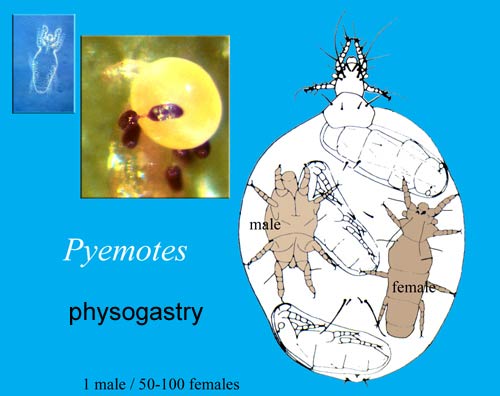
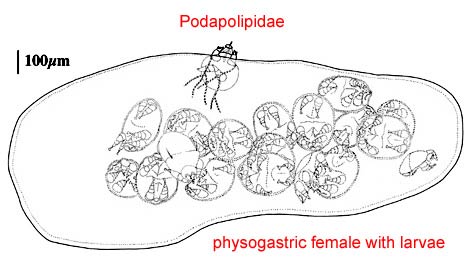
and some are physogastric.
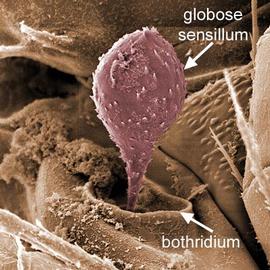
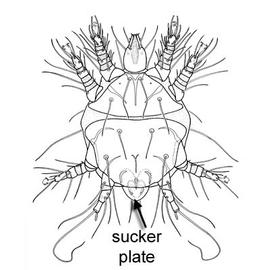
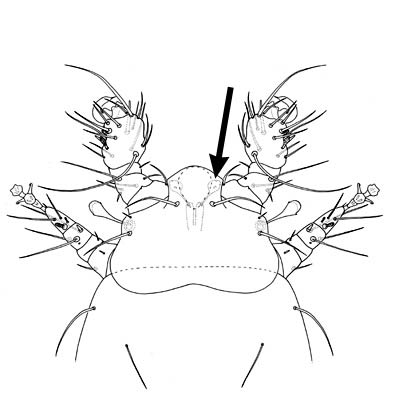
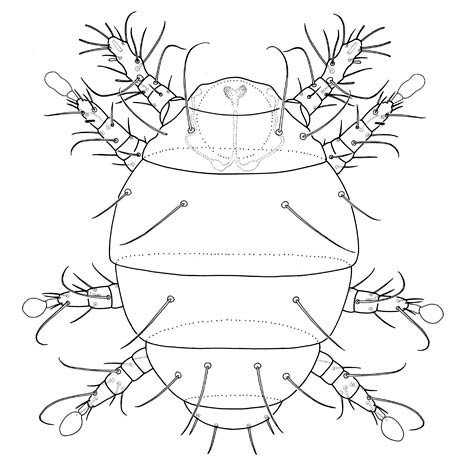
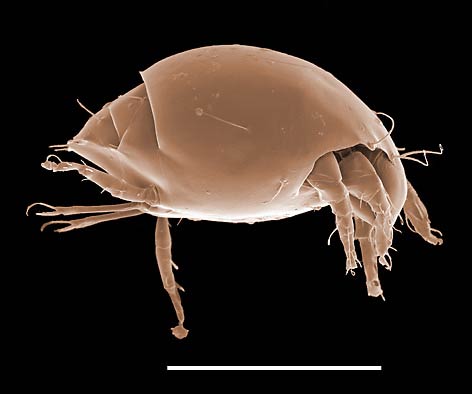
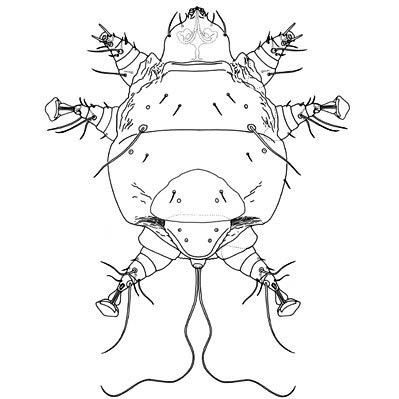
Female Heterostigmata have prodorsal trichobothriatrichobothrium:
(pl. trichobothria) (= bothridial sensillum) an often elaborately modified seta set in a cup-like base; forms include filiform, ciliate, pectinate or variously thickened or clubbed (bat-like to globose or capitate). (usually clubbed or globoseglobose:
spherical.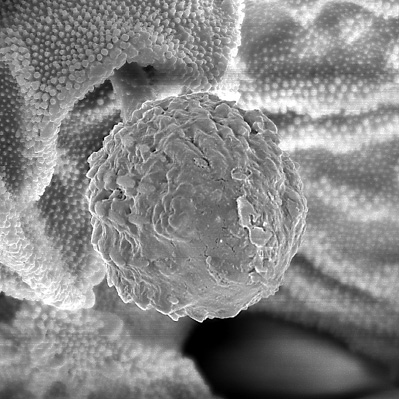 in shape) are usually sclerotized and have a distinctive beige-color similar to astigmatid hypopi (see Astigmata heteromorphicheteromorphic:
having different morphological forms; referring either to different forms within a particular life stage (e.g., normal and heteromorphic deutonymphs in some Mesostigmata; protogynes vs. deutogynes in Eriophyoidea; heteromorphic vs. homeomorphic males in the Astigmata) or to a developmental stage that differs radically from other stages (e.g., the heteromorphic deutonymph or hypopus in the Astigmata).
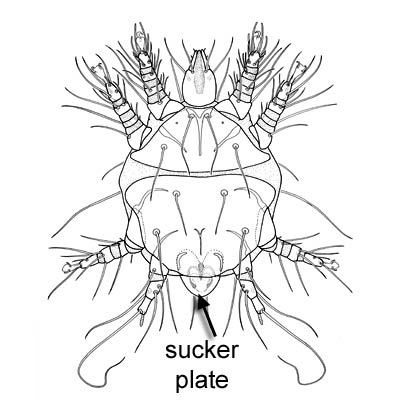
stages fact sheet), but the latter have a ventral sucker platesucker plate:
an array of modified setae in the anal region of the heteromorphic deutonymphs (hypopi) of Astigmatina.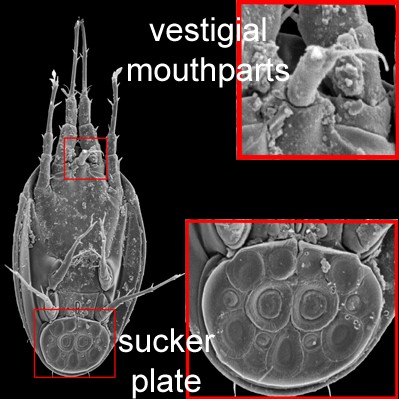 and lack trichobothriatrichobothrium:
(pl. trichobothria) (= bothridial sensillum) an often elaborately modified seta set in a cup-like base; forms include filiform, ciliate, pectinate or variously thickened or clubbed (bat-like to globose or capitate)..
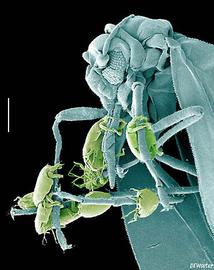
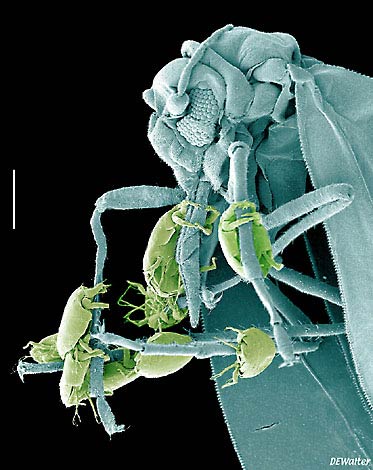
Most families of Heterostigmata are associated with insects or stored products. Tarsocheylids have been collected from the tunnels of bark beetles, beneath the elytra of passalid beetles, as well as from rotting wood. Heterocheylids are also passalid associates. Neither of these taxa is known to feed on their hosts. The interactions of Pygmephoroidea with their hosts are primarily phoretic, and the mites feed on fungus upon reaching their destination. In contrast, many species in the Pyemotoidea are parasites, parasitoids, and predators of insects. They are often found in infested stored products, and their mistaken biting of humans can cause severe itching and allergic reactions ('hay itch', 'straw itch', and 'grocer’s itch'). Female morphs specialised for hanging on to their hosts—phoretomorphs occur in several families of pygmephoroids and pyemotoids. These polymorphisms have caused much taxonomic confusion within the Heterostigmata. Within the TarsonemoideaTarsonemoidea:
(also Tarsonemina) a superfamily within Prostigmata > infraorder Eleutherengona > hyporder Heterostigmata consisting of two families: Tarsonemidae and Podapolipidae., the Podapolipidae are parasites of Coleoptera, Orthoptera and Hymenoptera. The Tarsonemidae have the most varied ecology of the Heterostigmata, sometimes acting as parasites or predators of insects (the most famous of these being the honeybee parasite Acarapis woodi), sometimes as fungivores, and sometimes as plant parasites.
Author: David E. Walter
Content last updated Sept. 2006, unless indicated otherwise
Lucid key player updated Sept. 2025
idtools.org