t
Uropodoidea Kramer, 1881
Polyaspidoidea and Trachyuropodoide
Superorder Parasitiformes » Order Mesostigmata » Suborder Monogynaspida » Infraorder Uropodina » Superfamily Uropodoidea
Including the families Uropodidae Kramer (s.l.) Nenteriidae Hirschmann, Trematuridae Berlese, Macrodinychidae Hirschmann, Trigonuropodidae Hirschmann, Urodinychidae Berlese, Dinychidae Berlese, Circocyllibamidae Sellnick, Deraiophoridae Trägårdh, Discourellidae Baker & Wharton
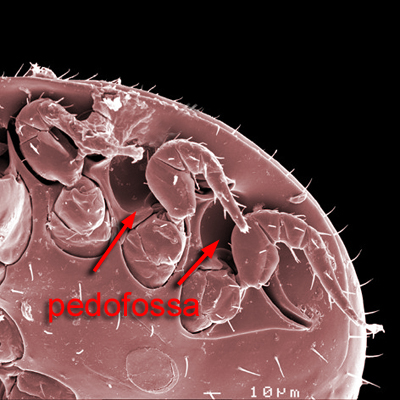 usually present
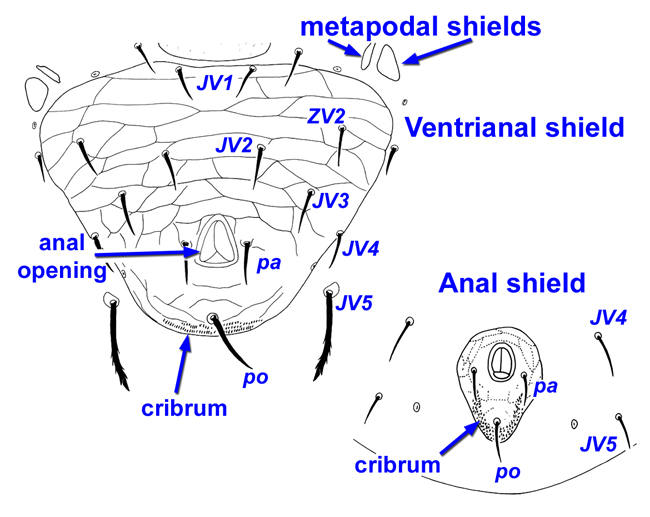 .
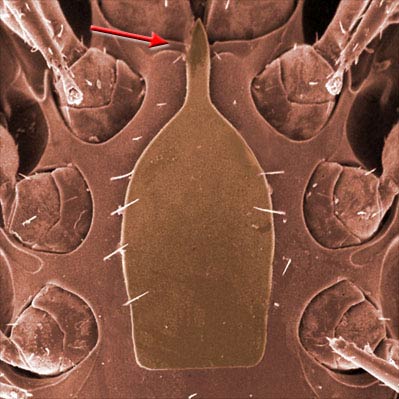
.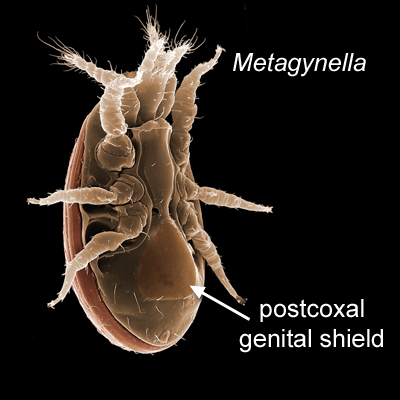 in Metagynella) often with anterior median process
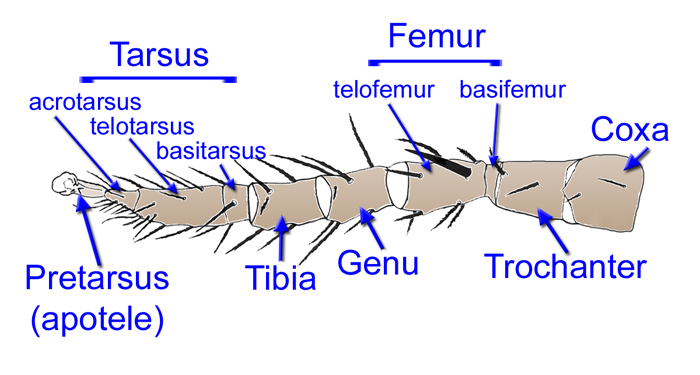 I with 4 setae; tibiatibia: I with 3 dorsaldorsal:
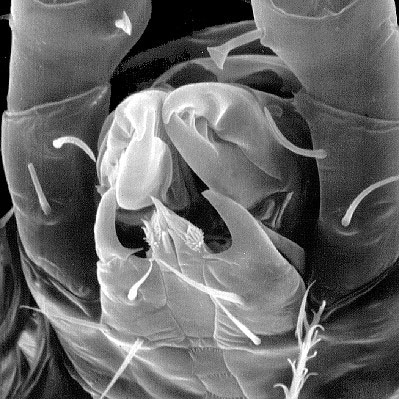 horn-like.
 hyaline; hypostomal denticleshypostomal denticles:
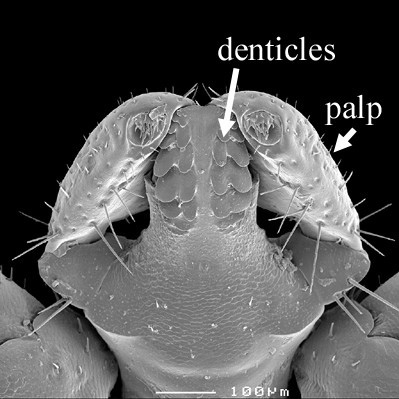 typically dense to irregular. Palp apoteleapotele:
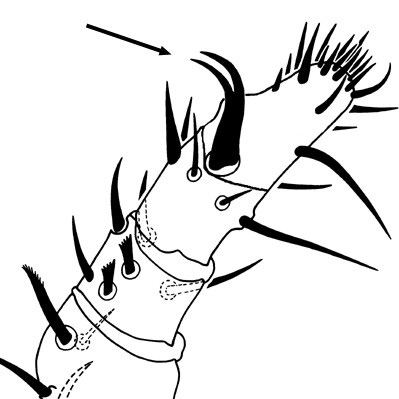 2-tined; palppalp:
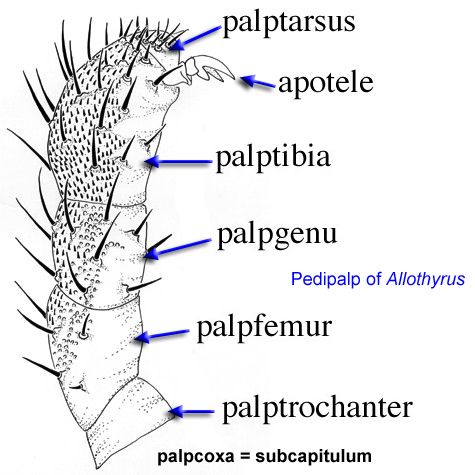 genu with 4–5 setae, palppalp: femur with 5 (rarely 4) setae.
 variable, usually wider than long.
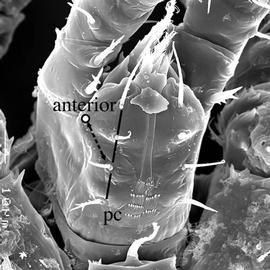
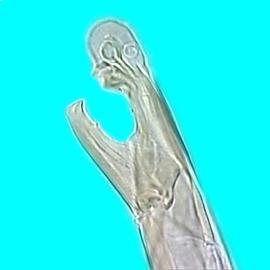
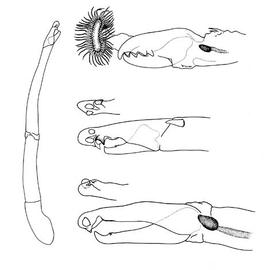
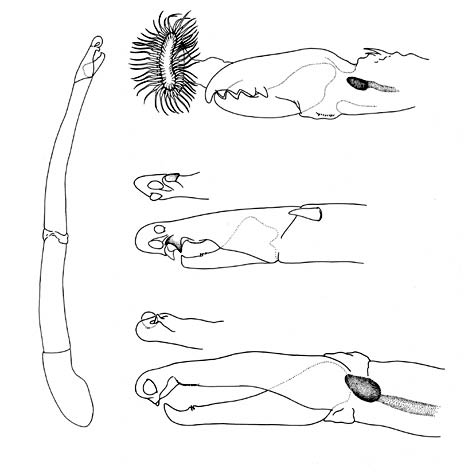
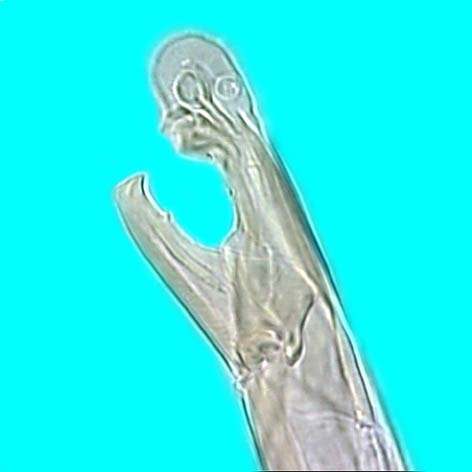
Chelicerae with large, sclerotized node at basebase:
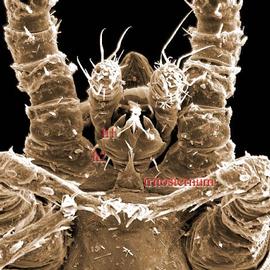
the usually columnar basal part of the tritosternum; sometimes expanded and rectangular or otherwise modified; the most basal part of any structure. of movable digit.............................. 3
- Chelicerae without large, sclerotized node.............................. 2
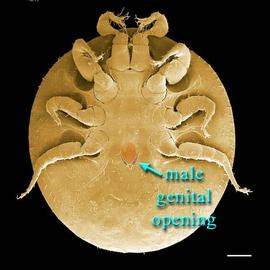
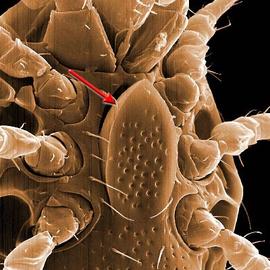
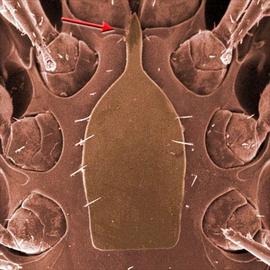
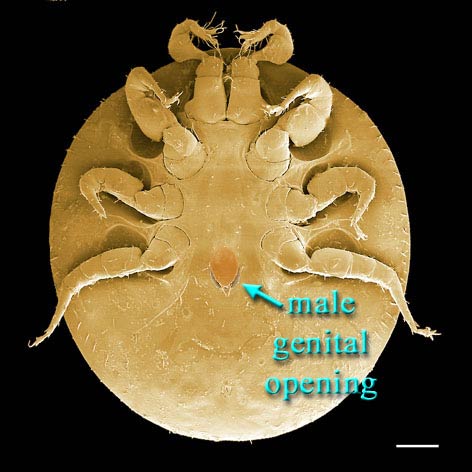
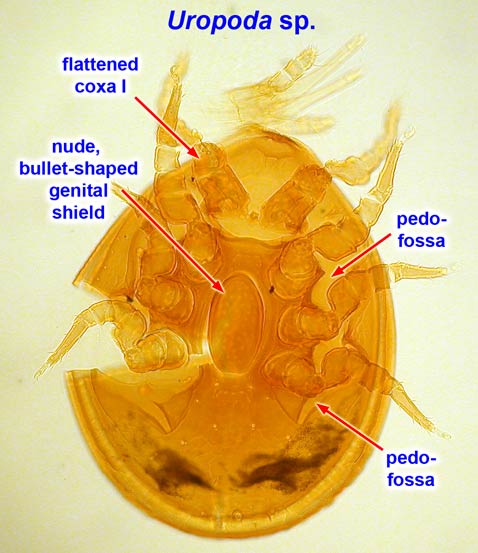
Genital opening intercoxal.............................. Uropodidae
- Genital opening postcoxalpostcoxal:
posterior to the coxae. .............................. Metagynuridae, Metagynella
Fixed digitfixed digit:
the distal extension of the middle article of the chelicera; usually bearing teeth and a distal hook and opposed to the movable digit in chelate-dentate forms, but often regressed; in Mesostigmata the fixed digit may bear the pilus dentilis.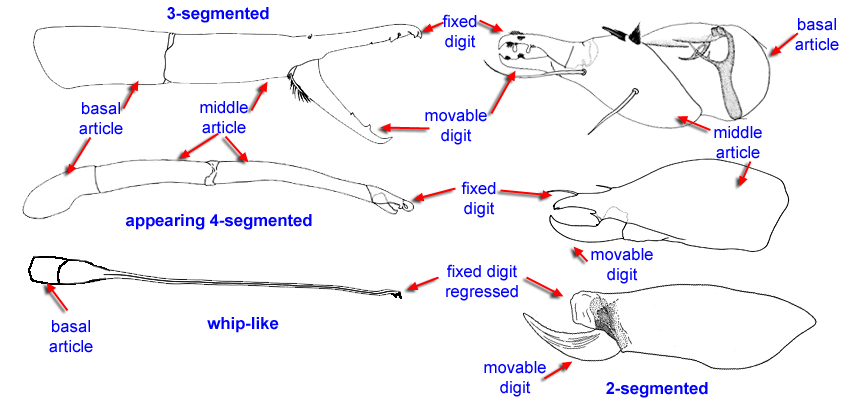 simple, lobed or acuminate distally, not ending in a flower-like process.............................. 4
- Fixed digitfixed digit:
the distal extension of the middle article of the chelicera; usually bearing teeth and a distal hook and opposed to the movable digit in chelate-dentate forms, but often regressed; in Mesostigmata the fixed digit may bear the pilus dentilis. ending in a flower-like process.............................. Uroactiniidae, Uroactinia
Pilus dentilispilus dentilis:
(pl. pili dentilis) a seta-like or membranous sensory organ inserted ventrolaterally on the fixed digit of the chelicera of many Mesostigmata.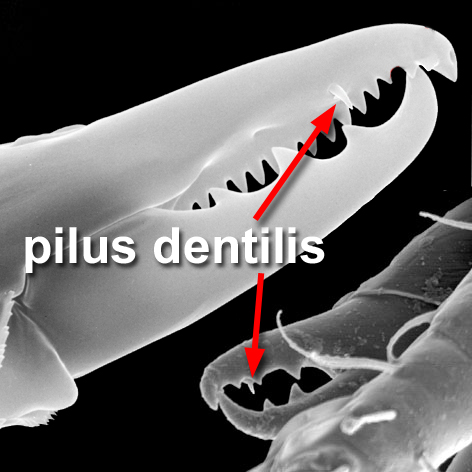 absent or modified into a membranous process; internal malae linear.............................. 6
- Pilus dentilispilus dentilis:
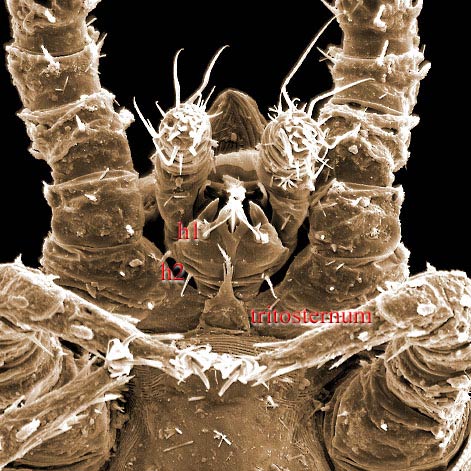
(pl. pili dentilis) a seta-like or membranous sensory organ inserted ventrolaterally on the fixed digit of the chelicera of many Mesostigmata. bifurcate; internal malae densely plumose, moustache-likemoustache-like:
having the appearance of a well developed handlebar moustache, as in the internal malae of most species of Veigaia (Mesostigmata). 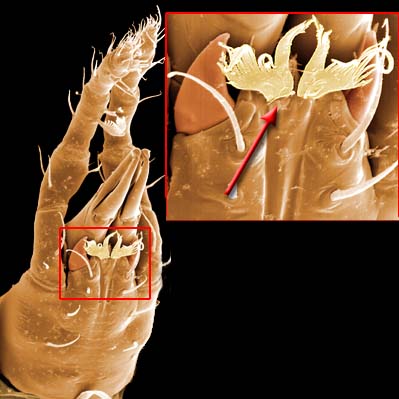 .............................. Trachyuropodidae (5)
Bodybody:
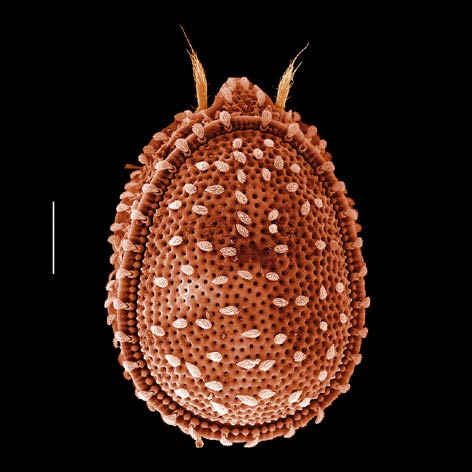
the idiosoma of mites.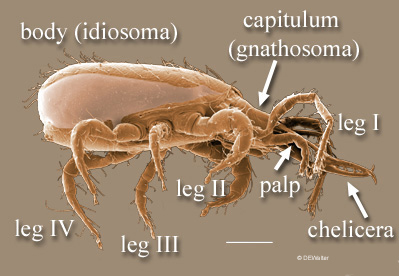 ornamented with large pits and/ or tubercles .............................. Trachyuropodidae, Trachyuropoda
- Bodybody:
the idiosoma of mites. flattened, oval, smooth to punctatepunctate:
usually referring to ornamentation on shields resembling a dense array of needle punctures; with a granular appearance.
, without large pits or tubercles.............................. Trachyuropodidae, Oplitis
Fixed digitfixed digit:
the distal extension of the middle article of the chelicera; usually bearing teeth and a distal hook and opposed to the movable digit in chelate-dentate forms, but often regressed; in Mesostigmata the fixed digit may bear the pilus dentilis. produced as strong lobe or acuminate structure; genugenu:
(pl. genua) (= patella) the 4th leg segment, between the femur and tibia.
I with pair of ventral setaeventral setae:
in the Lindquist-Evans system used in the Mesostigmata, the ventral region has up to three longitudinal rows (Jv, Zv, Lv) with 1-5 transverse row designations.
.............................. 9
- Chelicerae chelate-dentatechelate-dentate:
pincer-like chelicerae with teeth.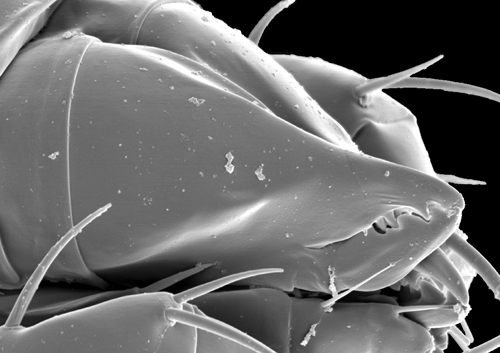 , without distaldistal:
towards the free end of an appendage.
process; genugenu:
(pl. genua) (= patella) the 4th leg segment, between the femur and tibia.
I without ventral setaeventral setae:
in the Lindquist-Evans system used in the Mesostigmata, the ventral region has up to three longitudinal rows (Jv, Zv, Lv) with 1-5 transverse row designations.
.............................. Trematuridae (7)
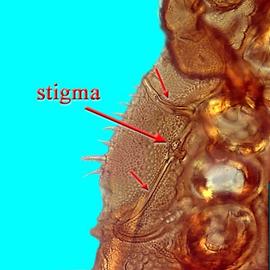
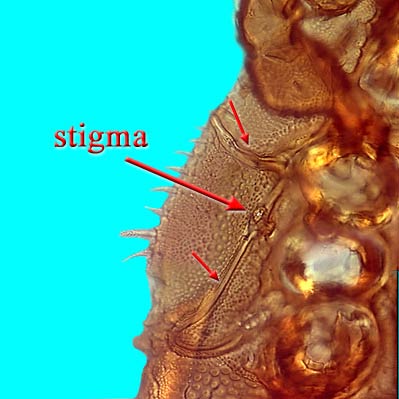
Peritremes present in adults (and deutonymphs).............................. 8
- Peritremes absent in adults (present in deutonymphs) ..............................Trematuridae, Trematura
Tectumgnathotectum:
(= epistome, tectum) an often membranous dorsal projection of the anterior margin of the basis capitulum in Mesostigmata; often diagnostic at family-, genus- or species-levels; also often difficult to see without high magnification and good optics. denticulate, taperingtapering:
drawn out or with margins converging.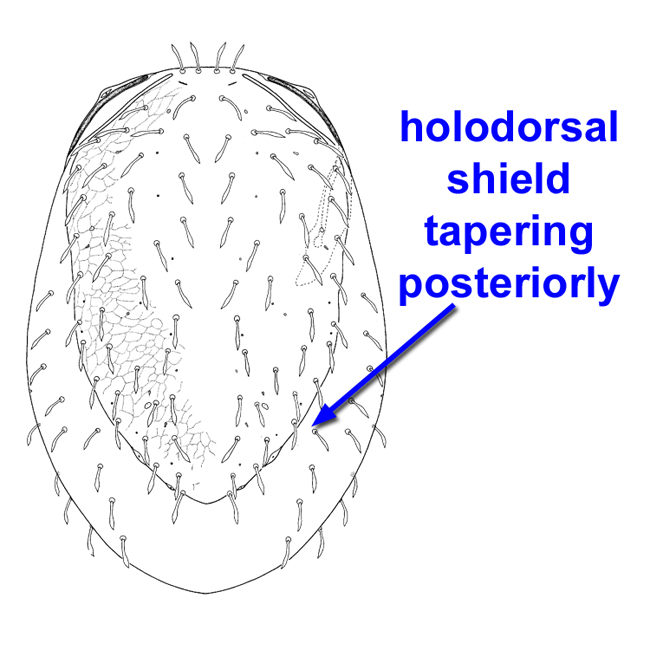 ; corniculicorniculus:
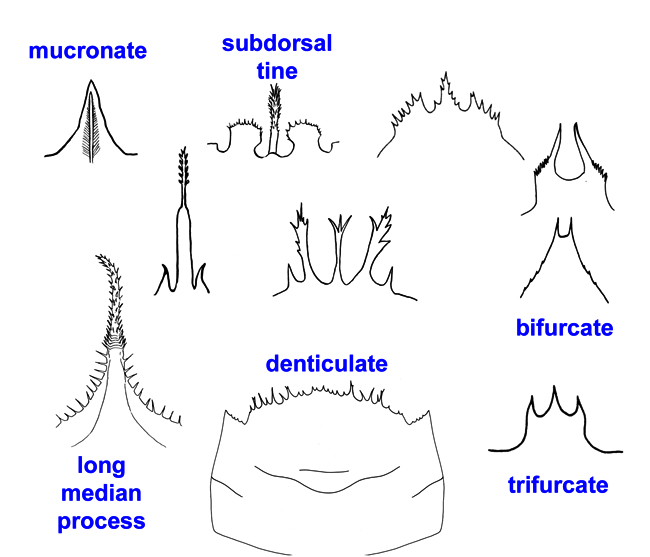
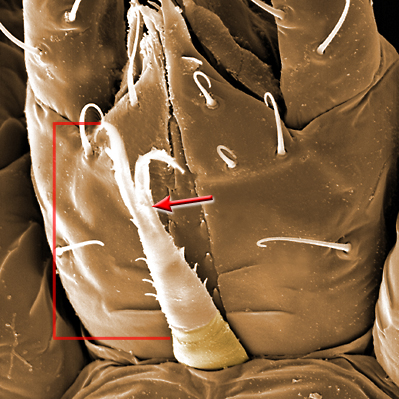
(pl. corniculi) (also, external malae) a usually horn-like process (sometimes toothed, bifurcate, trifurcate, spine-like, spatulate, or membranous) on the subcapitulum of parasitiform mites that usually supports the salivary styli. A toothed corniculus could be confused with a rutellum, a possibly homologous structure in Acariformes and Opilioacarida. Phytoseiid image is spatulate corniculus. divided; often with 1–2 pairs of elongate posteriorposterior:
the back part of the body or towards that region in comparison, e.g., 'posterior to'.
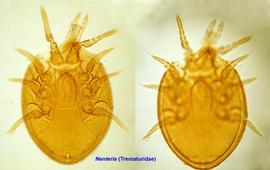
setae.............................. Trematuridae, Trichouropoda
- Tectumgnathotectum:
(= epistome, tectum) an often membranous dorsal projection of the anterior margin of the basis capitulum in Mesostigmata; often diagnostic at family-, genus- or species-levels; also often difficult to see without high magnification and good optics. with distally branched process; corniculicorniculus:
(pl. corniculi) (also, external malae) a usually horn-like process (sometimes toothed, bifurcate, trifurcate, spine-like, spatulate, or membranous) on the subcapitulum of parasitiform mites that usually supports the salivary styli. A toothed corniculus could be confused with a rutellum, a possibly homologous structure in Acariformes and Opilioacarida. Phytoseiid image is spatulate corniculus. simple; without elongate distaldistal:
towards the free end of an appendage.
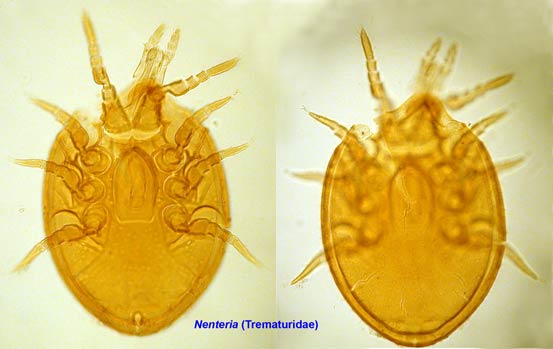
setae.............................. Trematuridae, Nenteria
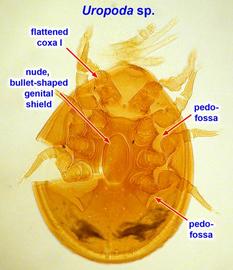
Pedofossaepedofossa:
(pl. pedofossae) (= fossae pedales, fovae pedales) recesses into which the legs can be withdrawn. usually present; internal malae simplesimple:
unadorned; simple setae are needle-like and without hairs or pectins.
or denticulatedenticulate:
bearing small, sharp processes, e.g., the hypostome of ticks.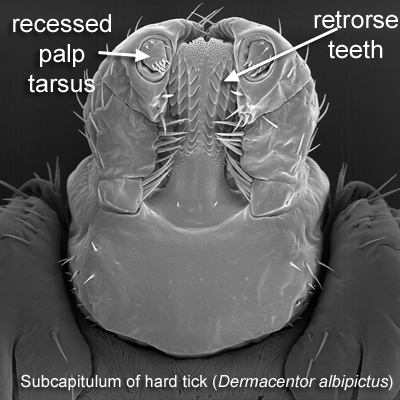 .............................. 10
- Pedofossaepedofossa:
(pl. pedofossae) (= fossae pedales, fovae pedales) recesses into which the legs can be withdrawn. absent; internal malae bifurcatebifurcate:
split into two distally or with two projections. 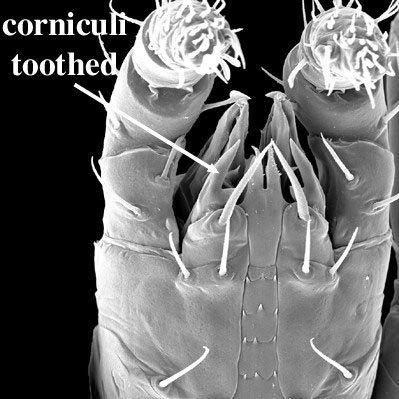 .............................. Dinychidae, Dinychus
Separate pygidial plate bearing setae present.............................. Urodiaspis
- Pygidial region fused to dorsaldorsal:
relating to the upper or back side; opposed to ventral.
shield, sometimes produced as tooth-like process.............................. Uroobovella (11)
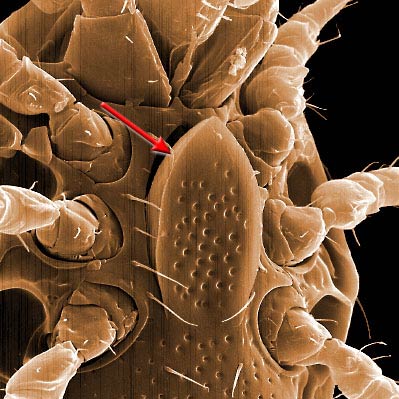
Metapodal lines and anterior genital shieldgenital shield:
a shield or shields covering the genital opening; in female mongynaspine Mesostigmata this shield is usually called the epigynal (epigynial) shield.
process absent.............................. Uroobovella (Uroobovella)
- Metapodal lines present, anterior genital shieldgenital shield:
a shield or shields covering the genital opening; in female mongynaspine Mesostigmata this shield is usually called the epigynal (epigynial) shield.
process present or absent.............................. Uroobovella (Fuscouropoda)
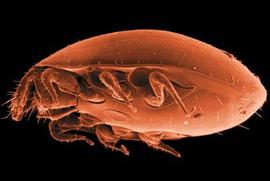
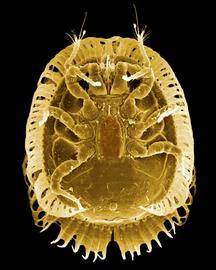
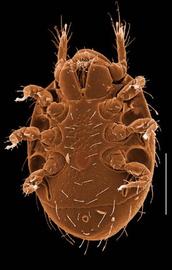
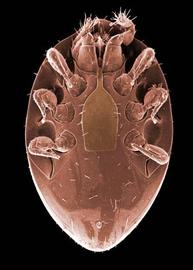
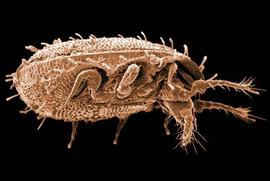
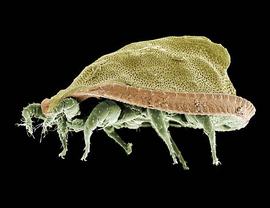
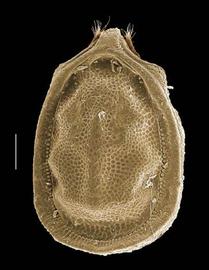
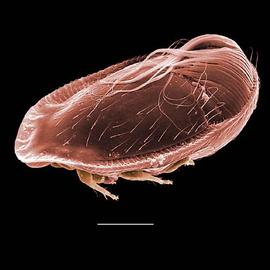
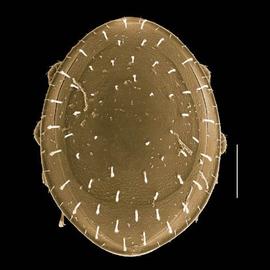
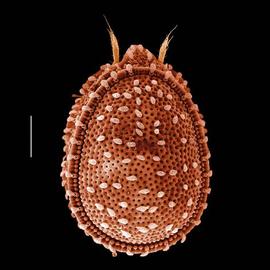
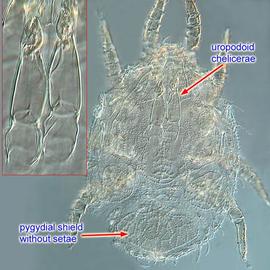
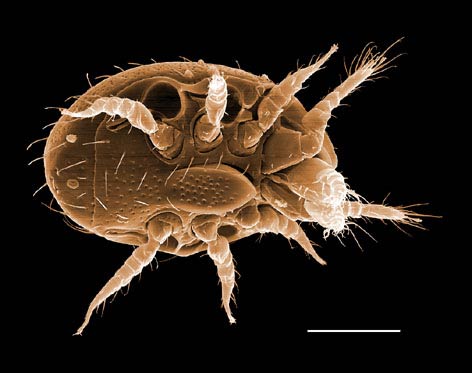
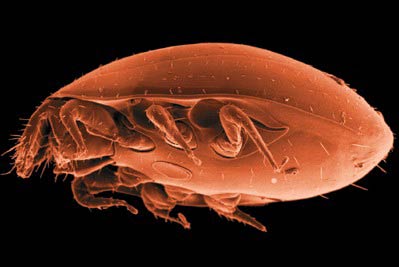
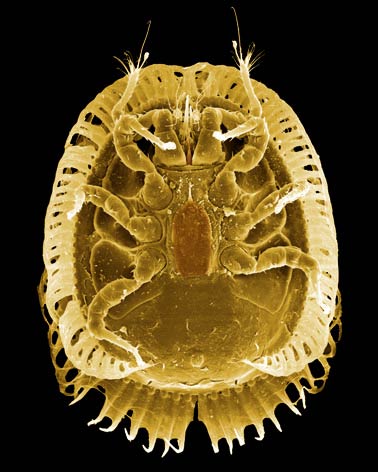
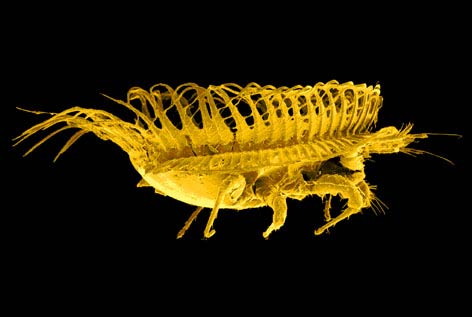
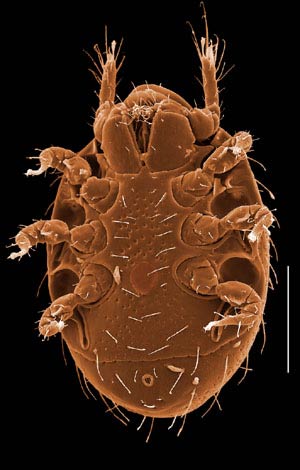
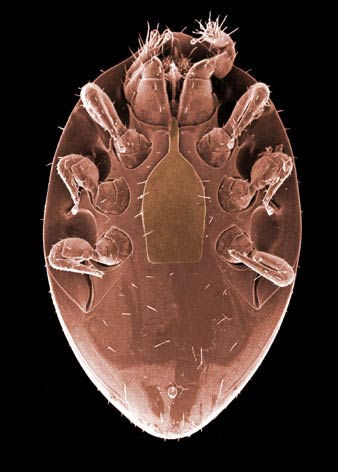
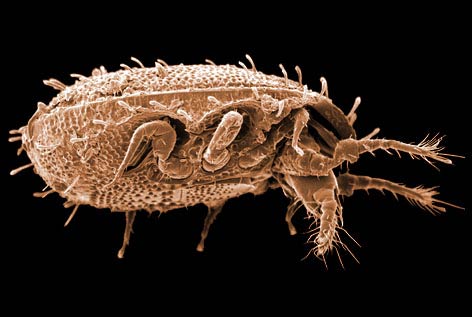
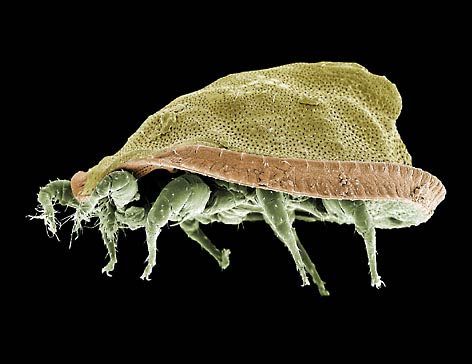
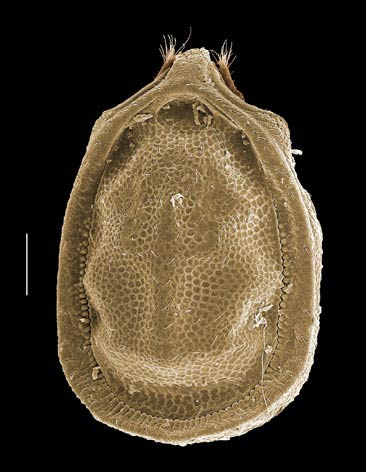
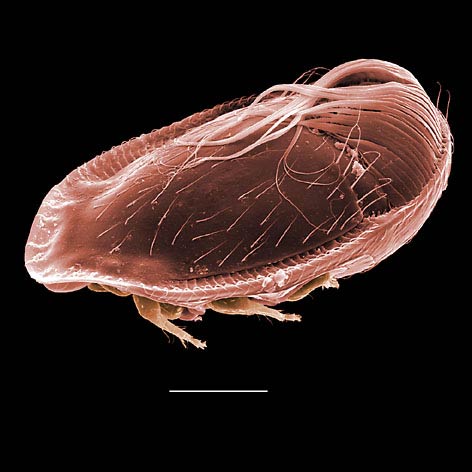
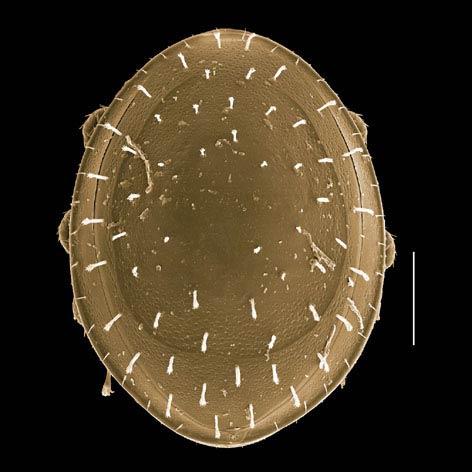
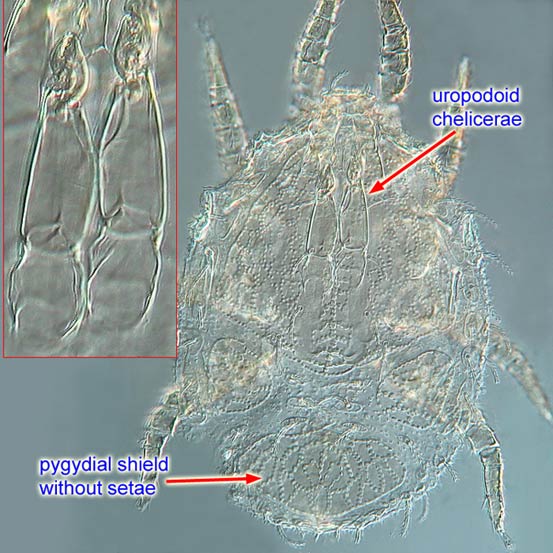
Well armored, tortoise-like mites with uropodine chelicerae are likely to be Uropodoidea.
Uropodoids occur in most litter types and are especially common in compost and in mesic to wet forests. Some species infest worm beds, but probably have little effect on the worms. The few species that have been studied are primarily predatory (especially on maggots and nematodes), although some are known to feed on fungi as well. Insects, myriapods, and small lizards are often covered with the phoretic deutonymphs of these mites, each attached by a small anal pedicle.
Author: David E. Walter
Content last updated Sept. 2006, unless indicated otherwise
Lucid key player updated Sept. 2025
idtools.org