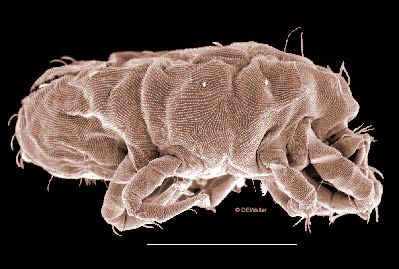
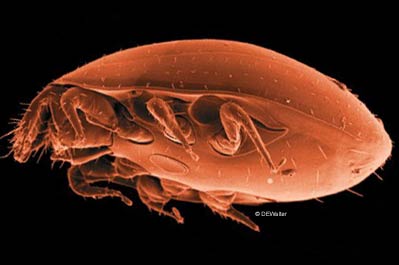
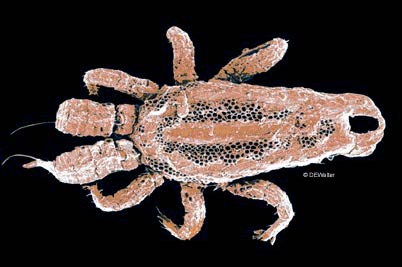
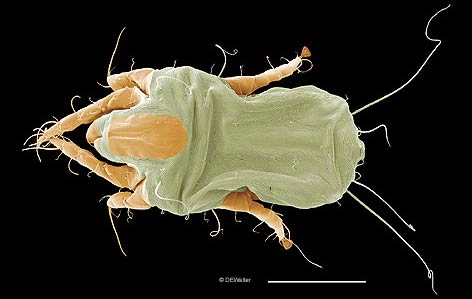
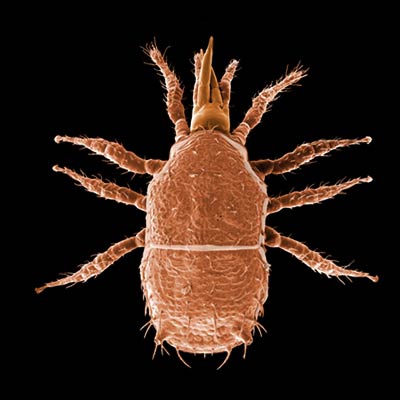
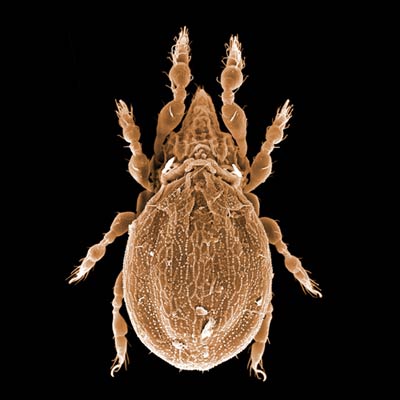
Acari

Is it a mite?

t

Common names

mites, ticks

Probability of encounter

high

Quarantine importance

Numerous important pests of crops, livestock, wildlife, native flora, and humans.

Similarity to mites

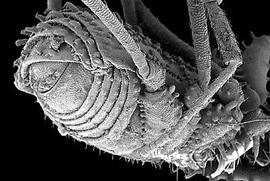
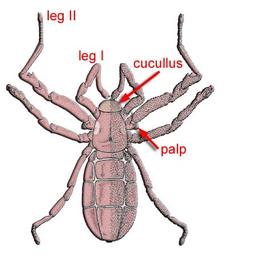
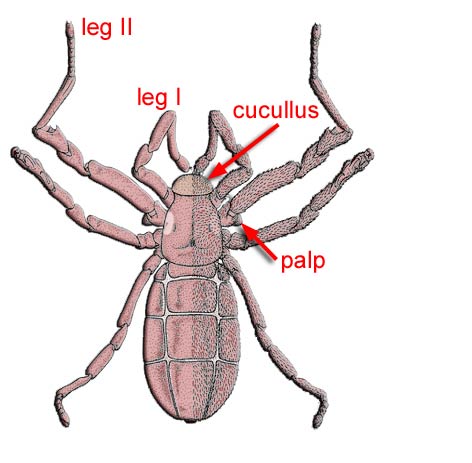
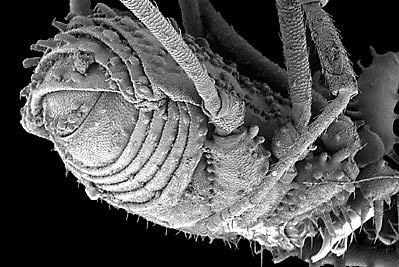
Taxa most similar to mites: Ricinulei have a cucullus and opisthosomal segmentationsegmentation:
in mites distinct external segments have been lost but remnants of segmentation may be represented by hysterosomal folds or transverse arrays of setae and other cuticular sense organs.  In theory, all chelicerates have a prosoma composed of 6 segments (cheliceral, pedipalpal, and four leg-bearing segments = body segments I-VI).  Ventrally the positions of the prosomal segments can be identified by the insertions of their appendages, but dorsally they are obscured.  The opisthosoma is thought to comprise an additional 12-13 segments (body segments VII-XVIII or XIX), but appears to be somewhat to much reduced in most mites, except possibly Opilioacarida.  In early derivative Acariformes (e.g., many Endeostigmata), hysterosomal folds are thought to represent segmentation and in the Grandjean system are designated (from the sejugal furrow to the anus): C, D, E, F, H, PS AD, AN, PA.  There is disagreement in the literature over the origin of 'segments' C and D.  Adherents of Grandjean consider them to be opisthosomatic (with C probably representing a fusion of the pregenital [body segment VII] and genital [VIII] segments).  Others believe that C and D are the dorsal regions of the last two prosomal segments that bear leggs III and IV (i.e., body segments V & VI).
. Opilionids have opisthosomal segmentationsegmentation:
in mites distinct external segments have been lost but remnants of segmentation may be represented by hysterosomal folds or transverse arrays of setae and other cuticular sense organs.  In theory, all chelicerates have a prosoma composed of 6 segments (cheliceral, pedipalpal, and four leg-bearing segments = body segments I-VI).  Ventrally the positions of the prosomal segments can be identified by the insertions of their appendages, but dorsally they are obscured.  The opisthosoma is thought to comprise an additional 12-13 segments (body segments VII-XVIII or XIX), but appears to be somewhat to much reduced in most mites, except possibly Opilioacarida.  In early derivative Acariformes (e.g., many Endeostigmata), hysterosomal folds are thought to represent segmentation and in the Grandjean system are designated (from the sejugal furrow to the anus): C, D, E, F, H, PS AD, AN, PA.  There is disagreement in the literature over the origin of 'segments' C and D.  Adherents of Grandjean consider them to be opisthosomatic (with C probably representing a fusion of the pregenital [body segment VII] and genital [VIII] segments).  Others believe that C and D are the dorsal regions of the last two prosomal segments that bear leggs III and IV (i.e., body segments V & VI).
.

Morphology

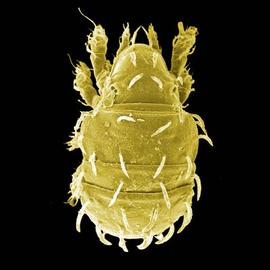
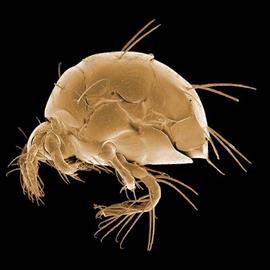
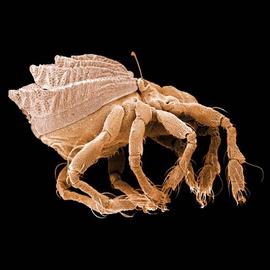
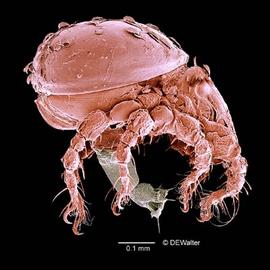
See the Mite morphology page for details.
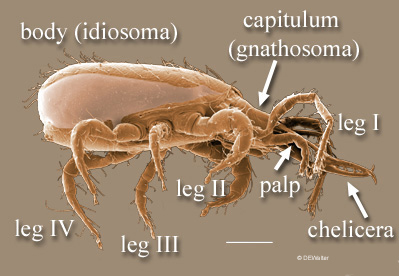
Body regions and limbs

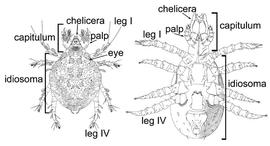
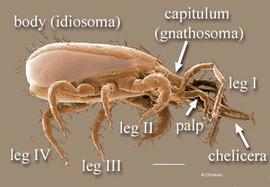
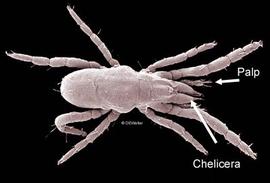
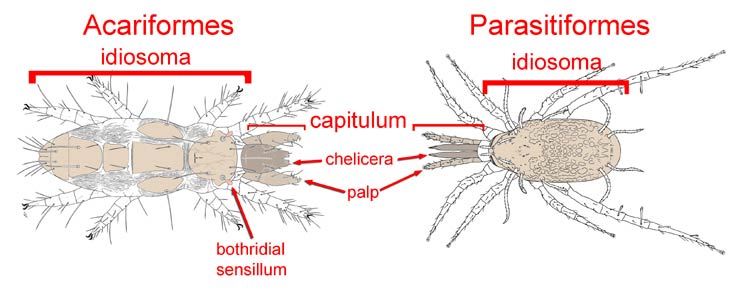
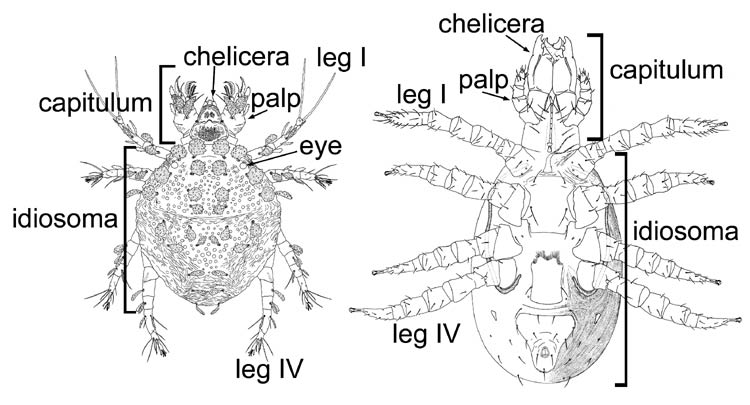
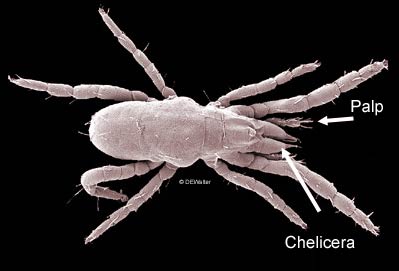
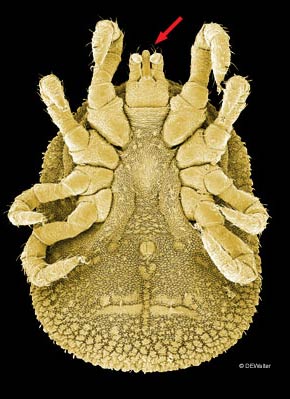
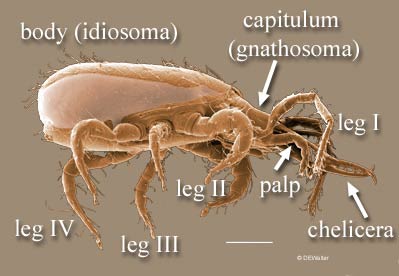
  • Mites have the first two segments (bearing the chelicerae and palps) separated from the bodybody:
    the idiosoma of mites.
    by flexible cuticle. This anterior region is called the capitulumgnathosoma:
    (= capitulum) the anteriormost part of a mite or ricinuleid, composed of the cheliceral and pedipalpal segments and separated from the body (idiosoma) by a ring of soft cuticle.
    ('little head') or gnathosomagnathosoma:
    (= capitulum) the anteriormost part of a mite or ricinuleid, composed of the cheliceral and pedipalpal segments and separated from the body (idiosoma) by a ring of soft cuticle.
    ('jaw body').
  • The remainder of the mite bodybody:
    the idiosoma of mites.
    is called the idiosoma and lacks primary segmentationsegmentation:
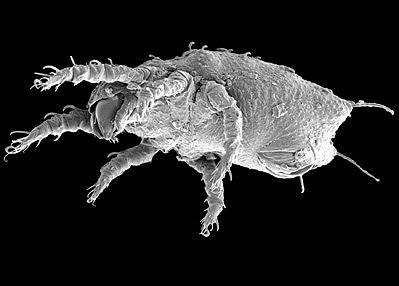
    in mites distinct external segments have been lost but remnants of segmentation may be represented by hysterosomal folds or transverse arrays of setae and other cuticular sense organs.  In theory, all chelicerates have a prosoma composed of 6 segments (cheliceral, pedipalpal, and four leg-bearing segments = body segments I-VI).  Ventrally the positions of the prosomal segments can be identified by the insertions of their appendages, but dorsally they are obscured.  The opisthosoma is thought to comprise an additional 12-13 segments (body segments VII-XVIII or XIX), but appears to be somewhat to much reduced in most mites, except possibly Opilioacarida.  In early derivative Acariformes (e.g., many Endeostigmata), hysterosomal folds are thought to represent segmentation and in the Grandjean system are designated (from the sejugal furrow to the anus): C, D, E, F, H, PS AD, AN, PA.  There is disagreement in the literature over the origin of 'segments' C and D.  Adherents of Grandjean consider them to be opisthosomatic (with C probably representing a fusion of the pregenital [body segment VII] and genital [VIII] segments).  Others believe that C and D are the dorsal regions of the last two prosomal segments that bear leggs III and IV (i.e., body segments V & VI).
    .
  • Larval mites are usually hexapodhexapod:
    with three pairs of legs (i.e. 6 legs), as in the larvae of mites or the larviform stages of others.
    (6 legs); nymphs and adults usually octopod (8 legs).

Diversity

2–3 superorders, 5–6 orders, 450–500 families: 55,000 described species, >1,000,000 spp.
References

  • Krantz 1978Krantz 1978:
    Krantz GW. 1978. A manual of acarology [2nd ed.]. Oregon State University Book Stores, Corvallis.
  • Walter and Proctor 1999Walter and Proctor 1999:
    Walter DE, Proctor HC. 1999. Mites: Ecology, evolution and behaviour. University of NSW Press, Sydney and CABI, Wallingford. 494 pp.
  • Walter et al. (Tree of Life Web Project) 1996Walter et al. (Tree of Life Web Project) 1996:
    Walter DE, G Krantz, and E Lindquist. 1996. Acari. The Mites. Version 13 December 1996. The Tree of Life Web Project, http://tolweb.org/

Mite Classification - The Acari: a Taxonomic Framework

Training videos
 
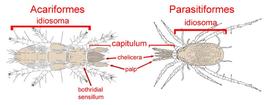
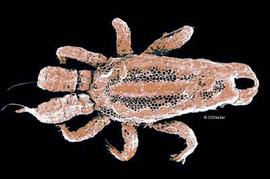
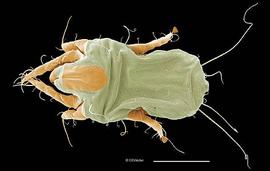
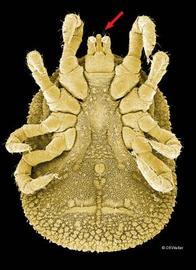
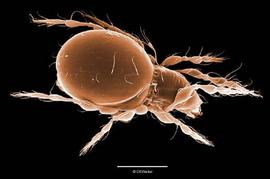
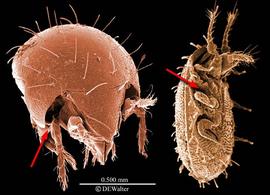
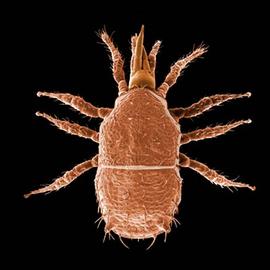
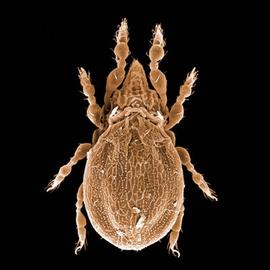
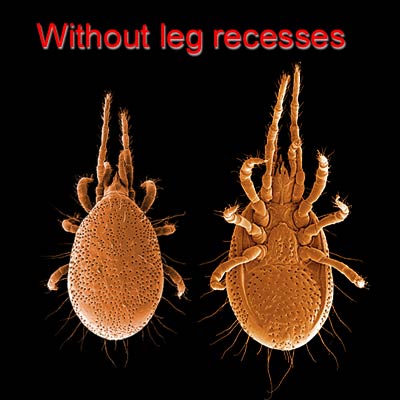
Acariformes and Parasitiformes body types
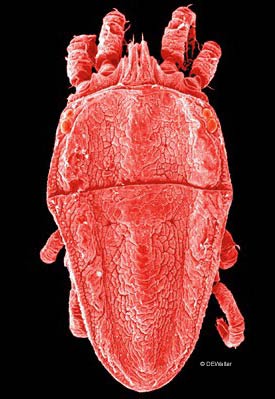
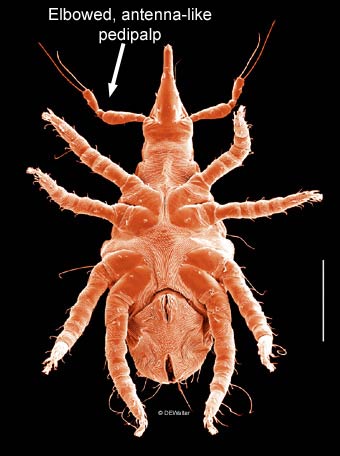
Dorsal view (left); ventral view (right)
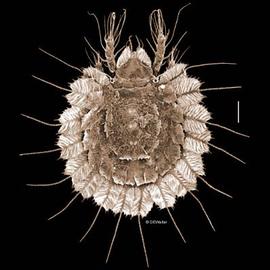
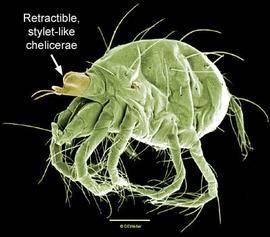
Predatory mesostigmatan (DEW)
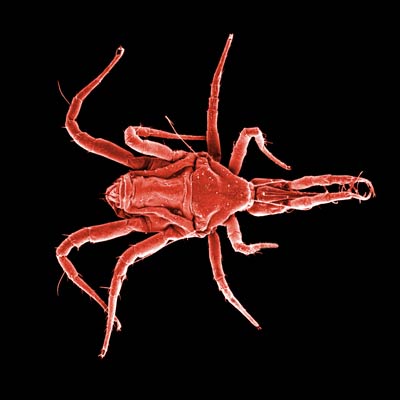
Predatory prostigmatan (DEW)
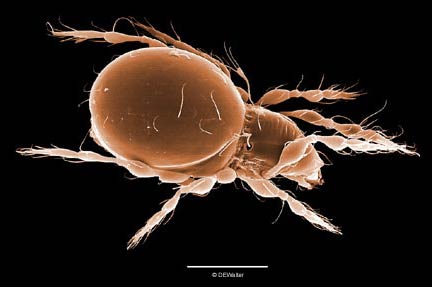
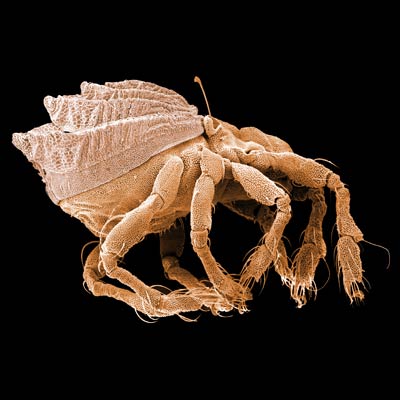
Oribatid nymph carrying scalps (DEW)
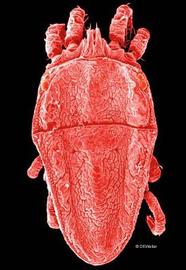
False spider mite (DEW)
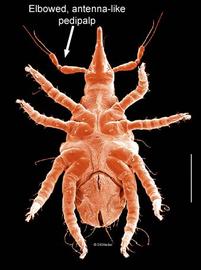
Snout mite (DEW)
Snout mite (DEW)
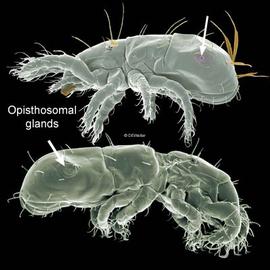
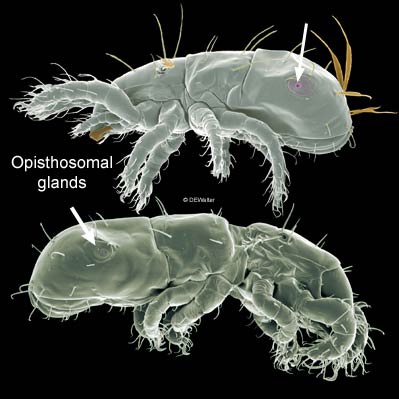
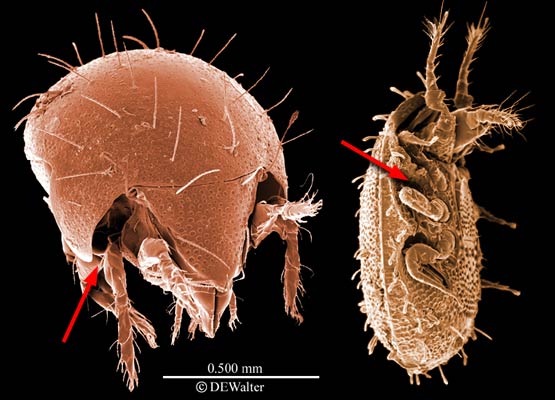
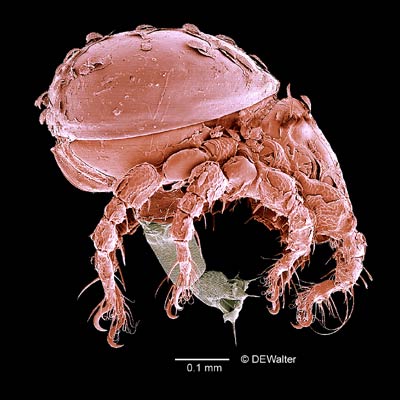
Two oribatid mites with glands (DEW)
Spider mite (DEW)
Spider mite (DEW)
Tydeid mite (DEW)
Tydeid mite (DEW)
Tortoise mite, male uropodine (DEW)
Polyaspidine mite (DEW)
House dust mite (DEW)
Soft tick (DEW)
Soft tick (DEW)
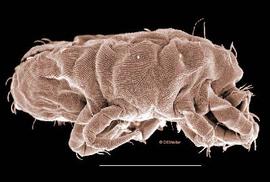
Oribatid mite (DEW)
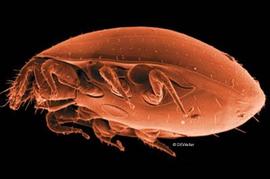
Oribatid mite (DEW)
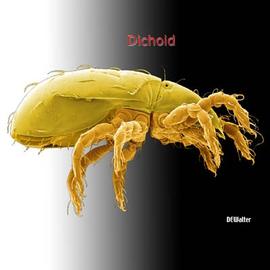
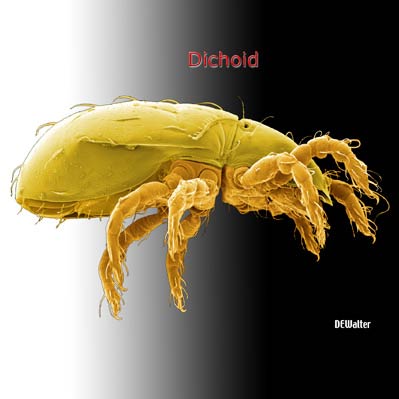
Dichoid oribatid mite (DEW)
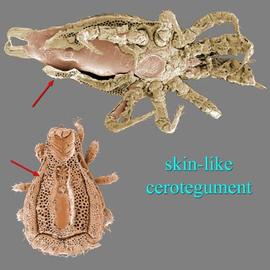
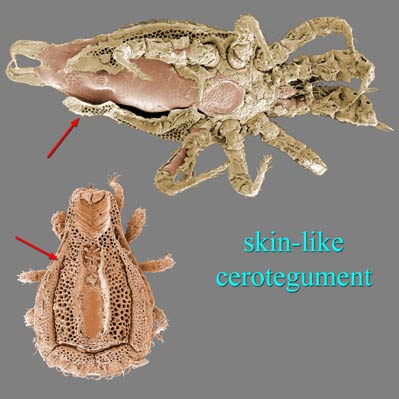
Mesostigmatans with cerotegument (DEW)
Mesostigmatan (DEW)
Mesostigmatan (DEW)
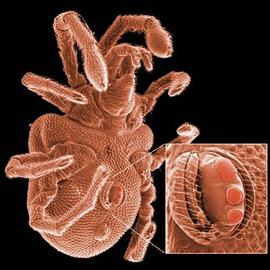
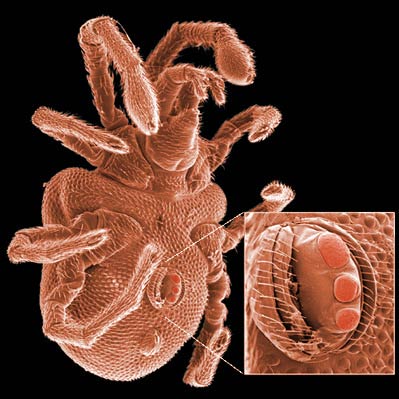
Velvet mite showing genital papillae (DEW)
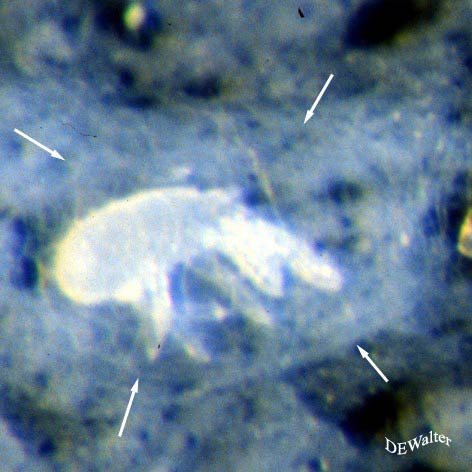
Larval mite in a silken cocoon (DEW)
Amored mites, an oribatid and a uropodid (DEW)
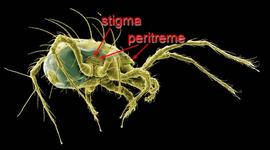
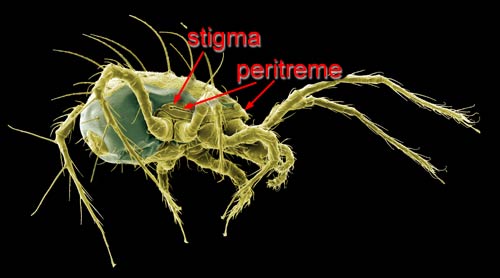
Mesostigmatan showing the peritreme
Stigmaeid mite (DEW)
Brachychthoniid mite (DEW)
Pygmephorid mite (DEW)
Oribatid mite with scalps (DEW)
Oribatid mite with ovipositor (DEW)
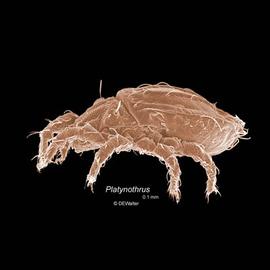
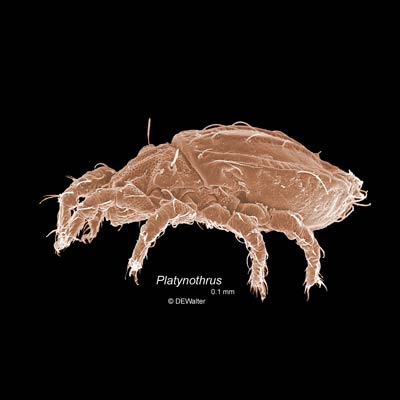
Oribatid mite ( Platynothrus ) (DEW)
Oribatid mite (Platynothrus) (DEW)
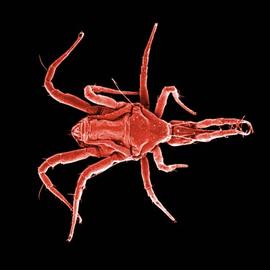
Snout mite (Cunaxidae) (DEW)
Mesostigmatan ( Asca ) (DEW)
Mesostigmatan (Asca) (DEW)
Oribatid (DEW)
Oribatid (DEW)
Opilionid (Opiliones) posterior showing opisthosomal segmentation (DEW)
Cucullus;  Pseudocellus  (Ricinulei) (DEW)
Cucullus; Pseudocellus (Ricinulei) (DEW)